Cost of Flat Roof Replacement: Nassau County Guide
A complete flat roof replacement in Nassau County costs between $8,500 and $28,000 for most residential properties, with the typical 1,200-square-foot roof running $12,000 to $18,000. But here’s the critical distinction: that’s for actually tearing off the old membrane, disposing of it, fixing what’s underneath, and installing a new system correctly. If you’re getting quotes for “$4 per square foot” to slap new material over what’s already there, you’re not getting a replacement-you’re getting a temporary patch that will cost you far more in three to five years when everything underneath finally gives out.
The real question when you’re facing flat roof replacement isn’t just “how much per square foot?” It’s “what are you actually removing, what are you fixing underneath, and what are you installing that will last?” Because in Nassau County, where we get punishing summer heat, winter freeze-thaw cycles, and coastal moisture, the difference between a $10,000 job and a $16,000 job is often whether your roofer discovers-and actually replaces-the rotted plywood and wet insulation that’s been hiding under your current membrane for the past decade.
Breaking Down the Real Cost Components
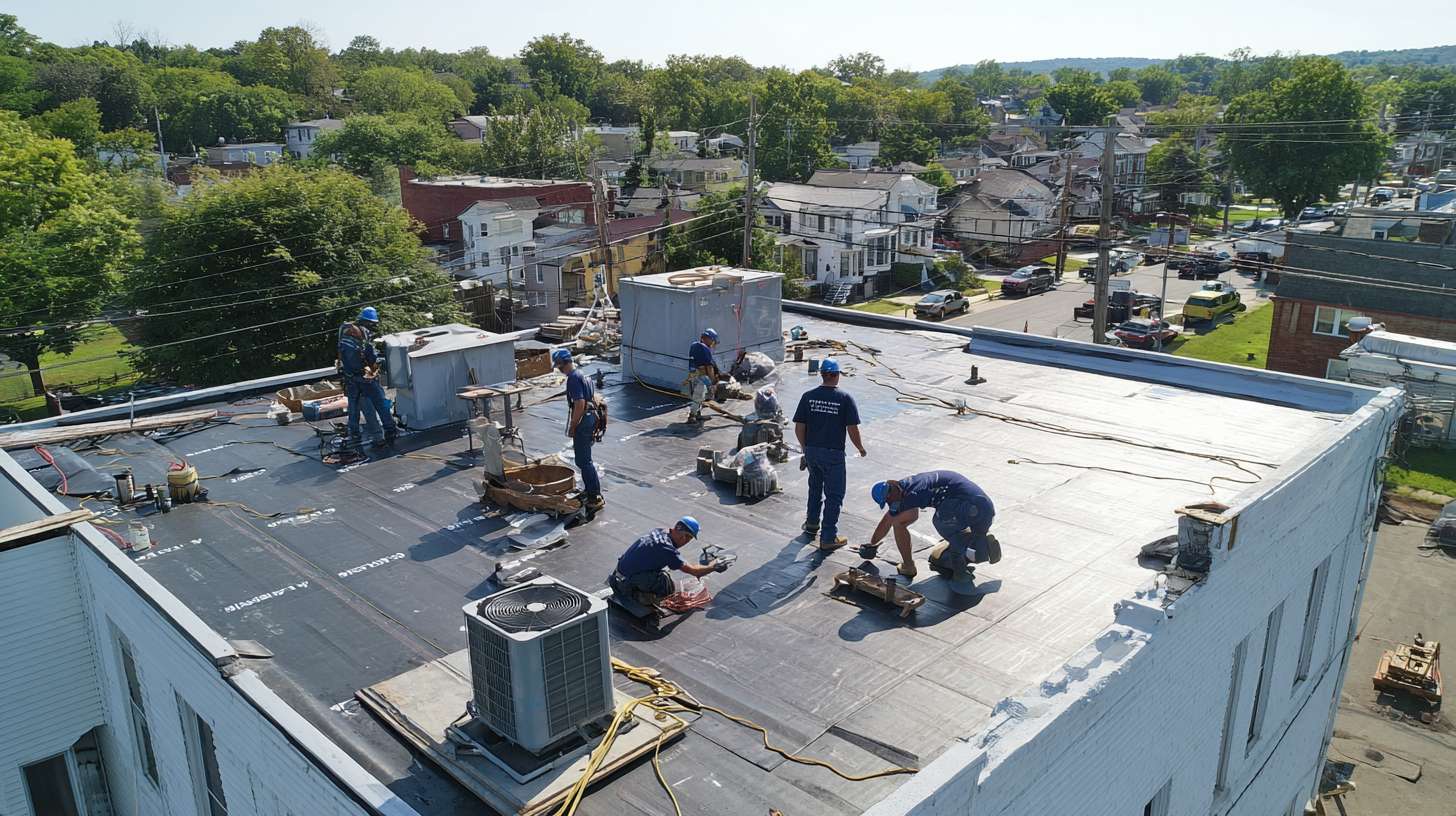
I pulled up at a two-family in Hempstead last spring where the owner had three quotes ranging from $7,800 to $19,500 for what they all called “flat roof replacement.” The homeowner was confused-how could the same job vary by $11,700? When we opened up the roof on demo day, I showed him exactly why. The lowest bidder had quoted only membrane replacement over the existing layers. The middle quote included tear-off but assumed the deck was solid. The highest quote (which ended up being $600 under what the middle bidder charged after change orders) had actually accounted for what we found: two-thirds of the plywood needed replacement, the perimeter wood was rotted from a decade of poor flashing, and there was no insulation at all under the old roof.
Here’s what actually goes into a legitimate flat roof replacement cost in Nassau County:
Tear-Off and Disposal: $2.50-$4.25 per square foot. This covers removing existing roofing layers, loading debris, and disposal fees. If you have multiple layers (common on Nassau County buildings from the 1960s-1980s), you’re at the higher end. A 1,200-square-foot roof with two layers of modified bitumen runs about $3,600-$4,800 just for removal. Disposal costs have jumped significantly-Nassau County transfer stations and approved dumps now charge $85-$110 per ton, and a typical residential flat roof replacement generates 3-5 tons of waste.
Deck Repair and Replacement: $3.50-$6.75 per square foot of damaged area. This is where “we’ll see when we open it up” becomes expensive if your contractor didn’t include an allowance. On coastal Nassau County properties and older homes with poor attic ventilation, I typically find 20-40% of roof decking needs replacement. That’s $840-$3,240 additional on a 1,200-square-foot roof. The cost varies based on whether we’re replacing with CDX plywood ($58-$67 per sheet currently) or OSB ($42-$51), and how much blocking and structural reinforcement is needed.
Insulation Installation: $2.25-$4.50 per square foot. New York State energy code requires minimum R-30 insulation for flat roofs on heated spaces. Most flat roofs I tear off in Nassau County have either zero insulation or degraded material that’s lost its R-value. Polyisocyanurate board insulation (the standard) costs $1.75-$2.10 per square foot for materials, plus installation labor. For that 1,200-square-foot roof, budget $2,700-$5,400. Skip this and you’ll fail inspection-plus you’ll pay the difference in heating and cooling costs every single year.
New Membrane Installation: $4.50-$8.75 per square foot. This is the actual waterproof layer, and it’s where material choice dramatically affects both upfront cost and lifecycle value. Modified bitumen costs $4.50-$5.75 per square foot installed. TPO (thermoplastic polyolefin) runs $5.25-$7.00. EPDM rubber membrane costs $5.00-$6.50. PVC, the premium option, ranges from $7.25-$8.75. I’ll break down which makes sense when in a minute, but understand that on a 1,200-square-foot roof, the difference between the cheapest and most expensive membrane is $3,300-$3,900.
Drainage Improvements: $850-$3,200 per project. Flat roofs aren’t actually flat-they need minimum ¼-inch per foot slope to drains or scuppers. Many Nassau County flat roofs I inspect have ponding water because the original builder didn’t create adequate slope or because the structure has settled over decades. Adding tapered insulation to create proper drainage costs $1.75-$2.60 per square foot for affected areas. New drains or scuppers run $275-$425 each installed. This isn’t optional cosmetic work-standing water cuts roof life in half.
Flashing and Edge Details: $15-$38 per linear foot. Parapet walls, roof penetrations, HVAC curbs, and perimeter edges all need proper flashing. On a typical Nassau County home with a flat roof, figure 80-140 linear feet of flashing work at $1,200-$5,300 total. Aluminum coping caps for parapet walls cost more ($28-$38/linear foot) but last decades longer than the painted steel ($15-$22/linear foot) that rusts out in our coastal climate.
| Roof Size | Budget Replacement (Mod Bit, Minimal Repairs) | Standard Replacement (TPO/EPDM, Typical Repairs) | Premium Replacement (PVC, Full Rebuild) |
|---|---|---|---|
| 800 sq ft | $7,200-$9,800 | $10,400-$14,600 | $15,200-$21,500 |
| 1,200 sq ft | $10,800-$14,200 | $15,600-$21,800 | $22,800-$28,400 |
| 1,600 sq ft | $14,400-$18,600 | $20,800-$28,200 | $30,400-$37,800 |
| 2,000 sq ft | $18,000-$23,000 | $26,000-$34,000 | $38,000-$46,500 |
Material Choices and Their Real Lifecycle Costs
I worked on a small commercial building in Garden City last fall-owner wanted the cheapest possible flat roof replacement to keep his retail tenants dry. We installed modified bitumen for $13,800 on a 1,400-square-foot roof. Three months later, I was at a similar-sized condo building in Manhasset installing PVC for $24,600. The Garden City owner will need to replace his roof again in 12-15 years and will spend another $16,000-$19,000 (accounting for inflation). The Manhasset condo board won’t touch their roof for 25-30 years. Over 30 years, the “cheap” option costs $29,800-$32,800. The “expensive” option costs $24,600, period.
Modified Bitumen: The most common choice for Nassau County residential flat roofs costs $4.50-$5.75 per square foot installed. It’s essentially thick asphalt sheets with polymer modifiers, torch-applied or self-adhered. Lifespan is 12-18 years in our climate. The appeal is lower upfront cost and ease of repair. The drawback is that in 15 years, you’re doing this all over again. Total cost of ownership over 30 years: approximately $1.85-$2.25 per square foot per year of life.
EPDM (rubber membrane): Costs $5.00-$6.50 per square foot installed and lasts 20-25 years. Black EPDM absorbs heat (a consideration if you have living space below), while white EPDM reflects it but costs about $0.60 more per square foot. The seams are the weak point-they’re glued or taped, and Nassau County’s temperature swings can cause seal failure over time. Still, it’s a solid mid-range option. Total cost of ownership over 30 years: $1.50-$1.95 per square foot per year.
TPO (thermoplastic polyolefin): Running $5.25-$7.00 per square foot installed, TPO is white, heat-reflective, and has heat-welded seams that are stronger than EPDM’s glued joints. Lifespan is 20-25 years, similar to EPDM. It’s gained popularity fast, but early-generation TPO (pre-2010) had problems-I’ve torn off TPO roofs from 2008-2012 that were already failing at year 12. Current formulations from reputable manufacturers are much better. Total cost of ownership over 30 years: $1.55-$2.10 per square foot per year.
PVC: The premium option at $7.25-$8.75 per square foot installed, but it delivers 25-30+ year lifespan. The seams are heat-welded, it’s highly resistant to chemicals and oils (relevant for roofs with HVAC equipment), and it stays flexible in cold weather better than other single-ply membranes. On Nassau County coastal properties where I worry about salt air and humidity, PVC is what I install on my own buildings. Total cost of ownership over 30 years: $1.45-$1.75 per square foot per year-actually the best value despite the highest initial cost.
What Drives Costs Higher in Nassau County
I bid a roof replacement on a bayfront property in Freeport where the homeowner was shocked by the $26,400 price for a 1,300-square-foot roof. “My neighbor in Levittown paid $11,000,” he said. When I explained that we needed to sister every roof joist because of structural sag, replace the entire perimeter where coastal humidity had rotted the wood, upgrade from zero insulation to code-required R-30, and install PVC because anything else would degrade faster in the salt air-and that his Levittown neighbor probably had a single-story ranch with easy access and minimal underlying problems-he understood. Location and condition aren’t just minor cost factors; they’re sometimes the primary drivers.
Building height and access. A second-story flat roof costs $1.20-$2.10 more per square foot than ground-level because of staging, material hoisting, and labor inefficiency. Third story adds another $0.90-$1.50. Roofs with no yard access requiring everything to go through the building increase costs 15-25%. I’ve had jobs in dense Nassau County neighborhoods where we couldn’t get a dumpster closer than 40 feet to the building-that alone added $800 to the disposal cost.
Existing roof condition. If we find one layer of membrane over solid decking with good insulation, that’s ideal. More common in Nassau County: two or three layers of old roofing over deteriorated deck over wet insulation that’s been compressed to half its original thickness. The difference between “simple tear-off” and “major rehabilitation” can add $4,800-$9,200 to replacement cost. This is why I include a structural inspection and contingency allowance in my estimates-the alternative is change orders that damage trust and blow budgets.
Penetrations and complexity. A simple rectangular flat roof with two drains and one plumbing vent is straightforward. Add three HVAC units, a dozen plumbing vents, two chimneys, a skylight, and parapet walls on three sides, and the labor complexity (and therefore cost) increases 30-45%. Every penetration needs proper flashing and detailing. I estimate $180-$340 for basic penetration flashing and $420-$680 for HVAC curb replacement with flashing.
Code compliance upgrades. If your roof replacement requires a permit (and it should), you’ll need to bring the assembly up to current code. In Nassau County, that typically means R-30 insulation minimum and proper fire rating for the roofing system. If your building doesn’t have adequate attic ventilation, some inspectors require that to be addressed. If your existing roof has an obsolete drain configuration, you may need to add drains or modify drainage paths. Budget $1,200-$3,800 for code-required upgrades beyond the basic roof replacement.
Red Flags in Flat Roof Replacement Quotes
After 26 years of opening up roofs and finding what’s really underneath, I can spot a problematic estimate in about 30 seconds. Here’s what should concern you:
“Price depends on what we find when we open it up” with no allowances or ranges. Every contractor knows that Nassau County flat roofs have underlying issues-it’s not if, it’s how much. A legitimate estimate includes either a contingency allowance (“$3,500 included for deck repair; additional work billed at $5.50/sq ft”) or provides ranges based on typical conditions. If someone quotes $8,200 firm with no discussion of what happens when you discover problems, you’ll be getting a change order for $4,000-$7,000 once the old roof is in the dumpster and you have no leverage.
Square footage that doesn’t match your roof. I’ve seen quotes that understate roof size by 20-30%-sometimes honest measurement error, sometimes intentional lowballing. Verify the square footage. If you have building plans, check them. If not, a simple calculation (length × width for rectangular sections, accounting for overhangs) gets you close. A 1,200-square-foot quote that’s really for a 1,500-square-foot roof will balloon by $3,900-$7,800 when reality hits.
No mention of tear-off, disposal, or permits. If the quote just says “install new TPO membrane – $6,800,” what are they installing it over? Are they tearing off the old roof or covering it? Where’s disposal? Is this permitted work? The cheapest quote is often cheap because it’s incomplete. Ask explicitly: “Does this include complete tear-off to the deck, disposal, and permits?” If the answer is vague or “we can do it either way,” you’re not getting a real replacement cost.
Material specifications that are too generic. “Rubber roofing” could be premium 60-mil EPDM with a 25-year warranty or cheap 45-mil material that’ll need replacement in 12 years. “Modified bitumen” could be top-grade SBS polymer with granular surface or basic APP with smooth surface. If the quote doesn’t specify membrane thickness, manufacturer, and warranty terms, you can’t compare it to other quotes or know what you’re actually getting.
Labor rates that seem impossibly low. Skilled flat roof installation in Nassau County costs $55-$75 per hour for labor (the good crews charge $65-$75 because they’re worth it). A 1,200-square-foot flat roof replacement is 4-6 days of work for a three-person crew-that’s 96-144 labor hours at $5,280-$10,800 just for labor, before materials, equipment, disposal, overhead, and profit. If someone quotes $7,500 total for a complete flat roof replacement, they’re either paying workers under the table, cutting every possible corner, or planning to hit you with changes.
What a Complete Nassau County Flat Roof Replacement Should Include
When Platinum Flat Roofing provides a flat roof replacement estimate, here’s what’s actually in the price-this is what you should expect from any legitimate contractor:
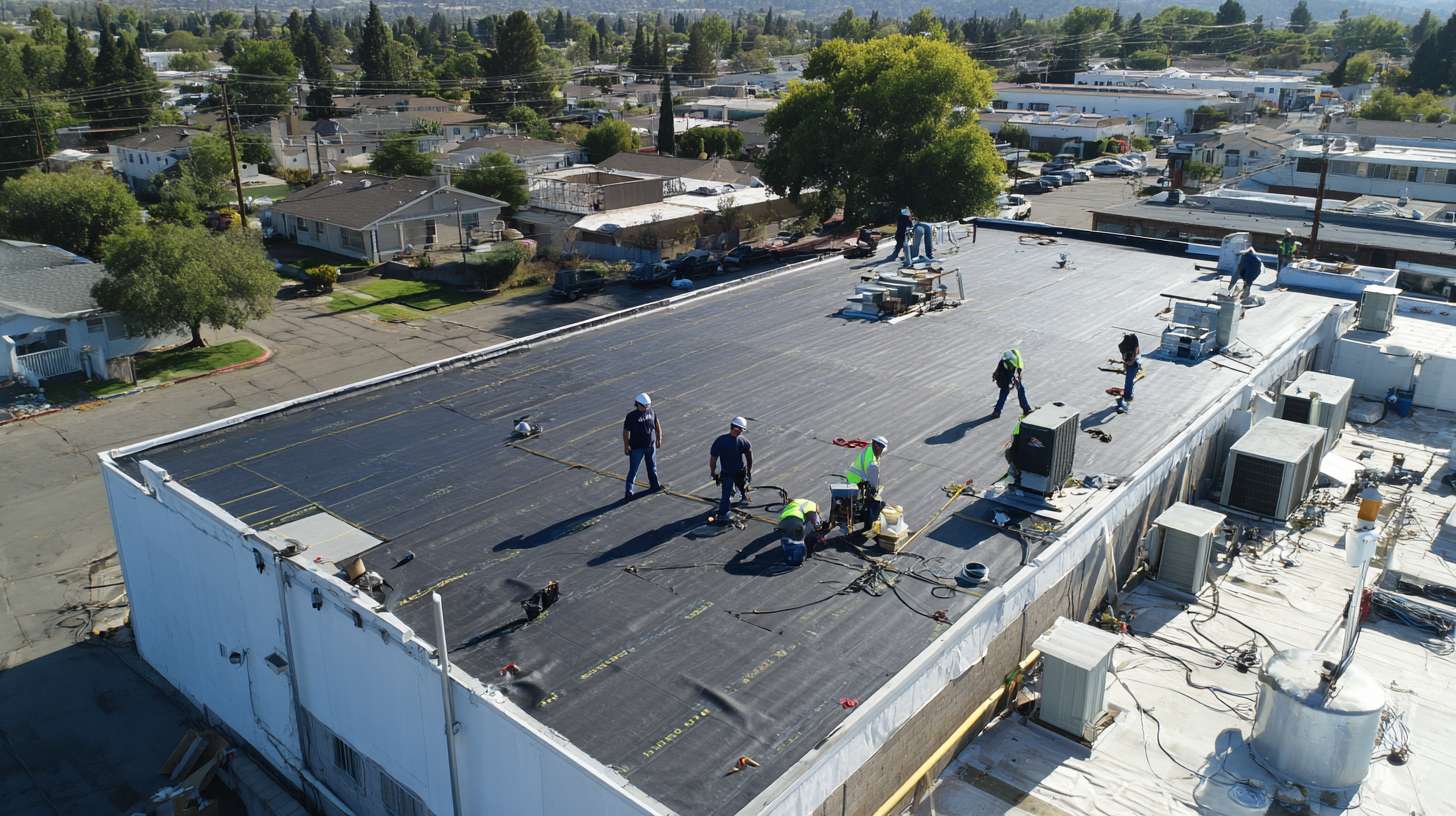
Complete tear-off of existing roofing materials down to the structural deck, with proper disposal at an approved facility. Protection of landscaping, windows, and property during demolition. Inspection of the exposed deck with a detailed report of what needs repair or replacement, already accounted for in our allowance. Replacement of deteriorated or damaged decking with new CDX plywood, including fastening to structural members per code. Installation of tapered insulation system to create proper drainage (¼-inch per foot minimum slope) if existing roof has ponding issues. Installation of code-compliant R-30 insulation across the entire roof surface.
Installation of your chosen membrane system (TPO, EPDM, PVC, or modified bitumen) according to manufacturer specifications, with all seams properly sealed or welded. Complete flashing of all roof penetrations, parapets, edges, and transitions using compatible materials that match membrane warranty requirements. Installation or replacement of drains, scuppers, and overflow drains as needed to meet code. Cleanup and final inspection, with all permits pulled and closed.
The written warranty should specify both manufacturer’s material warranty (typically 10-30 years depending on membrane) and contractor’s labor warranty (minimum 5 years for quality work). If these elements aren’t explicitly listed in your estimate, ask why-and get the answer in writing.
Timing Your Flat Roof Replacement for Best Value
A homeowner in East Meadow called me in March asking about flat roof replacement. I told her to wait until May. She was surprised-wasn’t spring the busy season when prices go up? Yes and no. In Nassau County, the ideal flat roof replacement window is May through October when weather is predictable and materials cure properly. But early May and September-October are slower than June-August, so you might negotiate 5-8% off peak-season pricing. Plus, you avoid the winter rush of emergency replacements after ice dam damage drives prices up 12-18%.
The worst time to replace a flat roof? November through March, when cold temperatures make some membrane installations impossible or require expensive cold-weather procedures, when short days reduce productivity, and when winter storms can delay projects for days at a time (while your building sits under tarps). If you can plan ahead and schedule for the shoulder seasons, you’ll get better pricing, faster completion, and superior installation quality.
That said, if your flat roof is actively leaking and causing interior damage, waiting for “better pricing” is false economy. A leaking flat roof that destroys ceilings, insulation, and personal property can cost $6,000-$15,000 in interior repairs-far more than you’d save by waiting for off-season pricing.
Making the Investment Decision
The cost of flat roof replacement in Nassau County isn’t small-$12,000 to $28,000 is real money. But context matters. That same roof protects a $400,000-$900,000 property. It keeps your heating and cooling costs manageable (or drives them up if the insulation is shot). It prevents water damage that could cost multiples of the roof replacement. And if you’re planning to sell within five years, a new flat roof with transferable warranty adds $8,000-$14,000 to your home’s value while removing a major negotiating point for buyers.
The decision isn’t really “should I replace my flat roof?”-if it’s failing, you have no choice. The real decision is whether to do it right once or cheap twice. Over 26 years, I’ve seen both approaches play out. The homeowners who invest in proper tear-off, structural repairs, adequate insulation, quality membrane, and skilled installation end up spending less over time, dealing with fewer headaches, and getting roofs that actually last their projected lifespan. The ones who chase the lowest quote end up calling me five to eight years later to fix what the cheap guy did wrong-and by then, they’ve spent more total money than if they’d just done it correctly the first time.
If you’re facing flat roof replacement in Nassau County, get at least three detailed written estimates that specify exactly what’s included, compare not just price but scope and materials, and remember that the goal isn’t the cheapest roof-it’s the best value roof that protects your property for the next 20-30 years without constant repairs and worry.