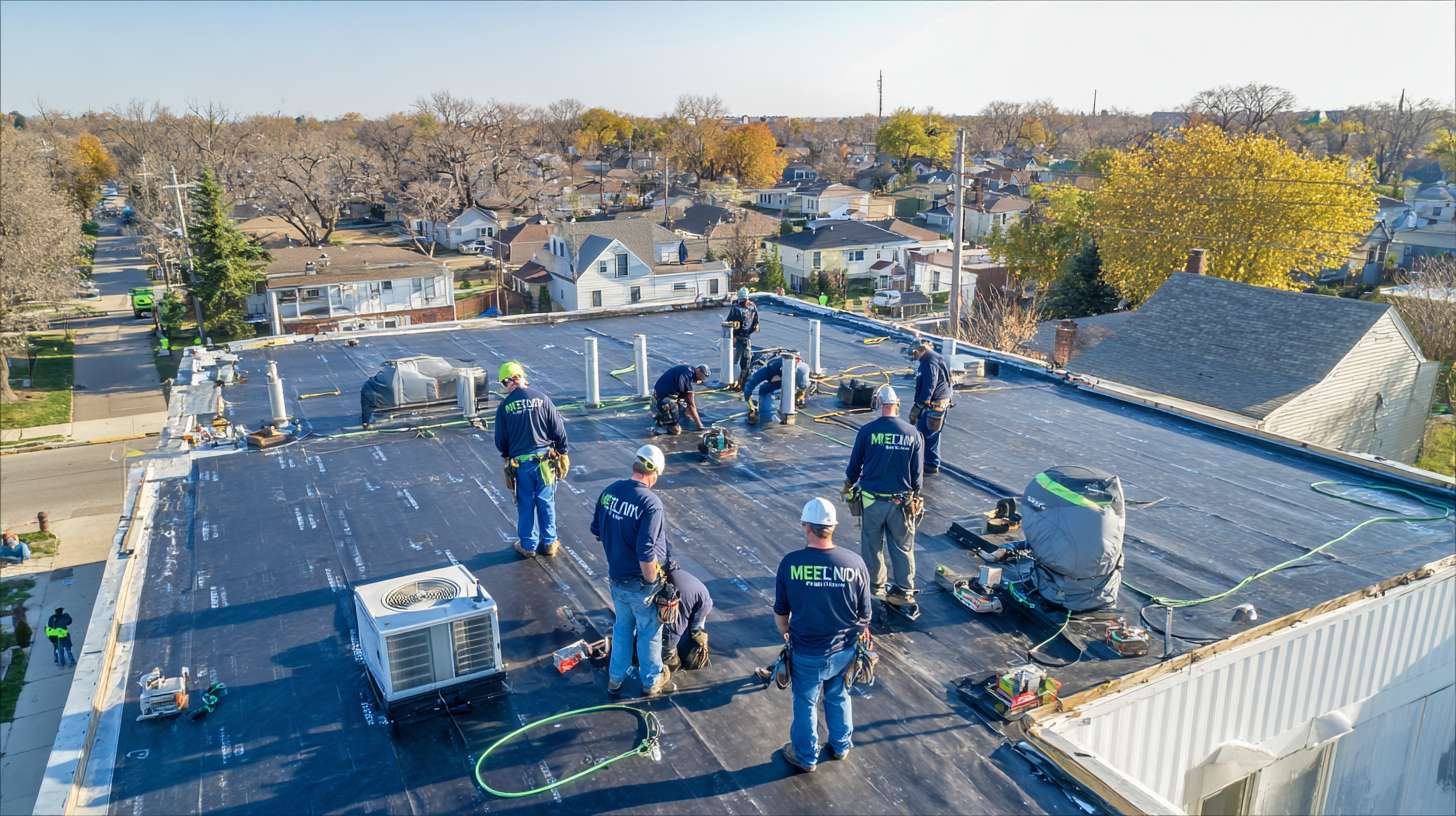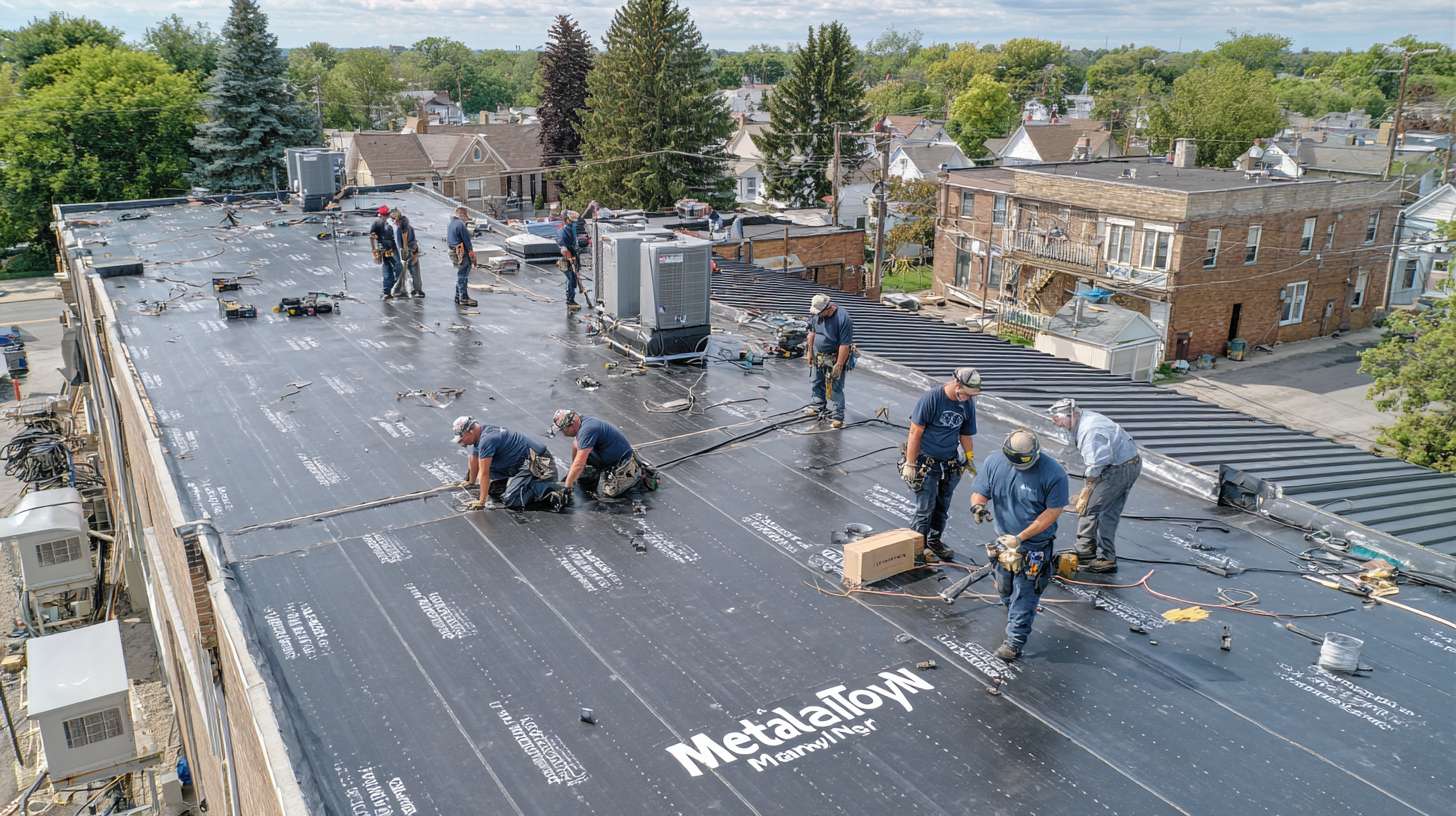
Professional Flat Roof Installation Contractor in Nassau County
When you hire a flat roof installer in Nassau County, how do you know they’ll actually install a system that lasts-rather than just lay down a membrane and disappear? The truth is, most homeowners can’t tell the difference between a true professional flat roofing installer and someone who just watched a few videos. But that difference shows up loud and clear three winters later when your roof either still looks perfect or has seams peeling, ponding water, and leaks you can’t trace. A proper flat roof installation in Nassau County-where we get wind gusts off the Atlantic, freeze-thaw cycles that can crack cheap materials, and rain that finds every weak point in flashing-requires both the right materials and a methodical installation process. This guide will show you exactly what a professional flat roofing installer does differently, from first inspection to the ten-year warranty you should demand in writing.
What Makes a Flat Roof Installer “Professional” Versus Just Licensed
A contractor’s license tells you someone passed a test. It doesn’t tell you whether they understand that a rubber flat roof over a heated garage in Merrick needs vapor retarder placement completely different from the same product on an unheated garden shed. Real flat roof installers invest in manufacturer training-EPDM specialists get certified by Firestone or Carlisle, TPO installers train with GAF or Johns Manville, and those certifications aren’t rubber stamps. They require classroom hours, field installs supervised by factory reps, and annual recertification to stay current on adhesive chemistry, seam-welding temperatures, and updated fastening patterns for Nassau County’s 110-mph wind zone.
Look for three things when you’re vetting flat roofing installers. First, ask for manufacturer certifications by name-“We’re GAF Master Elite” doesn’t cut it because that’s for shingles; you need “TPO Certified Applicator” or “EPDM Gold Level.” Second, demand references from jobs completed at least five years ago, not last month. Call those homeowners and ask one question: “Did you have any callbacks, and if so, how fast did they respond?” Third, check whether the flat roof installer pulls permits for every job. Some will tell you permits aren’t required for tear-offs or re-covers; in most Nassau County towns, that’s flatly wrong, and skipping permits means skipping inspections-which means no one except the installer ever verified the insulation R-value, fastener spacing, or flashing details.
I worked on a Bellmore duplex two years ago where the previous flat roofing installer-who had great Google reviews and a shiny truck-installed EPDM directly over rotted decking without replacing a single sheet of plywood. The membrane looked fine from the ground. But every rainstorm, water ran under the rubber, pooled on the soft deck, and the homeowner had ceiling stains spreading across both units. That’s not a material failure. That’s an installer who either didn’t know or didn’t care that you can’t balloon over structural problems with a new membrane.
Flat Roofing Systems Suited to Nassau County’s Climate
Nassau County sits in a unique climate pocket: we’re coastal, so salt air accelerates metal corrosion and UV exposure is intense in summer; we’re northern, so freeze-thaw cycles crack brittle materials and ice dams form on poorly insulated flat roofs; and we’re densely built, so nearby tall buildings create wind tunnels that can peel back mechanically attached membranes if the fastener pattern isn’t right. A professional flat roof installer matches the system to your specific building and use. Here’s what works here and why:
| Membrane Type | Best Use in Nassau County | Life Expectancy | Key Advantage |
|---|---|---|---|
| EPDM (Rubber) | Residential homes, garages, additions | 20-30 years | Handles freeze-thaw extremely well; lowest cost per square foot |
| TPO (White Thermoplastic) | Low-slope roofs with HVAC equipment, commercial buildings | 15-25 years | Highly reflective (lowers cooling costs); heat-welded seams stronger than adhesive |
| PVC | Roofs with heavy foot traffic or chemical exposure | 20-30 years | Most puncture-resistant; resists grease and oils from exhaust vents |
| Modified Bitumen | Steep-slope applications, hybrid flat/pitched designs | 15-20 years | Excellent adhesion on difficult substrates; self-healing in minor punctures |
Rubber flat roof installers overwhelmingly favor EPDM for residential work in Nassau County because it tolerates our temperature swings-it stays flexible at 20°F and doesn’t soften at 140°F surface temps in July-and because the seam adhesives have been refined over forty years to hold in coastal humidity. TPO is gaining ground on commercial flat roofs and larger residential buildings where the white surface reflects enough heat to pay back the higher install cost in five to seven summers of lower AC bills. PVC costs about 15-20% more than TPO but makes sense if you have rooftop HVAC, frequent maintenance foot traffic, or restaurant exhaust vents that deposit grease film-PVC resists all of that. Modified bitumen still shows up on older flat roofs, and it’s repairable, but most professional flat roofing installers have moved to single-ply membranes because the seams are cleaner and warranties are longer.
The Installation Process That Separates Professionals From Amateurs
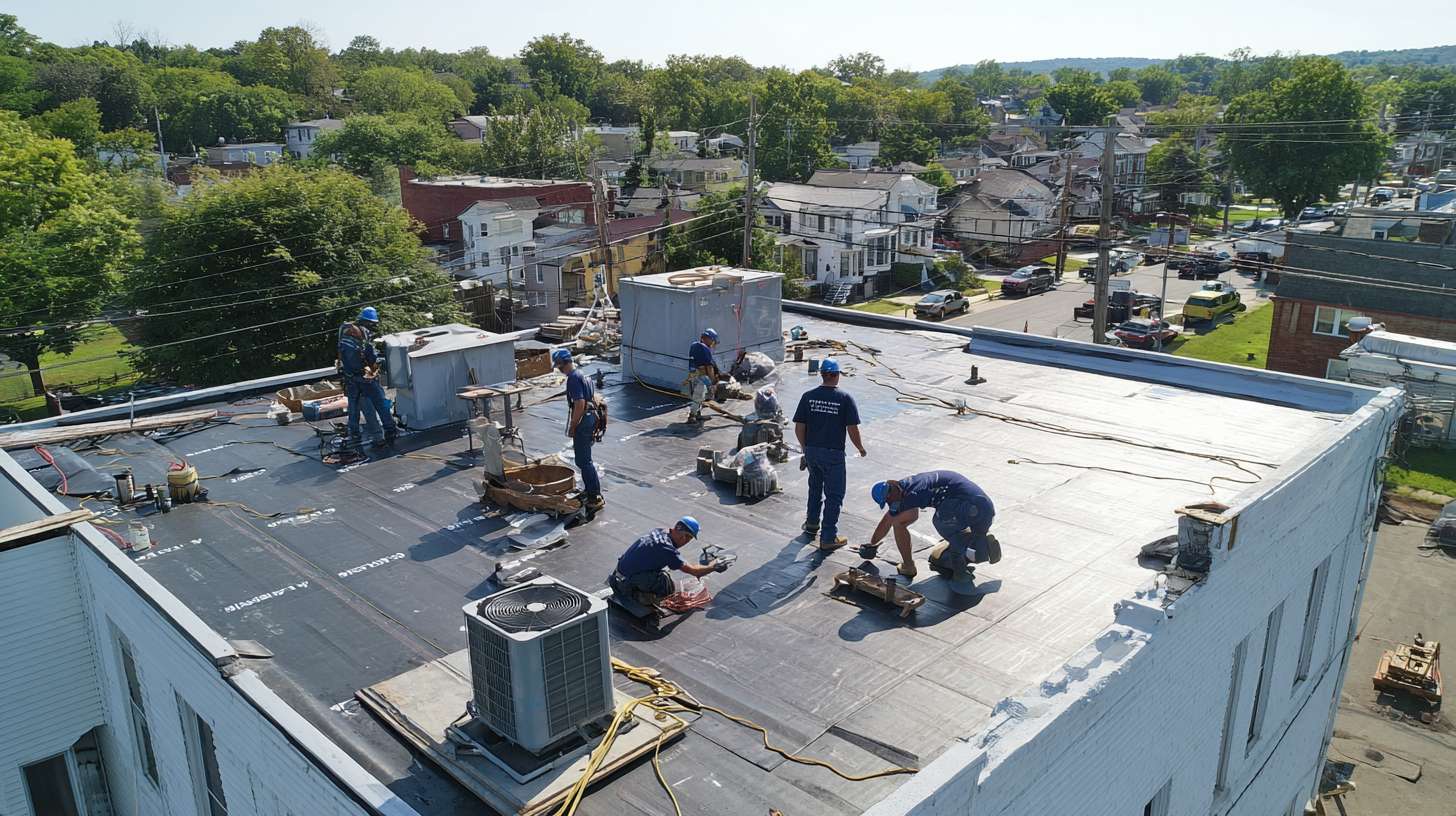
A real flat roof installer doesn’t start by rolling out membrane. The first hour on site is inspection: we’re up on the roof pulling back corners, checking fastener pop on existing membrane, probing for soft decking, and measuring slopes with a digital level because “flat” roofs in Nassau County need at least ¼-inch per foot slope to drain-any less and you get ponding, which voids most manufacturer warranties. If the existing roof is two or more layers, code requires full tear-off; if it’s one layer and the decking is sound, a recover might be allowed, but I tear off anyway because I want to see and repair what’s underneath.
On a recent Garden City garage, the homeowner’s first quote-from a flat roofing installer who advertised “same-day installs”-proposed recovering over the existing rolled roofing. I pulled a corner and found the OSB sheathing had delaminated from twenty years of moisture cycling. We tore off, replaced 40% of the deck, added a peel-and-stick ice-and-water shield at the perimeter and penetrations, installed two inches of polyiso insulation with taped seams (the original roof had zero insulation), then fully adhered 60-mil EPDM. The garage went from an icebox in winter and an oven in summer to conditioned space the owner now uses as a workshop. That’s what insulation and proper prep deliver-and what you lose when you hire the cheapest flat roof installer who skips steps.
Step-by-step, here’s what a professional installation includes:
- Tear-off and deck inspection: Remove old membrane and underlayment down to sheathing. Replace any soft, rotted, or delaminated panels. Fasten remaining deck with ring-shank nails or screws at 6 inches on-center at edges and 12 inches in the field.
- Insulation installation: Polyiso rigid foam is standard-R-6 per inch, lightweight, and compatible with all membranes. We mechanically fasten or fully adhere boards, stagger seams, and tape joints with foil tape to prevent thermal bridging. Two inches (R-12) is minimum for conditioned spaces in Nassau County; three inches (R-18) is better.
- Cover board: High-density fiberboard or gypsum cover board protects insulation from foot traffic and fastener pull-through. Some flat roofing installers skip this to save $0.50 per square foot; that’s a mistake on any roof someone will walk on.
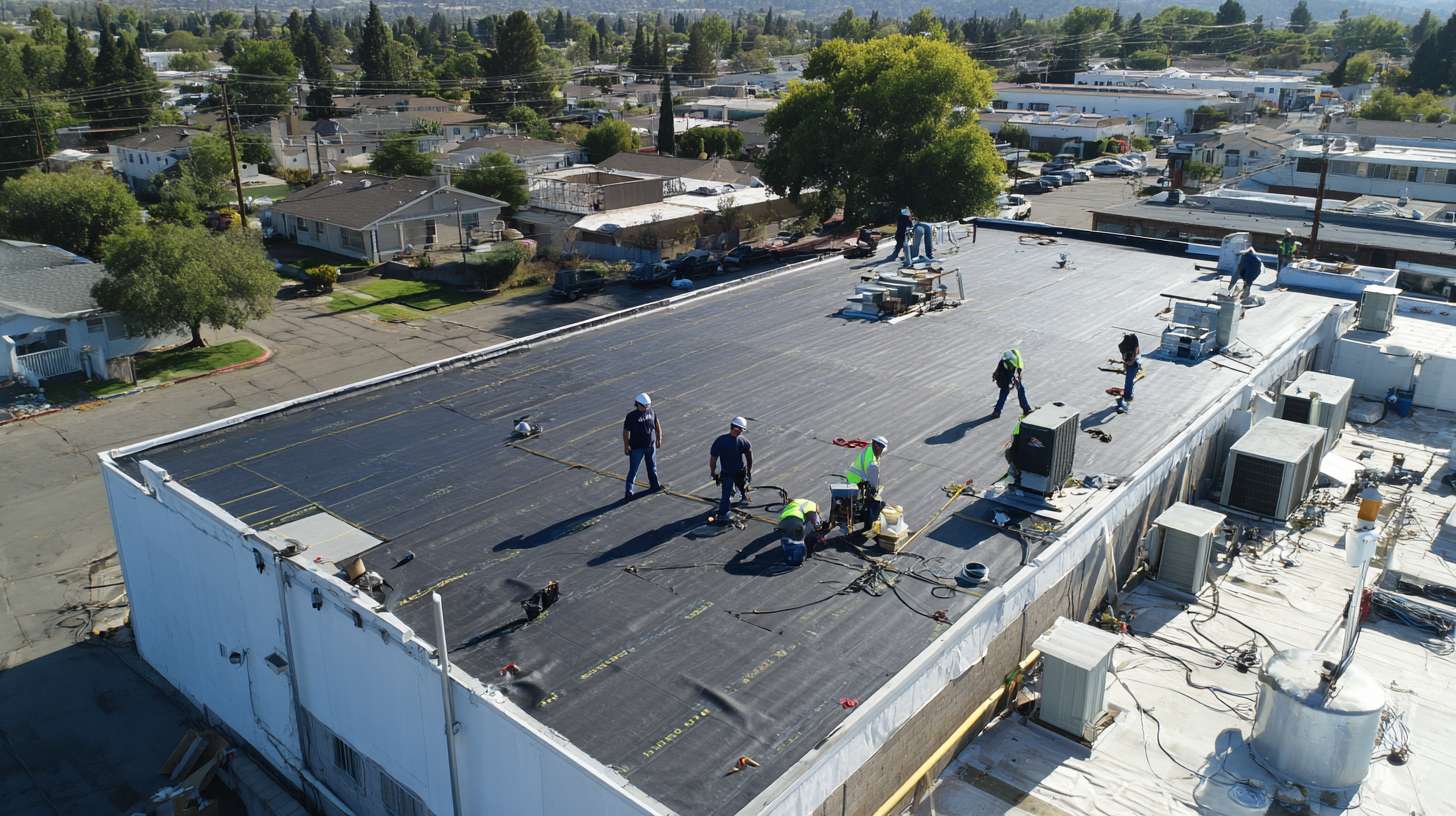
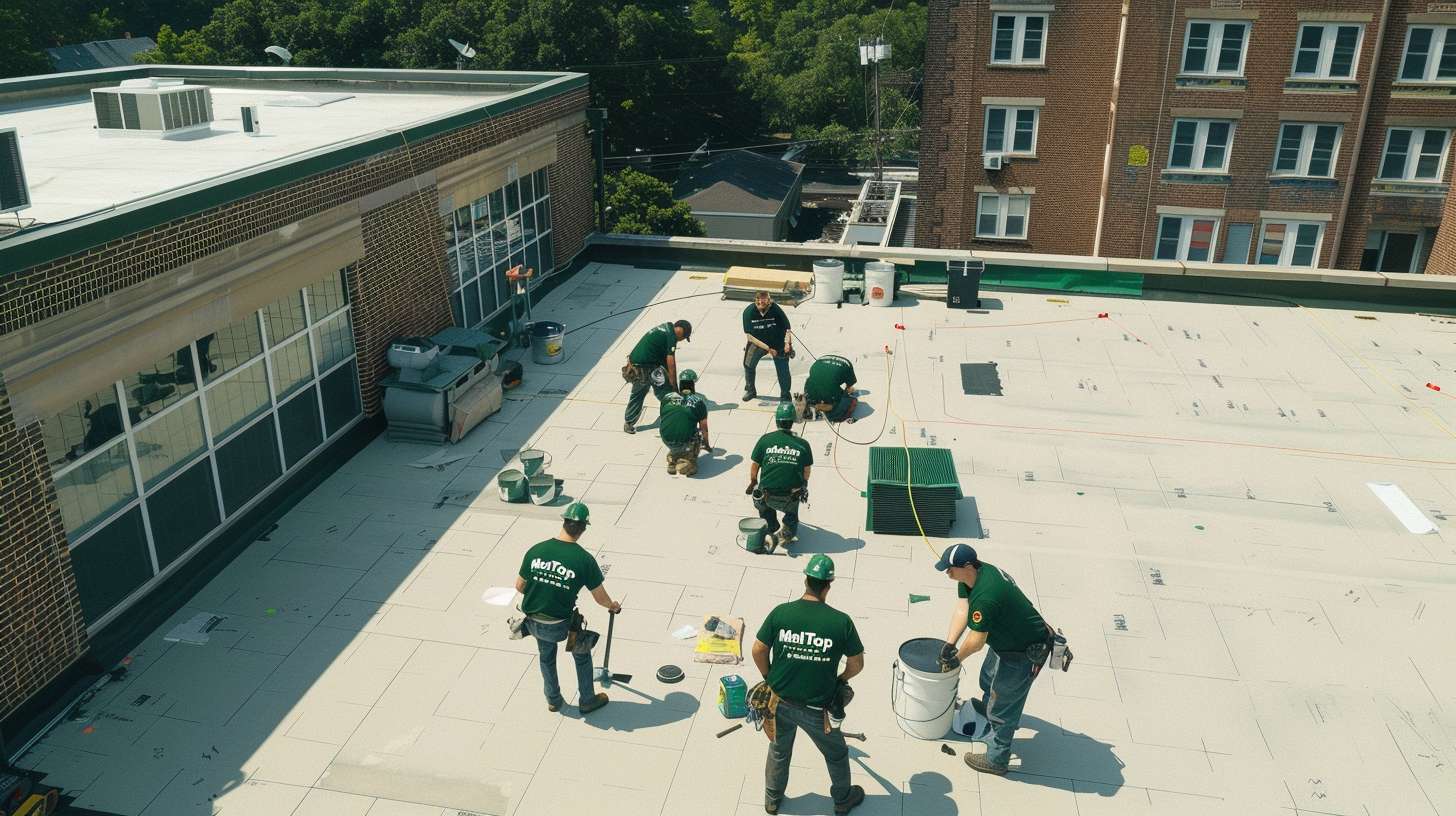
- Membrane installation: EPDM can be fully adhered (best wind resistance, no fastener penetrations), mechanically attached (faster, lower cost), or ballasted (requires structural capacity for stone weight). TPO and PVC are heat-welded at seams-we use a hot-air welder at 900-1,000°F and probe every seam with a blunt tool to verify fusion. If the seam peels open, it’s not welded; it’s just pressed together.
- Flashing and terminations: This is where most roof leaks start. Every parapet wall, pipe penetration, drain, and roof edge gets custom-cut flashing, mechanically fastened and sealed with lap sealant or heat-welded. Drip edges and metal coping caps at parapets are fabricated on-site to fit exact dimensions-pre-bent stock doesn’t seal properly.
- Final inspection and testing: We flood-test drains, check for ponding (any water remaining 48 hours after rain), and have the building inspector sign off before we call the job complete.
The entire process for a typical 800-square-foot flat roof on a Nassau County home takes two to three days with a two-person crew. Anyone promising same-day or next-day completion is cutting corners-likely skipping insulation, using thinner membrane, or not flashing penetrations correctly.
Red Flags When Hiring Flat Roof Installers
Some warning signs show up in the estimate; others appear once work starts. If a flat roofing installer tells you “we can just go over what’s there” without inspecting the existing deck, walk away. If the proposal lists “EPDM roof” but doesn’t specify membrane thickness (45-mil, 60-mil, or 90-mil), attachment method (fully adhered, mechanically fastened, or ballasted), or insulation R-value, it’s not a real proposal-it’s a placeholder that lets them install the cheapest version and still claim they gave you “EPDM.” If they say “we use the same product on every roof,” they don’t understand that a garage roof and a house roof have different structural loads, insulation needs, and drainage patterns.
Watch out for contractors who avoid permits. In Nassau County, most towns require permits for re-roofing projects, and inspectors check insulation, fastener spacing, and flashing details. Skipping permits saves the contractor time and the permit fee-and leaves you with a roof that might not meet code, which becomes your problem when you sell or file an insurance claim. Reputable rubber flat roof installers pull permits automatically, schedule inspections, and provide you with the signed-off permit card for your records.
If a flat roof installer pushes you toward the lowest-cost option without explaining trade-offs, that’s another red flag. I always present three options: meets code (minimum insulation, mechanically attached membrane), exceeds code (better insulation, fully adhered membrane, 20-year warranty), and premium (top-tier materials, 30-year warranty, maintenance plan included). A professional helps you choose based on how long you’ll own the building, your budget, and your comfort priorities. A salesperson just closes the deal on whatever you’ll sign today.
What Should Be in Your Flat Roof Installation Contract
Before you sign, the contract from your flat roofing installer should specify every material and method in writing. Vague language like “install new EPDM roof” isn’t enough. Demand these details:
- Membrane type, thickness, and manufacturer: “60-mil Firestone EPDM” or “80-mil GAF TPO,” not just “rubber roof.”
- Attachment method: Fully adhered with Firestone Bonding Adhesive, mechanically fastened at 12 inches on-center, or ballasted with ¾-inch river stone.
- Insulation type, thickness, and R-value: “2 inches polyiso, R-12” or “3 inches polyiso, R-18.”
- Tear-off scope: “Remove existing single-ply membrane and insulation down to wood deck; dispose of all debris; replace damaged decking as needed” (with a per-sheet price for deck replacement if extensive rot is found).
- Flashing and termination details: “Install custom aluminum coping cap at parapet walls; mechanically fasten and seal with Carlisle WIP300 lap sealant.”
- Drainage improvements: If the roof ponds, the contract should state “install tapered insulation to create positive slope to drains” or “add one 4-inch roof drain at low point.”
- Permit responsibility: “Contractor will obtain all required permits and schedule inspections.”
- Warranty terms: Separate manufacturer material warranty (10, 15, or 20 years) and contractor labor warranty (minimum 5 years). Get both in writing.
- Payment schedule: Never more than 10% deposit, 40% when materials arrive on site, 40% when membrane and flashing are complete, final 10% after inspection sign-off and final walk-through.
I handed a homeowner in Rockville Centre three bids side-by-side for the same 1,200-square-foot flat roof. One bid listed “EPDM roof – $8,500.” Another listed “rubber roof system – $9,200.” Ours listed every layer from deck fasteners to membrane seams, specified 60-mil fully adhered EPDM with two inches of polyiso and gypsum cover board, included permit costs, and came in at $11,400. The homeowner picked us because she understood exactly what she was buying-and five years later, that roof still looks new while her neighbor’s $8,500 roof (installed by the low bidder) has already had two leak repairs and visible seam separation.
Why Rubber Flat Roof Installers Favor EPDM in Nassau County
If you’re getting quotes from multiple flat roof installers in Nassau County, you’ll likely hear “EPDM” more than any other product name. There’s a reason: rubber roofing has the longest proven track record in our climate, the most forgiving installation tolerances (which matters when you hire a small crew), and the lowest cost per year of service life. EPDM stays flexible down to -40°F-we don’t see that here, but we do see 15°F winter nights followed by 50°F afternoons, and that daily expansion-contraction cycle would crack a brittle membrane in three seasons. EPDM just flexes.
It also handles UV exposure better than early TPO formulations (newer TPO has improved, but EPDM still has a forty-year head start in real-world aging data). Coastal salt spray doesn’t degrade it. Seam adhesives have been refined to the point where a properly primed and bonded EPDM seam will outlast the membrane itself. And if a tree branch punctures it, repairs are straightforward-clean, prime, patch, and roll-while TPO and PVC require heat-welding equipment that most homeowners don’t own.
For residential flat roofs in Nassau County-garages, home additions, low-slope porches-rubber flat roof installers can deliver a 60-mil EPDM system with proper insulation and flashing for $9-$13 per square foot installed, depending on size and complexity. That’s 30-40% less than TPO and 40-50% less than PVC, with equal or better lifespan. The only place EPDM loses is aesthetics-it’s black, so it absorbs heat-but for most homeowners, that’s a small trade-off for a roof that will still be leak-free twenty years from now.
Warranties, Maintenance, and What Happens After Install
A manufacturer’s warranty on flat roofing materials is only as good as the installation behind it. Most membrane makers offer 10, 15, or 20-year material warranties, but those warranties are void if the flat roofing installer didn’t follow the installation manual-correct adhesive, proper seam overlap, specified fastener spacing, and approved flashing methods. Some manufacturers offer “system warranties” that cover materials and labor, but those require certification: the installer has to be factory-trained and the installation has to be inspected by a manufacturer’s rep. Those system warranties cost 10-15% more than standard installs, but for a commercial property or a high-value home, the peace of mind is worth it.
Your flat roof installer should also provide a separate labor warranty-at least five years-that covers leaks caused by installation defects: missed seam welds, improperly flashed penetrations, or fasteners that pull loose. Get this in writing. Some contractors verbally promise “we’ll take care of you,” but six years later when a seam opens, they’re suddenly too busy or out of business.
Flat roofs aren’t maintenance-free. Twice a year-spring and fall-you or a hired service should clear drains and scuppers, remove leaves and debris, check seams and flashing for lifting or separation, and look for signs of ponding water. If water sits in the same spot more than 48 hours after rain, that area needs tapered insulation or an additional drain. Catching small problems-a loose flashing clamp, a clogged drain, a lifted seam edge-costs $150-$300 to fix. Ignoring them until water leaks through the ceiling costs $2,000-$5,000 in emergency repairs and interior damage.
Some flat roof installers offer maintenance contracts-two inspections per year plus minor repairs for $300-$400 annually. For commercial buildings or rental properties where you might not notice a small leak right away, those contracts pay for themselves. For owner-occupied homes where you’re on-site daily, a simple visual check every six months is usually enough, and you can call your original installer for any concerns.
Choosing the Right Flat Roof Installer for Your Nassau County Project
Start with referrals from neighbors who had flat roof work done at least three years ago-recent installs all look good; it’s the five- and ten-year-old roofs that reveal quality. Ask your building inspector (if you know one) who does clean work and who generates callback complaints. Check manufacturer websites for certified flat roofing installers-GAF, Firestone, Carlisle, and Johns Manville all maintain online directories of trained contractors. Don’t rely on Google reviews alone; some of the worst flat roof installers I’ve seen have five-star ratings because they reviewed well and follow up for happy reviews immediately after install, before any problems surface.
Get at least three written estimates, and compare them line by line. If one bid is 30% cheaper than the others, it’s missing something-thinner membrane, no insulation, skipped flashing, or unlicensed labor. If one bid is 30% more expensive without clear upgrades (better warranty, thicker membrane, additional services), you’re paying for overhead, not quality. The right flat roofing installer will land in the middle, explain every line item, show you samples of the materials, and give you a timeline that’s realistic-not rushed to close the sale.
Ask how the crew handles weather delays. Flat roof installation can’t happen in rain, and adhesives and sealants don’t cure properly below 40°F or above 100°F surface temperature. A professional flat roofing installer will tell you “we’ll tarp and pause if weather turns” rather than push through and compromise the install. Ask who will be on site-the owner, a foreman, or a subcontracted crew. Ask whether they carry workers’ comp and liability insurance, and verify it with a phone call to the carrier (contractors have been known to Photoshop certificates).
Finally, trust your gut. If a flat roof installer pressures you to sign today, offers a discount that expires tomorrow, or dismisses your questions as “over-thinking it,” walk away. Roofing is a relationship business-you’re inviting a crew onto your property, trusting them to protect your home from water, and relying on them to honor a warranty for years. Choose someone who listens, explains, and treats your project as if it were their own roof.
Flat roof installation in Nassau County isn’t rocket science, but it is skilled work that requires training, attention to detail, and respect for our specific climate and building conditions. Hire a flat roofing installer who understands the difference-and who can prove it with references, certifications, and a contract that spells out every layer from decking to drip edge. Your roof will thank you for the next twenty years.