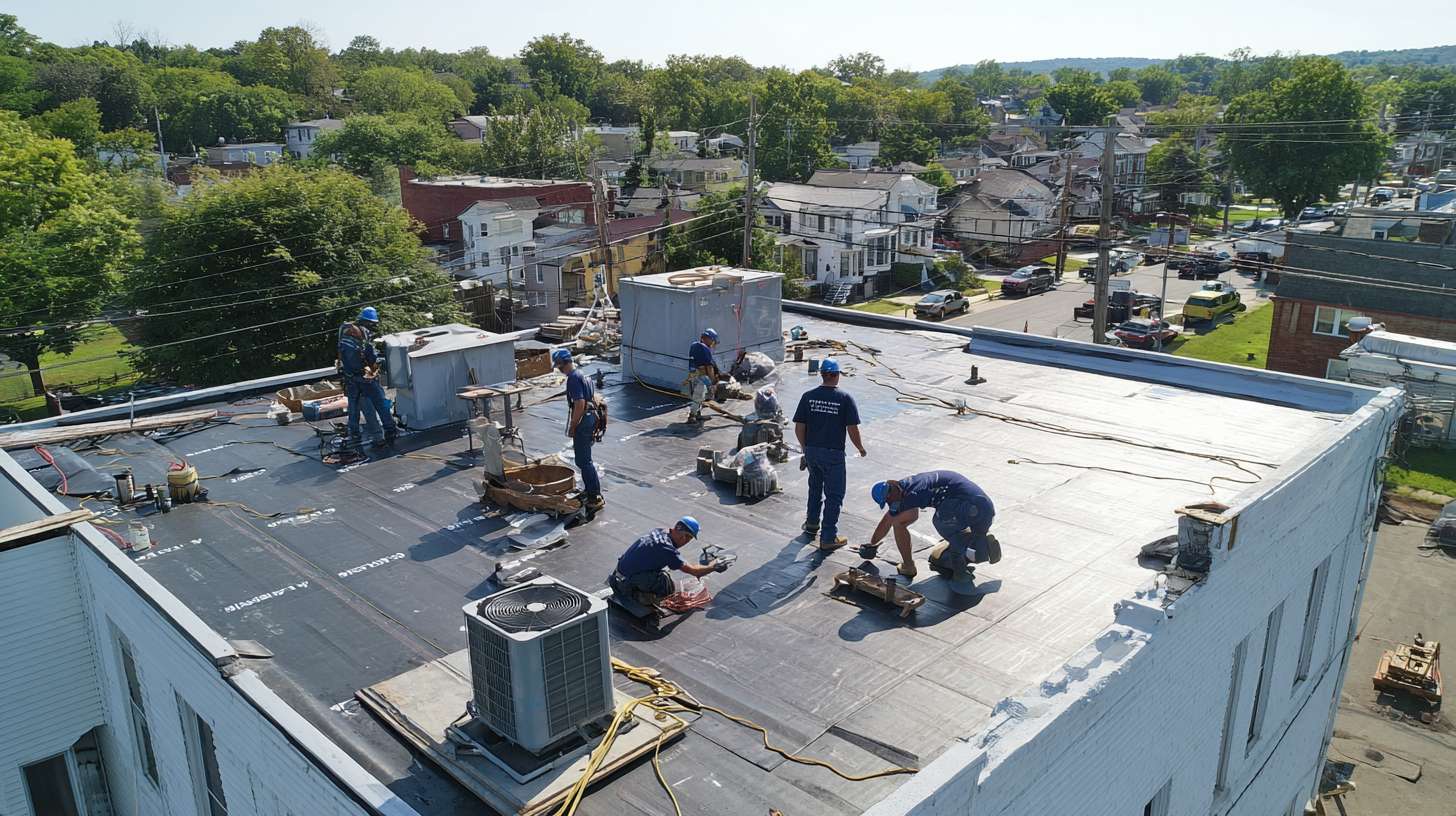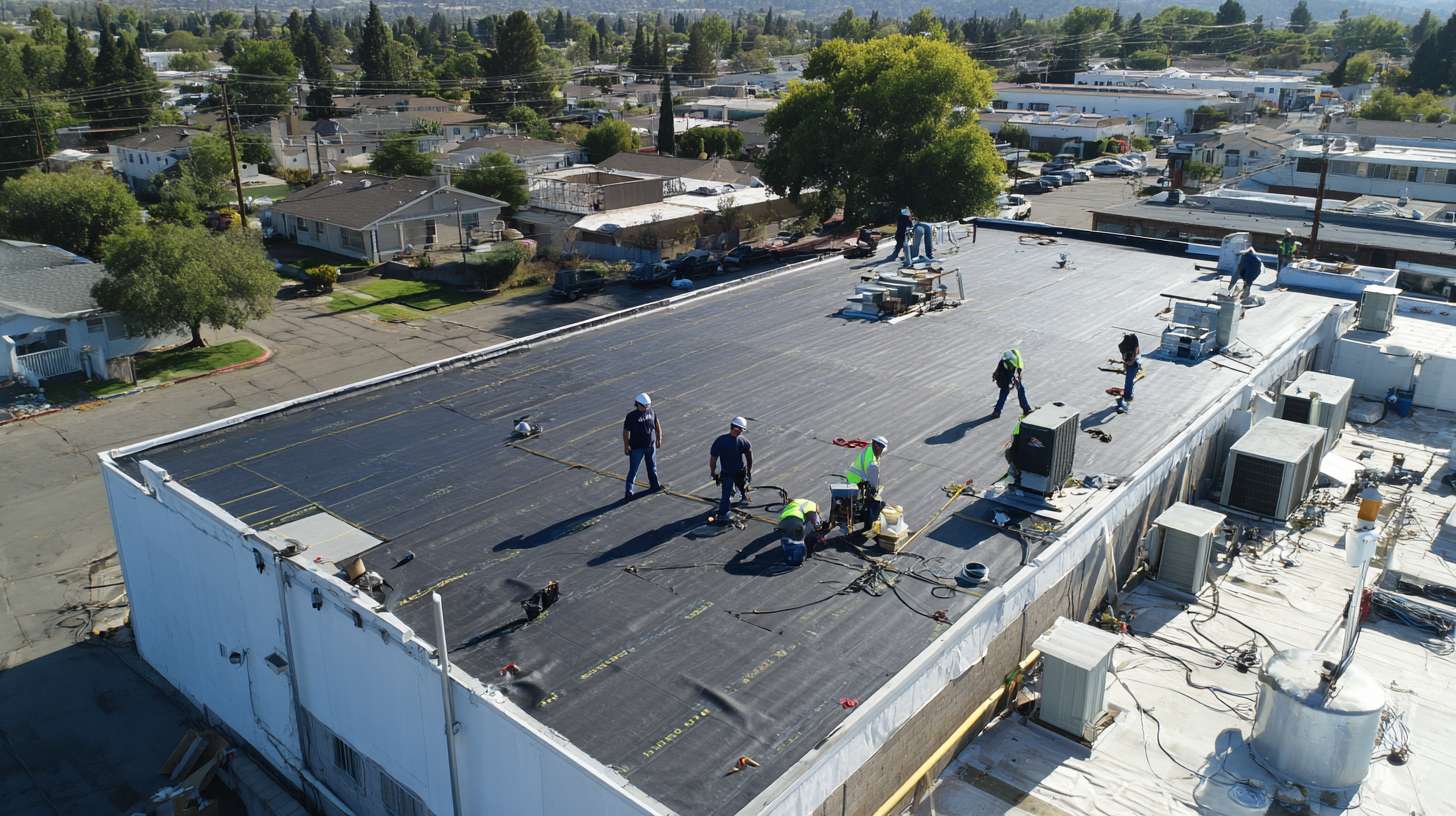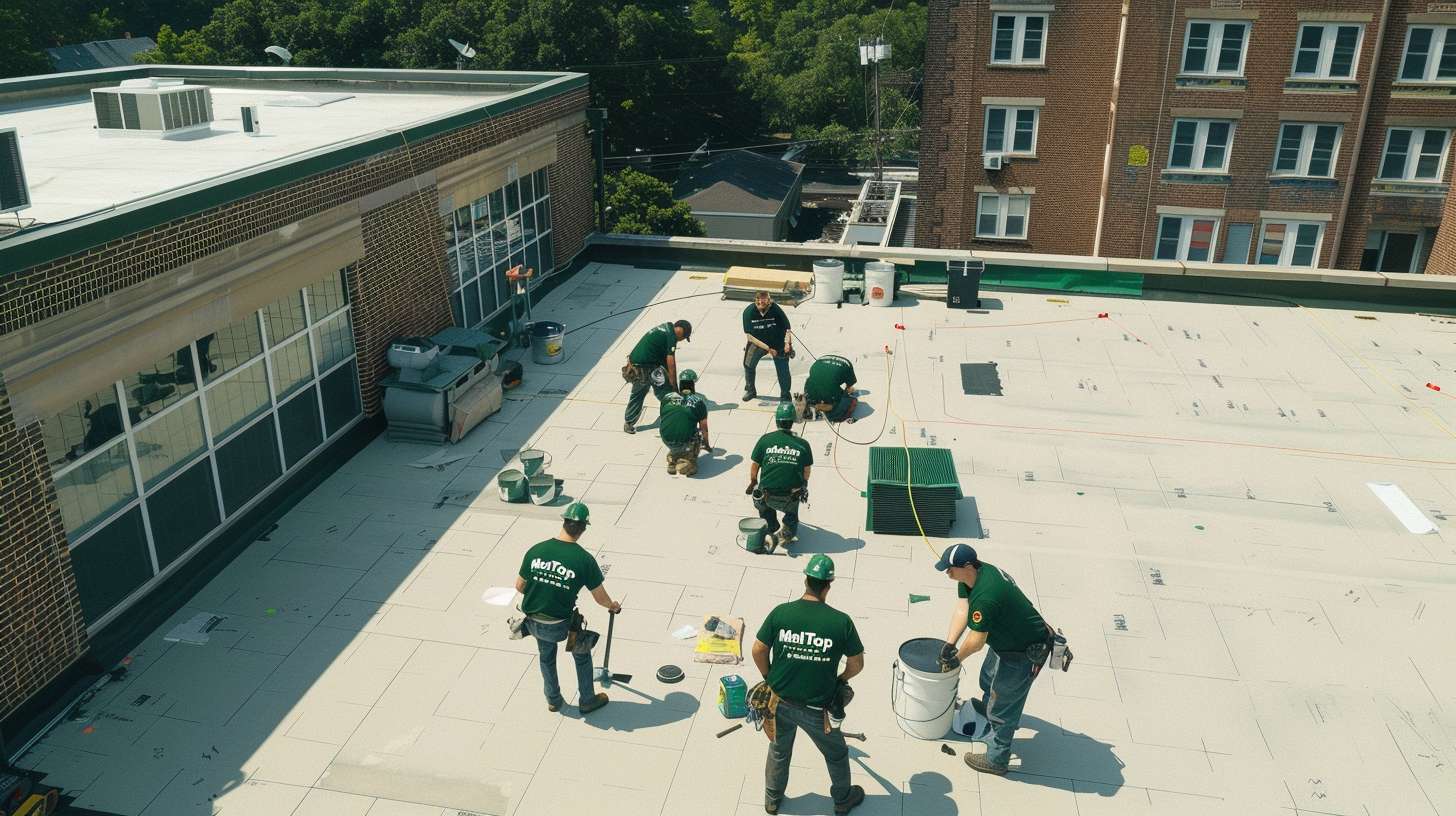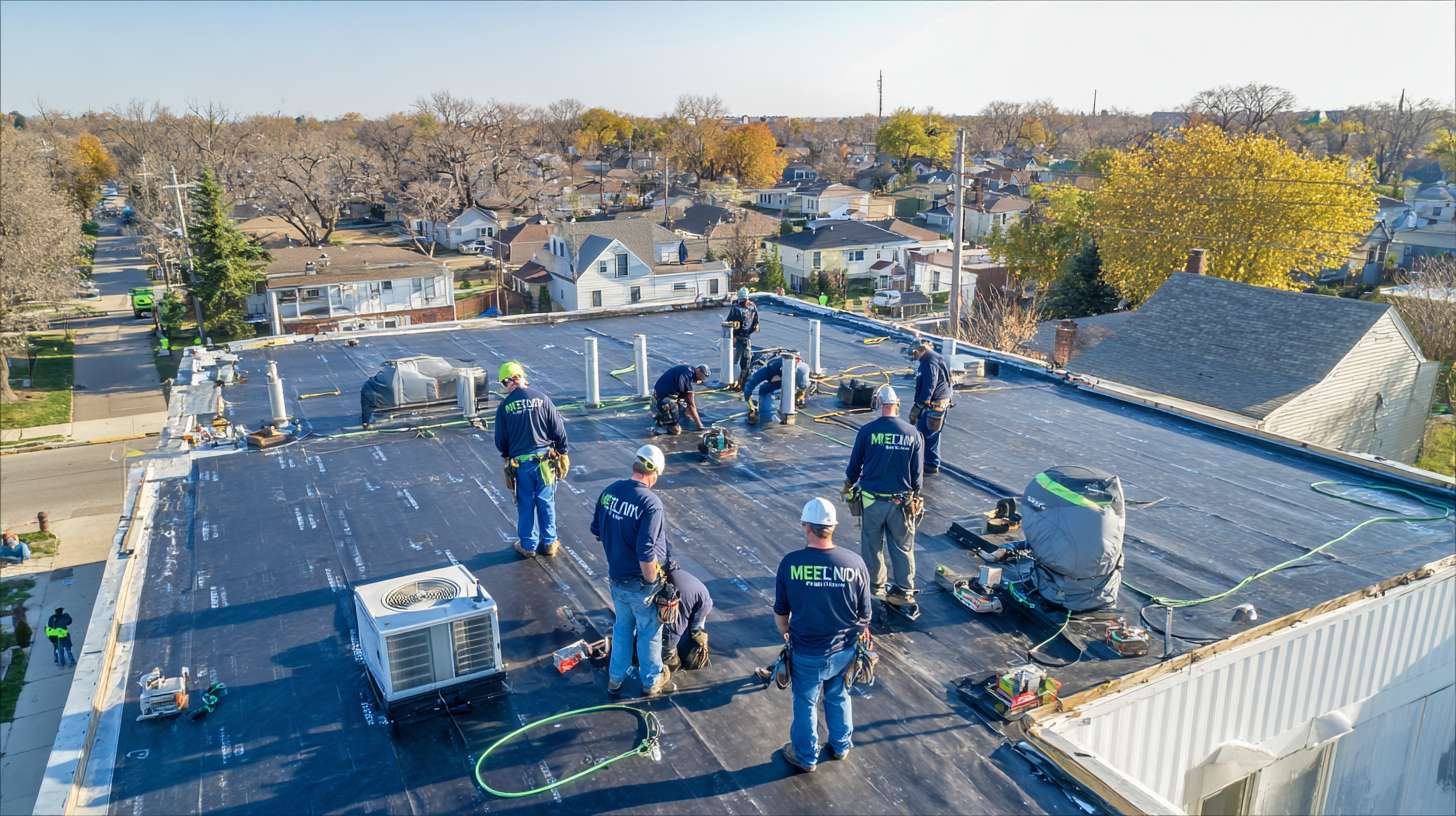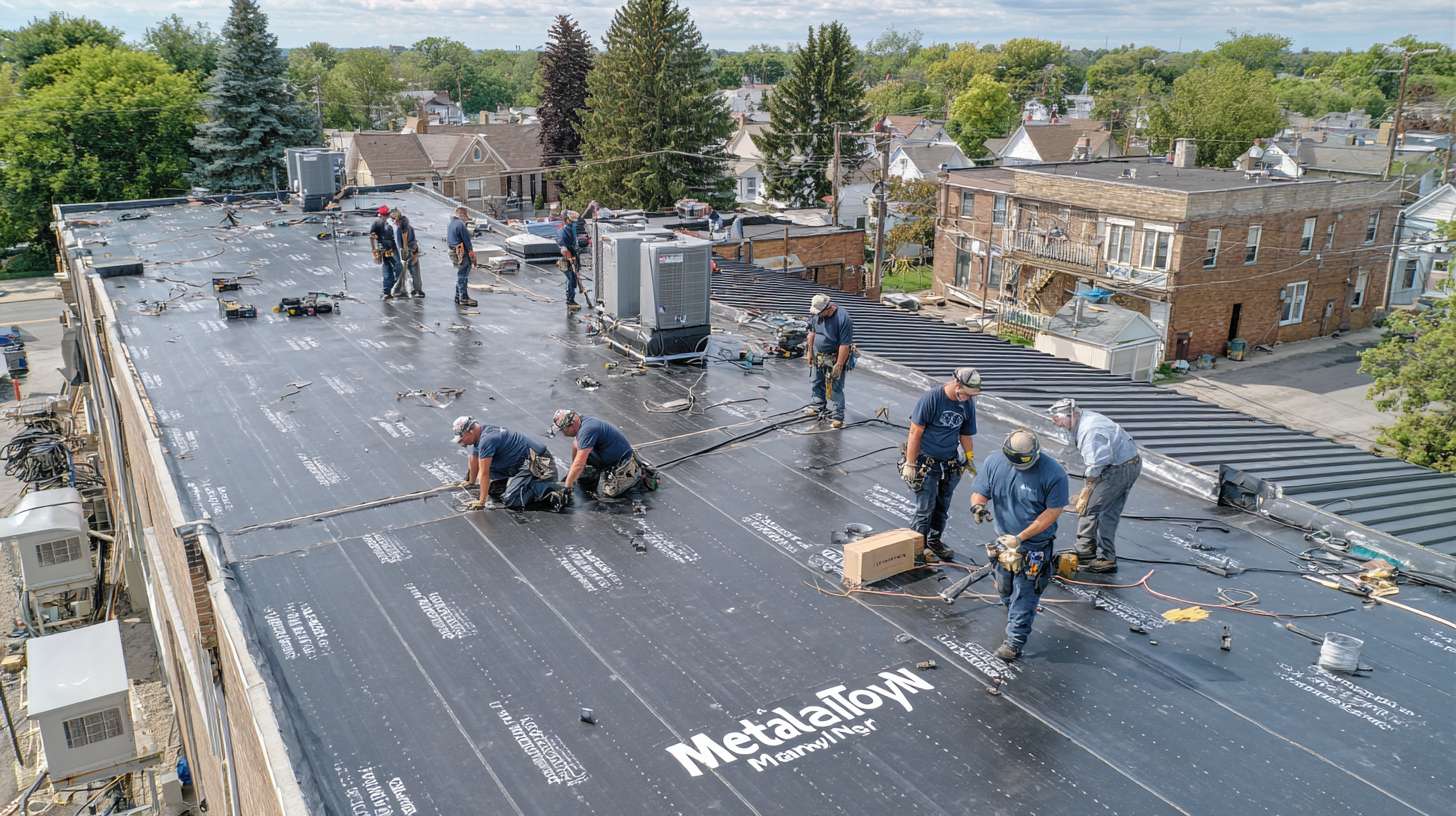
Expert Flat Roof Leak Detector Services in Nassau County, NY
Here’s something most Nassau County property owners don’t realize: when you see water staining on your ceiling or a drip coming through your flat roof, you’re almost never looking at the spot where water actually entered the roof. Because of how flat roofs are layered and how water travels horizontally through insulation and membrane seams, the true entry point is typically 5-20 feet away from where you see the problem inside. That’s why the common approach-patching the area directly above the wet spot-usually fails within weeks or months. Professional flat roof leak detection in Nassau County costs $350-$850 depending on building size and complexity, but it eliminates the expensive guesswork cycle where you pay for repairs that don’t fix the actual problem.
At Platinum Flat Roofing, we’ve spent nearly two decades tracking down mystery leaks on commercial and residential flat roofs across Nassau County. What makes our approach different is simple: we don’t sell a repair until we can prove where the leak starts with physical evidence-infrared images, moisture meter readings, water test documentation-not assumptions based on where you see water inside.
Why Flat Roof Leaks Are So Hard to Find (And Why Your Last Repair Probably Failed)
In a Lynbrook medical office last fall, the property manager had already paid three different contractors to “fix” a persistent leak above the waiting room. Each contractor patched a different section of the roof based on where they saw staining on the ceiling tiles. Each repair stopped the leak for a few weeks, then it came back. When we performed infrared scanning and moisture mapping, we found the actual entry point was 14 feet away from the visible damage, tucked under a rooftop HVAC unit curb flashing that nobody had thought to inspect carefully. One proper repair at the real source, and the leak hasn’t returned in over a year.
This happens constantly because flat roof water intrusion follows rules most people don’t understand. Water enters through a tiny gap-maybe a split seam, a lifted flashing edge, or a puncture in the membrane-then travels horizontally along the top of the insulation layer or between membrane plies. It follows the path of least resistance, moving along tapered sections, pooling in low spots, until it finally finds a way through the deck and shows up inside your building far from where it entered. This is called capillary action and lateral migration, which just means water sneaks sideways through flat roof layers before dripping down.
Making this even more complicated in Nassau County: our weather patterns. We get intense summer thunderstorms that dump water fast, creating temporary ponding that finds entry points only when the roof is overwhelmed. We also get freeze-thaw cycles in winter that open up seams and cracks that stay sealed the rest of the year. A leak that only appears during nor’easters or after heavy spring rains is especially difficult to trace because you can’t see it happening under normal conditions.
How Professional Flat Roof Leak Detection Actually Works
Finding a leak on a flat roof isn’t guesswork-it’s a methodical, multi-step process using specific tools and techniques. Here’s exactly how we approach every leak detection job at Platinum Flat Roofing:
Visual Inspection and Pattern Analysis
Every leak detection starts with a detailed roof surface inspection, but we’re not just looking for obvious holes. We’re analyzing wear patterns, studying where ponding water sits after rain, checking every penetration (vents, skylights, drains, HVAC equipment), examining all perimeter flashings, and noting areas where the membrane shows surface cracks, blistering, or separation at seams. On a Wantagh strip mall roof, we found the leak source by noticing a barely-visible scuff pattern near a rooftop access hatch-foot traffic had gradually worn through the top membrane layer right along a seam, creating an entry point only visible when you knew what to look for.
We also inspect from inside whenever possible. The pattern of interior water damage tells a story: multiple stains in a line suggest water traveling along a structural member; staining that appears only on one side of a room points to perimeter flashing issues; ceiling damage that spreads in a fan pattern often indicates a central roof penetration leak with water dispersing as it travels through insulation.
Infrared Thermal Imaging
This is where leak detection becomes scientific. Infrared cameras detect temperature differences across the roof surface that are invisible to the human eye. Wet insulation retains heat differently than dry insulation-during the day it heats up slower, at night it cools down slower. When we scan a flat roof with thermal imaging equipment (usually in early morning or evening for best contrast), wet areas show up as distinct temperature anomalies.
The technology doesn’t directly “see” water, but it maps moisture patterns with remarkable accuracy. On a large commercial building in Rockville Centre, infrared scanning revealed a moisture pattern extending across 1,200 square feet, but the actual leak entry point was a single 3-inch gap where a roof drain clamping ring had separated from the membrane. Without thermal imaging, we would have been looking at potentially tearing up and replacing a huge section of roof. With the infrared evidence, we made a targeted $890 repair instead of a $15,000+ roof replacement.
Moisture Meter Testing
Infrared gives us the big picture; moisture meters give us precision. We use two types: non-invasive meters that scan the surface without penetrating the membrane (perfect for detecting moisture in the top layers), and probe meters that we carefully insert through the membrane in suspected areas to check moisture content at different depths in the insulation and deck.
This matters because not all roof moisture comes from active leaks. Sometimes we find elevated moisture readings from condensation issues, from construction defects where moisture was trapped during installation, or from ancient leaks that have already been sealed but left moisture behind in insulation layers. Distinguishing between old trapped moisture and active leak paths prevents unnecessary repairs.
Controlled Water Testing
When the leak source isn’t obvious after inspection, infrared, and moisture mapping-or when we need to confirm a suspected entry point before starting repairs-we perform controlled water testing. This means isolating a section of roof, flooding it deliberately with a hose or specialized equipment, and watching (from inside) to see if and where water appears. We can test specific flashings, seams, or penetrations one at a time to definitively identify the problem.
On a Merrick townhouse with a perimeter gutter system, the homeowner had water appearing at the same interior wall location during every heavy rain. Visual inspection showed several possible entry points: coping cap gaps, deteriorated gutter seals, and questionable parapet flashing. Rather than repair all of them (at significant cost), we performed targeted water testing on each suspected area. The leak revealed itself at a specific 18-inch section where the gutter mounting bracket had punctured the membrane, allowing us to make a precise $425 repair instead of a multi-thousand-dollar perimeter rebuild.
Common Flat Roof Leak Sources in Nassau County Buildings
After eighteen years tracking down leaks, certain patterns emerge. Here are the most frequent culprits we find on Nassau County flat roofs:
| Leak Source | Why It Happens | Detection Method | Typical Repair Cost |
|---|---|---|---|
| Roof drain assemblies | Clamping rings separate from membrane; debris causes backup and overflow; freeze damage | Visual inspection + controlled water testing | $380-$750 per drain |
| HVAC penetrations and curbs | Flashing deteriorates from heat exposure; equipment vibration loosens seals; improper pitch | Infrared scanning + visual inspection | $525-$1,400 per unit |
| Membrane seams and field splits | UV degradation; foot traffic; thermal cycling; poor installation technique | Infrared + moisture meters | $8-$18 per linear foot |
| Perimeter flashings and copings | Wind uplift; thermal expansion/contraction; fastener corrosion; sealant failure | Visual inspection + water testing | $25-$65 per linear foot |
| Ponding water areas | Roof deflection; inadequate slope; insulation compression; membrane degradation accelerated by standing water | Infrared + extended observation | $1,200-$4,800+ depending on cause |
| Skylight assemblies | Condensation mistaken for leaks; gasket deterioration; improper counter-flashing; thermal stress cracks | Visual + controlled water testing + condensation analysis | $650-$2,100 per skylight |
What a Professional Leak Detection Service Includes
When you hire Platinum Flat Roofing for leak detection in Nassau County, here’s exactly what the process involves and what you receive:
Initial consultation and problem history: We start by understanding when the leak appears (every rain, only heavy storms, specific wind directions, seasonal patterns), where you see water inside, and what repairs have already been attempted. This history often points us toward specific roof areas or leak mechanisms. A leak that only happens during winter storms with east winds, for example, tells us to focus on the building’s eastern perimeter where wind-driven rain is forcing water through gaps that gravity-fed rain doesn’t find.
Comprehensive roof surface documentation: We photograph the entire roof, noting every penetration, all drainage components, flashing conditions, membrane condition, and any visible defects. This creates a reference record and helps identify changes over time if leaks recur or new problems develop.
Infrared thermal scanning: Conducted during optimal conditions (usually early morning or evening, ideally 12-24 hours after rainfall when temperature differentials are strongest), this reveals moisture patterns invisible to visual inspection. We provide thermal images with analysis showing moisture extent and suspected entry points.
Moisture meter mapping: Systematic scanning across suspect areas with both non-invasive and probe-type meters, documenting moisture content at various depths. This distinguishes between surface moisture, insulation saturation, and deck penetration-essential for understanding whether you’re dealing with an active leak, trapped historic moisture, or condensation issues.
Targeted water testing (when needed): If the leak source isn’t definitively identified through inspection and scanning, we perform controlled flooding of specific roof sections to trigger and observe the leak under controlled conditions. This provides absolute confirmation before repairs begin.
Written diagnostic report with photo documentation: You receive a detailed report showing exactly where water is entering, how it’s traveling to the interior leak location, what’s causing the failure, and what specific repairs are needed. This includes marked-up photos, infrared images, and a prioritized repair recommendation. This documentation is invaluable if you’re dealing with insurance claims, warranty disputes, or need to get competitive bids for the repair work.
Repair cost estimate: We provide detailed pricing for the repairs needed to solve the identified leak source-not a whole-roof replacement unless that’s genuinely necessary, and not a guess-and-patch approach that might fail.
DIY Flat Roof Leak Detection: What You Can (and Can’t) Do Yourself
Many Nassau County property owners want to attempt finding a flat roof leak themselves before calling professionals, which is understandable. Here’s an honest assessment of what’s realistic:
What you can do: Basic visual inspection from inside (mapping water stains and leak patterns), safe roof access for obvious defect inspection (large cracks, detached flashings, missing membrane sections), cleaning debris from drains and checking for obvious drain problems, and documenting when leaks occur relative to weather conditions. These steps cost nothing and sometimes reveal simple, fixable problems like clogged drains or a loose vent pipe flashing you can re-seal with roof cement.
What’s difficult without equipment: Identifying the true entry point when it’s distant from interior damage, distinguishing between multiple potential leak sources, detecting membrane failures that aren’t visible on the surface (subsurface splits, failing seams that look intact), and safely accessing all roof areas including around equipment and at roof edges.
What requires professional tools: Infrared thermal imaging (cameras cost $3,000-$15,000 and require training to interpret correctly), accurate moisture content measurement at various depths, controlled water testing without causing additional damage or flooding interior spaces, and documentation sufficient for insurance claims or warranty work.
When DIY becomes expensive: The biggest risk isn’t the cost of detection tools-it’s the cost of repairing the wrong location. We regularly work with Nassau County property owners who spent $800-$2,500 on patch repairs that didn’t solve their leak because the repair targeted the symptom (interior water location) rather than the cause (actual entry point). Professional detection typically costs $350-$850, but saves that amount many times over by ensuring repairs address the real problem the first time.
How Weather and Building Types Affect Leak Detection in Nassau County
Nassau County’s climate and building stock create specific leak detection challenges worth understanding. Our proximity to the Atlantic means we get coastal storm systems that bring wind-driven rain from directions that don’t stress roof assemblies during normal weather. A flat roof might handle typical summer thunderstorms perfectly, but fail during nor’easters when sustained east winds push water horizontally into parapet flashings and coping gaps that never see water pressure under normal conditions.
Freeze-thaw cycling from November through March causes membrane materials and sealants to expand and contract repeatedly. Small gaps that self-seal during warm weather can open up during cold snaps, creating seasonal leaks that are nearly impossible to find during summer inspections. We’ve worked on several cases where leaks only appeared during January-February cold spells, requiring winter leak detection work (more challenging but definitely possible) or waiting for specific weather conditions to recreate the problem.
Building age and construction type also matter. Nassau County has thousands of commercial buildings from the 1960s-1980s with built-up roof (BUR) systems over metal decks. These older assemblies often have multiple layers from previous reroofing projects, creating complex moisture pathways. Water can enter through the top membrane, travel between layers, and emerge at completely unexpected interior locations. Newer TPO and EPDM single-ply systems are typically easier to diagnose because there are fewer layers for water to travel through, though seam failures in these systems can be nearly invisible without proper detection equipment.
The Real Cost of Ignoring Small Leaks
Here’s what happens when Nassau County property owners delay leak detection and hope small leaks resolve themselves: a minor membrane split that starts allowing occasional water intrusion during heavy rains gradually saturates the insulation layer underneath. Wet insulation loses R-value (making your building less energy efficient and increasing heating/cooling costs), adds significant weight to the roof structure, and creates conditions for mold growth and wood deck deterioration.
On a Baldwin commercial property, the owner ignored a “small occasional leak” for nearly two years because it only appeared a few times per season and seemed insignificant. When we finally performed leak detection and opened up the affected area for repairs, we found 300 square feet of completely saturated insulation, substantial deck rot requiring replacement, and mold remediation needs. What started as a problem that would have cost $650 to fix properly became a $8,200 repair project. The kicker: the entire leak was caused by a 7-inch split in a field seam that would have taken about 45 minutes to repair if caught early.
Why Leak Detection Should Always Come Before Roof Replacement Quotes
One of the most common scenarios we encounter: a Nassau County property owner has a leak, gets a roof inspection from a contractor, and receives a quote for complete roof replacement ranging from $12,000 to $45,000+ depending on building size. The contractor genuinely couldn’t find the specific leak source during a visual inspection, so recommended replacement as the certain solution. Sometimes that’s appropriate-but often it’s not.
Professional leak detection frequently reveals that what seems like a “failing roof” is actually a localized problem: a single bad flashing detail, one compromised seam, a poorly installed penetration, or a drainage issue. A $600 leak detection investment followed by a $1,800 targeted repair saves $10,000+ compared to unnecessary replacement. Even when the roof does need replacement eventually, pinpointing current leak sources lets you make temporary repairs to buy another 2-5 years before committing to the larger project.
We make this recommendation constantly: before agreeing to any flat roof replacement quote, invest in proper leak detection. If multiple leak sources are found throughout the roof, or if the membrane shows widespread deterioration, replacement makes sense. But if detection reveals one or two specific problems, targeted repairs are almost always the smarter financial decision.
Questions to Ask Your Nassau County Leak Detection Contractor
Not all “leak detection” services are equal. Here’s what to ask before hiring:
“What specific detection equipment do you use?” You want to hear about infrared thermal cameras, moisture meters (both types), and water testing capabilities-not just “I’ll take a look at the roof.” Visual inspection alone misses most leak sources on flat roofs.
“Do you provide written documentation with photos and thermal images?” Verbal explanations aren’t sufficient, especially if you need documentation for insurance claims, property transactions, or getting competitive repair bids. A professional service provides detailed reports you can reference and share.
“How much does detection cost separately from repair?” Be cautious of “free leak detection” offers-these are typically sales calls where someone does a quick visual inspection, tells you the roof needs replacement, and provides a sales quote. Legitimate leak detection is a skilled service worth paying for, typically $350-$850 in Nassau County depending on building complexity, and should be available as a standalone service whether or not you hire that contractor for repairs.
“Can you show me examples of leak detection reports from previous jobs?” This demonstrates they actually document their findings professionally rather than just pointing at roof areas and making recommendations.
“What happens if you can’t definitively locate the leak source?” Honest answer: sometimes leaks are extraordinarily difficult to pinpoint, especially intermittent ones that don’t appear during inspection. Ask how they handle these situations-do they recommend additional testing, monitoring during specific weather conditions, or systematic exploratory investigation?
When to Schedule Flat Roof Leak Detection in Nassau County
Timing affects both the urgency of getting detection service and the effectiveness of certain detection methods:
Immediate detection is needed when: you see active water intrusion (dripping, spreading ceiling stains, visible water accumulation); when leaks appear near electrical systems, equipment, or valuable inventory; when you’re experiencing leaks in occupied spaces affecting business operations or living conditions; or when you’re preparing for a property sale or lease and need documentation of roof condition.
Optimal detection conditions: Infrared thermal imaging works best 12-24 hours after rainfall when wet insulation retains temperature differences but the roof surface has dried. Early morning or evening scans provide better thermal contrast than midday scans. For Nassau County, spring and fall often provide ideal conditions-moderate temperatures, regular rainfall for natural roof wetting, and good weather windows for actual detection work.
Seasonal considerations: Some leaks only appear during specific seasons due to freeze-thaw cycling (winter), intense rainfall (summer thunderstorms), or wind-driven rain from coastal storms (fall/winter nor’easters). If your leak is seasonal, detection work should be scheduled during or immediately after the season when it appears, not six months later when conditions have changed.
Before and after roof work: Schedule detection before any significant roof repair or restoration project to ensure work addresses actual problems, not guesses. Consider follow-up detection after major repairs to document that leak sources have been properly resolved-this provides peace of mind and documentation if warranty issues arise later.
The bottom line: if you have a flat roof leak in Nassau County, professional detection is the smartest first investment you can make. It costs a fraction of what you’ll spend on failed repair attempts or premature roof replacement, and it gives you specific, documented answers about what’s wrong and what it will realistically cost to fix properly. At Platinum Flat Roofing, we’ve built our reputation on finding leaks other contractors couldn’t locate, documenting exactly what we find, and providing honest recommendations about whether repair or replacement makes sense for your specific situation. Call us at [phone number] to schedule a leak detection service and finally get the answers-and the dry building-you’ve been looking for.