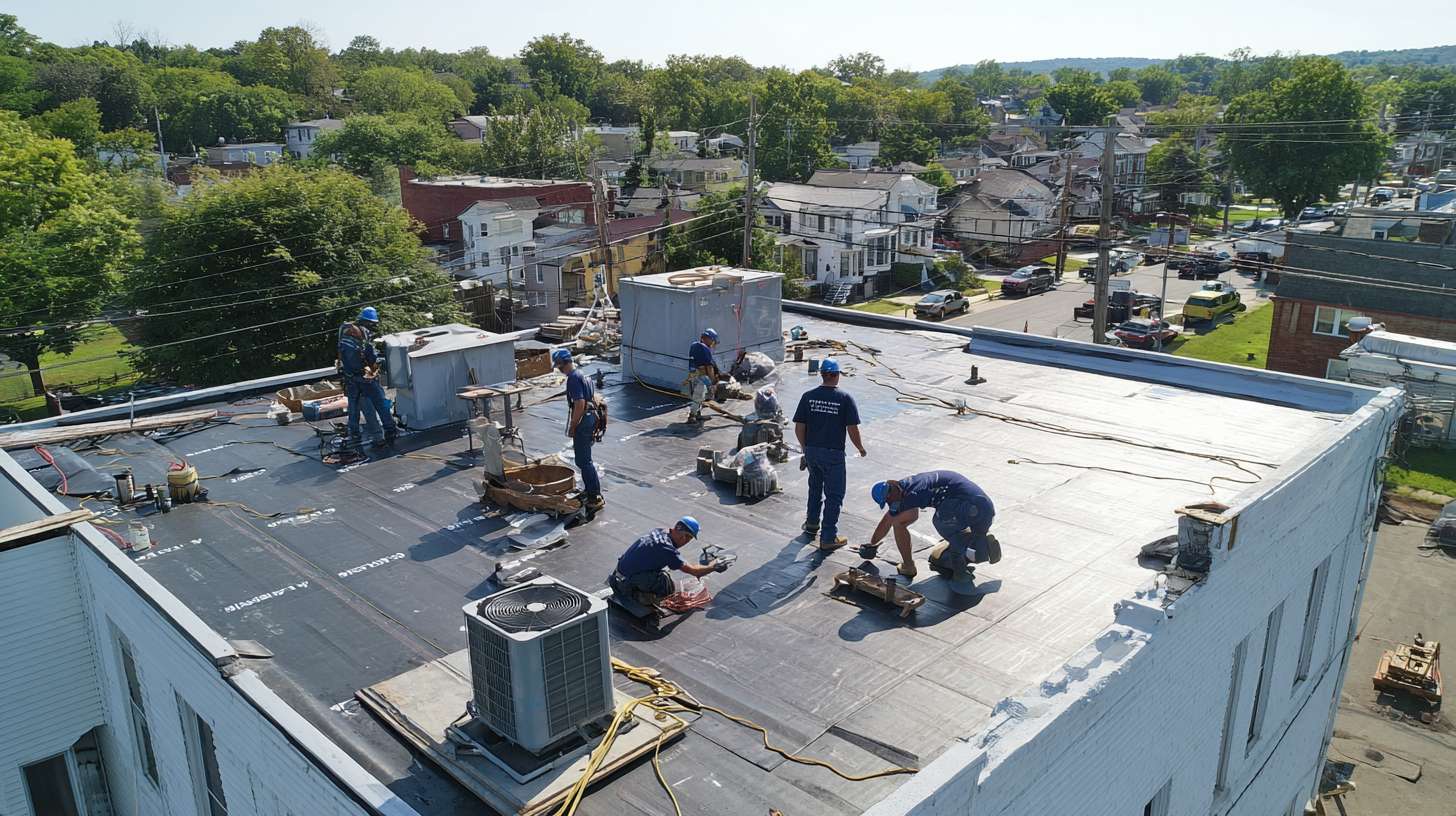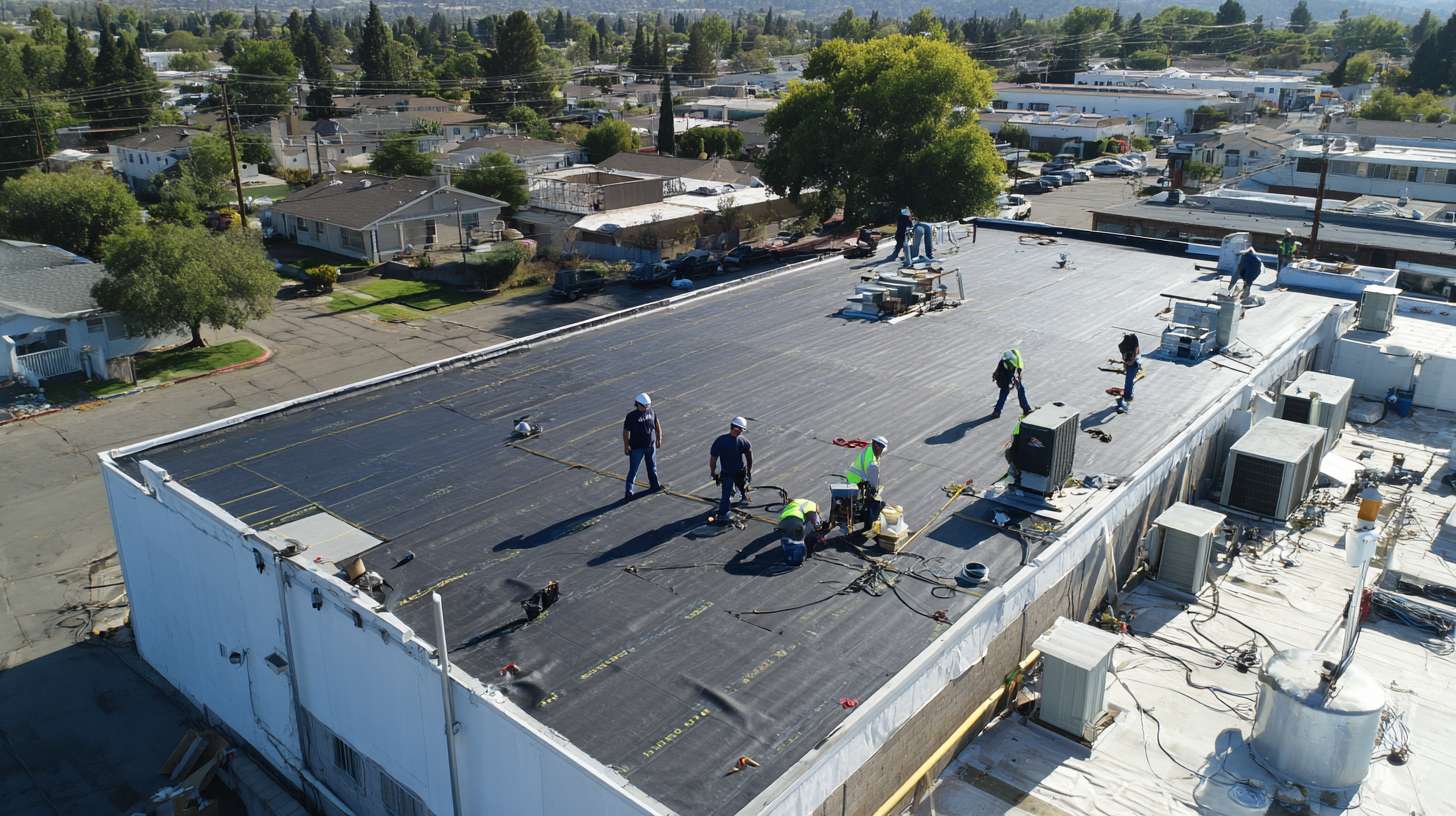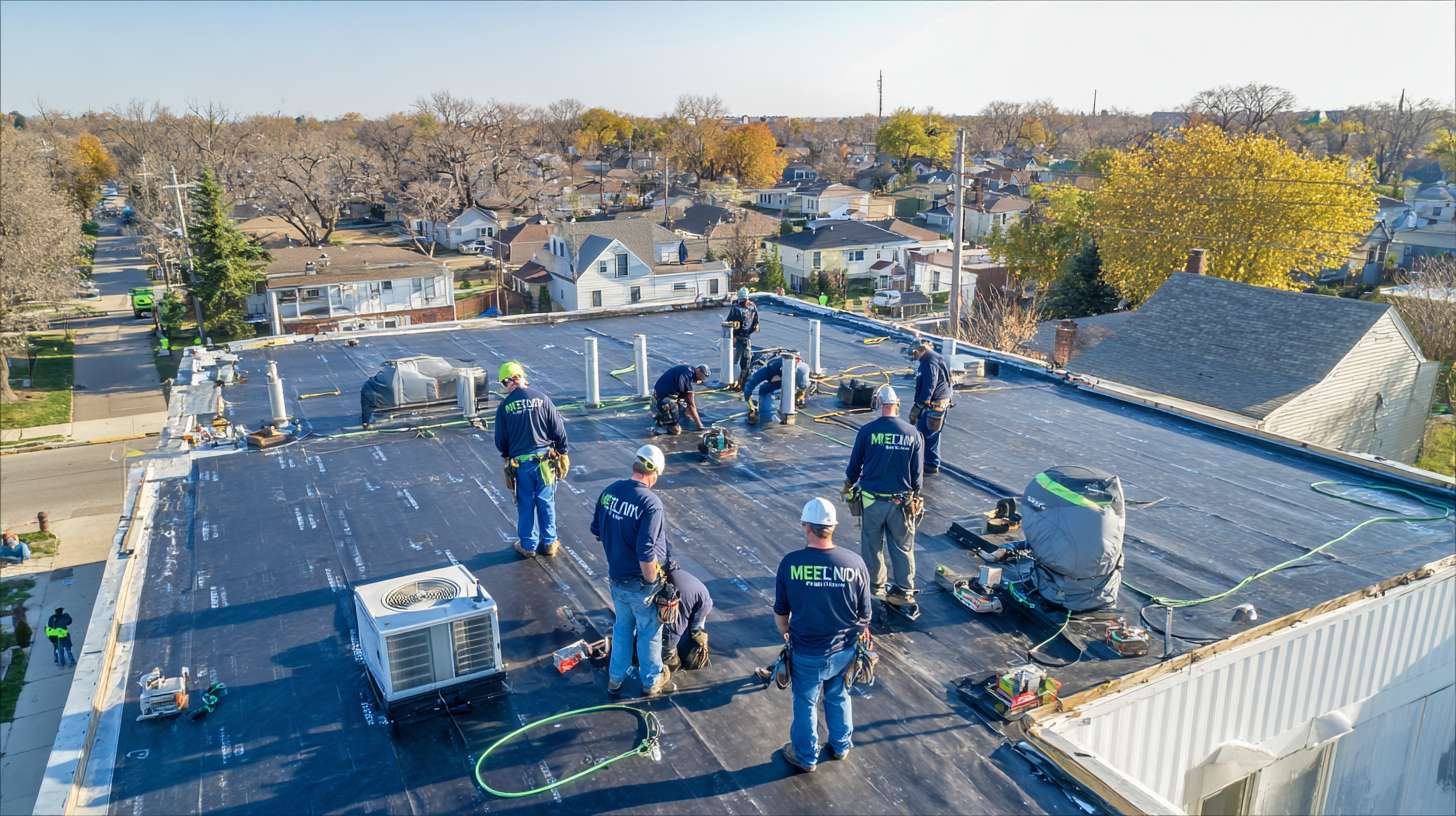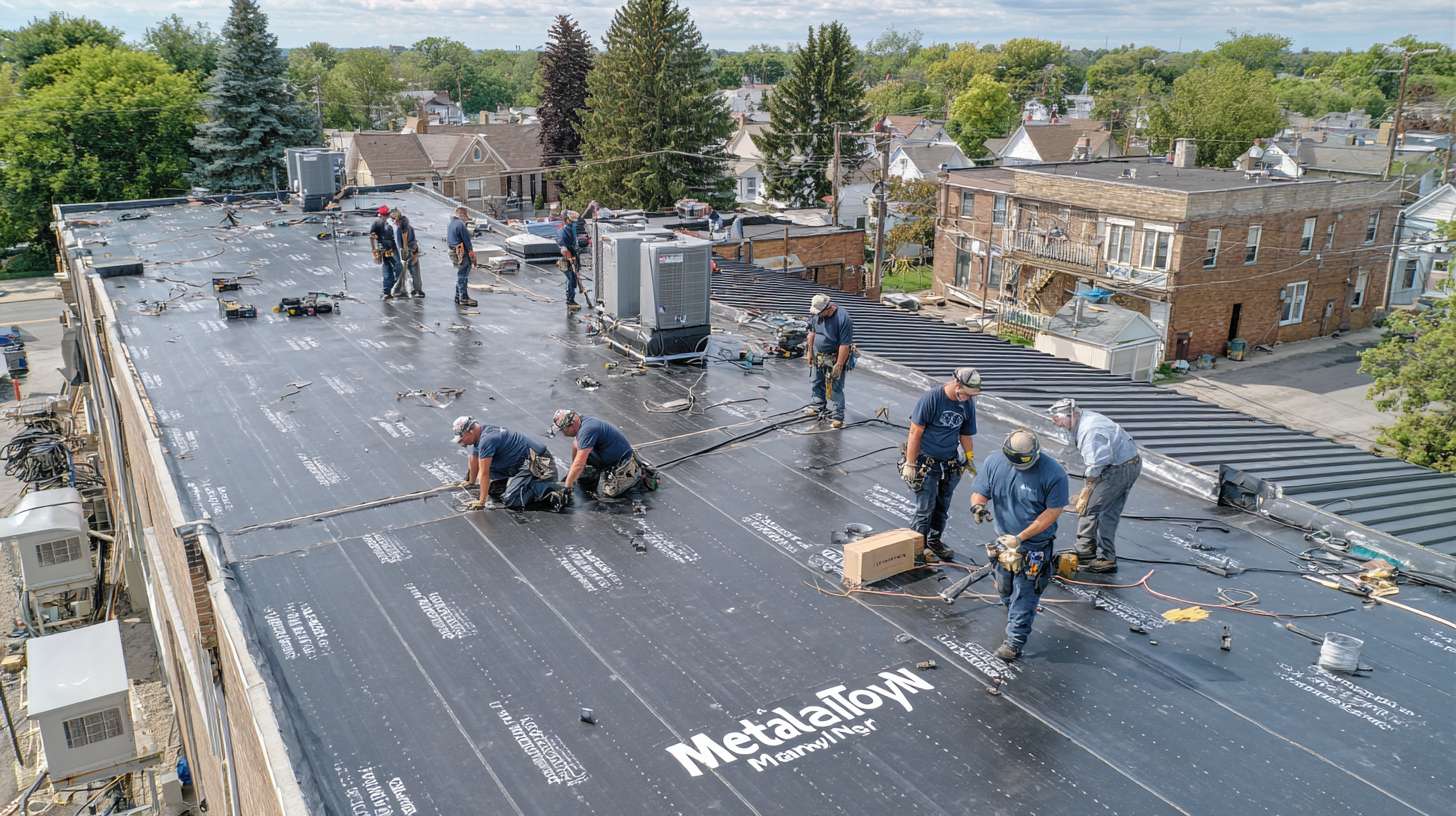
What’s the Flat Roof Replacement Average Cost in Nassau County?
In Nassau County, the average price of flat roof replacement ranges from $11,000 to $22,000 for a typical 1,000-1,200 square foot roof, assuming a full tear-off down to the deck, wood repair allowance up to 15%, polyiso insulation to meet current energy codes, a single-ply TPO or EPDM membrane, all new metal flashings and edge work, and standard disposal. That figure only makes sense when you know what’s actually included-because I’ve seen $9,500 quotes that leave out insulation entirely and $28,000 quotes for essentially the same roof that comes with a transferable warranty and thirty-year membrane. The real question isn’t how much does a flat roof replacement cost, it’s what you’re buying at each price point and which items will bite you later if they’re missing from the estimate.
I’ve been pricing flat roofs across Nassau County since 2007, from small Cape Cod homes in Wantagh with garage roofs to three-story walk-ups in Hempstead, and the single biggest estimating mistake homeowners make is comparing bottom-line numbers without understanding the layers underneath. A proper flat roof replacement quote has at least seven major line items-tear-off and disposal, deck inspection and repair, insulation/code upgrades, membrane and adhesive, flashings and terminations, permits and overhead, and labor-and when any one of those is vague or missing, your “average price for flat roof replacement” estimate is smoke.
The Seven Cost Components That Make Up Your Flat Roof Replacement Total
Let’s reverse-engineer a real 1,100 square foot single-family flat roof over living space in Oceanside that we quoted last fall at $16,200. The homeowner had two other bids-one at $12,800 and one at $19,400-and couldn’t figure out the gap until we laid the estimates side by side and showed what was in writing versus what was assumed. Here’s how our number broke down:
- Tear-off and disposal: $2,850 (complete removal of two layers of modified bitumen down to 5/8″ plywood deck, dumpster, labor to carry material down ladder to driveway)
- Deck inspection and repair allowance: $1,650 (15% allowance-165 sq. ft. of plywood replacement at $10/sq. ft. including fasteners and sealing)
- Insulation upgrade: $2,970 (three inches of polyiso rigid board to bring roof assembly to R-30, taped seams, code-compliant attachment)
- Membrane and adhesive: $4,400 (60-mil white TPO fully adhered, seams hot-air welded, twenty-year manufacturer labor-and-material warranty)
- Flashings, edge metal, and terminations: $2,200 (new aluminum drip edge, copper step flashings at brick chimney, TPO-coated termination bars at parapet walls, four new PVC pipe boots)
- Permits, insurance, overhead: $1,320
- Labor (project management, supervision, cleanup): $810
Total: $16,200. Every one of those lines is in writing with quantities, and the deck-repair allowance has a not-to-exceed cap and a refund clause if we use less. The $12,800 bid? It said “repairs as needed” with no dollar figure, listed insulation as “code minimum” without specifying thickness or R-value, and gave a membrane brand but no mil thickness or warranty term. The $19,400 bid included a premium sixty-mil Duro-Last system with a thirty-year NDL warranty and factored in a twenty percent deck-repair allowance because the estimator saw sagging near the drain and expected worse underneath.
When someone asks what is the cost of a flat roof replacement, they’re really asking what it costs to do it right-meaning the roof won’t leak, meets current building and energy codes, and the price they sign is the price they pay unless we open the deck and find structural damage nobody could have seen from below.
Why Size Alone Won’t Tell You the Average Price of Flat Roof Replacement
Square footage matters, but access and configuration matter nearly as much. A 900 square foot flat roof on a detached garage in Massapequa with truck access and an eight-foot ceiling might run $9,200. A 950 square foot roof deck on a third-story addition in Garden City with no driveway access, material carried up interior stairs, and neighbor setback restrictions that require hand-carrying every sheet of plywood? That’s $13,800 even though it’s almost the same size.
Labor to strip and re-roof accounts for roughly forty to fifty percent of your total flat roof replacement cost in Nassau County, and the second a crew can’t back a truck up to the building or use a conveyor to move debris, every hour stretches. I’ve priced identically sized roofs in the same week-one in Levittown where we parked in the driveway and tossed torn-off membrane straight into the dumpster, another in Long Beach two blocks from the beach where parking permits, narrow side yards, and carrying material through the house added $2,100 to the quote.
Multiply your square footage by $10-$20 per square foot as a rough starting point, then adjust for these access factors:
- Ground-level or low-pitch roof with truck access: lower end
- Second or third story, ladder access only: add $1.50-$2.50/sq. ft.
- No driveway or street parking, material carried more than fifty feet: add $1-$2/sq. ft.
- Tight urban site with dumpster permit and neighbor coordination: add $800-$1,200 flat fee
The same principle applies to the number of roof planes, parapets, and penetrations. A simple rectangular roof with one drain is cheaper per square foot than a roof with three different levels, four HVAC curbs, two chimneys, and six plumbing vents, even if the total area is identical.
Tear-Off Costs and the Hidden Variable: What’s Underneath
On Long Island, most flat roofs I open have at least one layer of modified bitumen or built-up roofing, and about thirty percent have two layers because someone in the 1990s recovered an old tar-and-gravel roof instead of tearing off. Tear-off and disposal for a single layer runs $2.25-$3.50 per square foot; double that layer count and you’re closer to $3.75-$5.00 per square foot because the weight doubles, the dumpster fills faster, and the labor hours climb.
New York State code requires a complete tear-off when you’re adding another layer would exceed two layers total or when the existing roof system is damaged or non-compliant. In Nassau County, that means virtually every replacement I quote is a full tear-off. The cost includes pulling up membrane or shingles, removing all fasteners, scraping residual adhesive if it’s interfering with the new deck inspection, and hauling material to the dumpster or trash chute.
On a 1,000 square foot roof, budget $2,500-$3,200 for tear-off and disposal assuming one layer. If the estimator hasn’t been on your roof or seen photos and the quote just says “remove existing roofing,” ask how many layers the price assumes. I’ve had homeowners sign a contract for a one-layer tear-off, we show up and find two layers plus an old coal-tar base sheet, and suddenly there’s a $1,800 change order on day one.
Deck Repair: The Single Biggest Driver of “How Much Should a Replacement Flat Roof Cost” Surprises
Here’s the hard truth about flat roof pricing: you can’t know the true cost until the old membrane is off and you see the plywood or OSB deck underneath. Every honest estimate I write includes a deck repair allowance-typically ten to twenty percent of the roof area-with a per-square-foot price for replacement sheathing and a not-to-exceed cap.
Flat roofs pond water. Even a properly sloped roof will have low spots where water sits for a day or two after rain, and over fifteen or twenty years that moisture works its way through seams and worn spots in the membrane, soaks into the plywood, and starts rot. On a 1,200 square foot roof, I routinely find 80-150 square feet of soft, spongy, or delaminated decking around drains, along parapet walls where flashing failed, or near HVAC penetrations that were never properly sealed.
In Platinum Flat Roofing estimates, we price deck repairs at $9-$12 per square foot installed, depending on whether it’s 5/8″ CDX plywood or 7/16″ OSB and whether the rot is in small scattered patches (quick cuts and patches) or full-sheet sections that require new blocking and fastening to the joists. On that $16,200 Oceanside job I mentioned earlier, we budgeted $1,650 for deck work-fifteen percent of 1,100 square feet at $10/sq. ft.-and ended up using $1,520 of it because we replaced 152 square feet around two drains and a chimney cricket that had been leaking for years.
If an estimate says “deck repairs additional” or “priced as needed,” ask for a guaranteed maximum or a price-per-square-foot allowance in writing. Otherwise you’re signing a contract with a blank check attached, and I’ve seen that go badly when a homeowner expects $12,800 and ends up at $16,300 because the contractor “found” $3,500 in wood rot that was entirely predictable on a twenty-two-year-old roof.
Insulation and Energy Code Upgrades in Nassau County
Nassau County falls under New York State Energy Code, and as of the 2020 update the minimum insulation requirement for a roof assembly over conditioned space is R-30 in climate zone 4A. Most older flat roofs I tear off have zero insulation above the deck or maybe an inch of rotted fiberboard that contributes almost nothing. That means what is the average cost of a flat roof replacement today includes insulation that wasn’t part of the equation twenty years ago.
We install polyisocyanurate rigid board-polyiso-in two or three layers with staggered seams and taped joints to hit R-30. Three inches of polyiso (two layers of 1.5″ at roughly R-6 per inch) gets you to R-36, costs about $2.50-$3.25 per square foot installed including adhesive and mechanical fasteners, and makes a dramatic difference in your heating and cooling bills if the flat roof is over living space. On a 1,000 square foot roof, that’s $2,500-$3,250 just for the insulation layer.
Some contractors will quote “code-minimum insulation” and install whatever gets the permit signed-maybe two inches of EPS (expanded polystyrene) at R-8 that technically checks a box but leaves you with a cold roof in winter. Others skip insulation entirely on garage or porch roofs and hope the inspector doesn’t call it out. If your quote lists insulation, it should specify type (polyiso, XPS, EPS), thickness, R-value, and attachment method. If it just says “insulation included,” ask for details in writing before you sign.
Membrane Choice and How It Impacts the Average Price for Flat Roof Replacement
The waterproofing membrane itself-the part everyone thinks of as “the roof”-accounts for roughly twenty-five to thirty-five percent of the total replacement cost, and the price swings wildly depending on material, thickness, installation method, and warranty.
In Nassau County the three most common single-ply membranes are:
- EPDM (rubber): Forty-five-mil or sixty-mil black or white sheets, mechanically fastened or fully adhered, fifteen- to twenty-year warranties, $3.50-$5.50/sq. ft. installed. Durable, proven, economical-my go-to for garage roofs and rental properties where cost matters more than curb appeal.
- TPO (thermoplastic polyolefin): Forty-five-mil to eighty-mil white sheets, heat-welded seams, fifteen- to thirty-year warranties, $4.50-$7.00/sq. ft. installed. Reflective, energy-efficient, excellent seam strength. Most common choice for owner-occupied homes and small commercial.
- PVC: Fifty-mil to eighty-mil white or tan sheets, heat-welded seams, twenty- to thirty-year warranties, $6.50-$9.50/sq. ft. installed. Premium option with superior chemical resistance, flexibility in cold weather, and longest expected lifespan-often spec’d for high-end residential and buildings near salt air.
On a 1,200 square foot roof, switching from sixty-mil EPDM to sixty-mil TPO adds about $1,200-$1,800 to the total price. Upgrading to eighty-mil PVC with a thirty-year NDL (no-dollar-limit) warranty adds another $2,400-$3,600 over TPO. The question isn’t which membrane is “best”-it’s which one matches your budget, how long you plan to own the property, and whether the roof is visible from the street or your bedroom window.
I always recommend TPO for flat roofs over living space on owner-occupied homes: it’s the sweet spot of performance, cost, and warranty coverage, and the white reflective surface cuts summer cooling loads enough that you’ll see payback over a fifteen-year lifespan.
Flashings, Edge Metal, and Terminations: Small Details That Add Up
A flat roof isn’t just the field membrane-it’s every transition, penetration, and edge where water tries to sneak in. Flashings and metal work include:
- Aluminum or galvanized drip edge and gravel stop at roof perimeters
- Step flashings and counter-flashings at walls, chimneys, and parapets
- Termination bars and reglets where membrane meets vertical surfaces
- Pipe boots and HVAC curb flashings for all penetrations
- Scupper liners and overflow drains if required by code
On a straightforward rectangular flat roof with minimal penetrations, flashing and metal work runs $1.50-$2.50 per square foot of roof area-so $1,650-$2,750 on a 1,100 square foot roof. Add a brick chimney, three walls where the flat roof ties into a second story, and six plumbing vents, and that number climbs to $2,800-$3,500 because every termination requires custom cutting, sealing, and fastening.
This is where I see the most shortcuts. An estimator prices the membrane carefully, then throws in a low-ball number for “flashings included” and uses the cheapest mill-finish aluminum with exposed fasteners and relies on caulk instead of proper termination bars. Three years later the caulk shrinks, water gets behind the flashing, and you’ve got a leak that requires cutting open the new roof to fix.
A quality flat roof replacement in Nassau County uses pre-finished metal that matches or complements your trim, mechanical fasteners hidden under the membrane or behind counter-flashings, and all terminations sealed with peel-and-stick or liquid flashing before the membrane goes down. Budget $2-$3 per linear foot for edge metal and $85-$150 per penetration for proper flashing, and make sure the estimate specifies materials and methods, not just “flashing as required.”
Real-World Examples: Three Nassau County Projects and What They Cost
| Location & Roof Type | Size (sq. ft.) | Scope | Total Cost | $/sq. ft. |
|---|---|---|---|---|
| Wantagh, detached garage roof | 650 | One-layer tear-off, 8% deck repair, 2″ polyiso (R-12), 60-mil EPDM mechanically fastened, basic aluminum edge, ground-level truck access | $8,950 | $13.77 |
| Oceanside, single-family over living space | 1,100 | Two-layer tear-off, 15% deck repair, 3″ polyiso (R-30), 60-mil TPO fully adhered, copper chimney flashing, aluminum drip edge, ladder access | $16,200 | $14.73 |
| Long Beach, third-floor condo roof deck | 875 | One-layer tear-off, 20% deck repair (salt-air rot), 3″ polyiso (R-30), 80-mil PVC fully adhered, all new scuppers and overflow drains, interior carry, parking permit | $17,650 | $20.17 |
The Wantagh garage came in at the low end because it’s a simple rectangle with truck access, no living space underneath (so we went with R-12 instead of R-30 to save cost), and the homeowner chose EPDM over TPO to keep the price under $9,000. The Oceanside house hit the middle of the range with code-compliant insulation, a better membrane, and moderate access challenges. The Long Beach condo roof deck cost nearly fifty percent more per square foot than the Wantagh garage even though it’s only thirty-five percent larger, because we found extensive rot from salt air and wind-driven rain, the crew had to carry everything up two flights of interior stairs, and the HOA required a premium PVC system with a thirty-year warranty.
Permits, Insurance, and Overhead
In Nassau County, any flat roof replacement over living space requires a building permit. Permit fees run $300-$650 depending on project value and municipality, and the application process adds a week or two to the schedule while the building department reviews drawings and schedules an inspection after the tear-off and another after final installation.
A legitimate roofing contractor in New York carries general liability insurance (minimum $1 million per occurrence) and workers’ compensation coverage for every crew member. Those policies aren’t cheap-my annual premiums run close to $18,000 for a small company doing $650,000 in volume-and they’re baked into every estimate as overhead. You’ll also pay for project management, estimating time, vehicle costs, tool depreciation, and the contractor’s profit margin.
All of that typically adds up to fifteen to twenty-five percent of the direct cost (labor, materials, disposal). On a $14,000 roof in hard costs, expect another $2,100-$3,500 for permits, insurance, and overhead, bringing the total to $16,100-$17,500. If a quote seems unusually low, ask whether permits and insurance are included or if you’re expected to pull the permit yourself and accept liability for an uninsured crew.
Red Flags in Flat Roof Replacement Estimates
After eighteen years of pricing roofs and fixing other contractors’ messes, here are the estimate red flags that should make you ask more questions before you sign:
- “Repairs as needed” or “additional if required” with no dollar allowance or cap. Every flat roof has some deck damage. An honest estimate budgets for it.
- No insulation line item or vague language like “meets code.” Ask for R-value, thickness, and material type in writing.
- Membrane listed by brand but no thickness or warranty term. “TPO roof” could mean forty-five-mil with a twelve-year warranty or eighty-mil with a thirty-year-the price difference is $3,000 on a typical home.
- Lump-sum price with no breakdown. You can’t compare quotes or know what you’re paying for if the estimate just says “complete flat roof replacement: $13,500.”
- Unusually short timeline. A proper flat roof tear-off and replacement takes two to four days depending on size, weather, and crew size. If someone promises to start Monday and finish Tuesday on a 1,200 square foot roof, they’re either running a huge crew (expensive) or skipping steps (dangerous).
- No mention of permits or insurance. Licensed contractors don’t forget these-unlicensed ones hope you won’t ask.
In 2019 I re-roofed a house in Bellmore where the previous contractor had quoted $11,200, done the work in a day and a half, and left the homeowner with a roof that failed inspection because there was no insulation, the deck repairs were screwed down with drywall screws instead of ring-shank nails, and the flashing at the chimney was just caulked over the old metal. The homeowner paid me $14,800 to tear off the six-month-old roof and do it correctly. Your goal is to avoid being that homeowner.
Getting an Accurate Flat Roof Replacement Quote in Nassau County
When you call Platinum Flat Roofing or any reputable contractor for an estimate, expect this process:
- Roof inspection: We measure the roof, photograph the existing conditions, check deck access, look for visible damage or ponding, count penetrations, and note any obstacles (chimneys, HVAC units, parapets, unusual slopes).
- Attic or interior inspection: If there’s access, we look at the underside of the deck for water stains, rot, or sagging that signals hidden damage.
- Discussion of goals and budget: How long do you plan to own the property? Do you want the most economical code-compliant roof, or are you thinking long-term value? Is energy efficiency a priority?
- Written proposal with line-item breakdown: Tear-off scope and cost, deck repair allowance with per-square-foot price, insulation type and R-value, membrane brand/thickness/warranty, flashing and metal details, permit and insurance, labor, and total. Plus a timeline, payment schedule, and warranty summary.
Get at least three estimates, compare them line by line, and don’t just pick the lowest number. The average cost of a flat roof replacement in Nassau County is $11,000-$22,000 because there’s a wide range of quality, materials, and included services within that span. A $10,500 roof that leaves out insulation, uses forty-five-mil membrane instead of sixty, and has no deck-repair allowance isn’t a better deal than a $15,800 roof that includes all of those things-it’s a different product entirely.
Final Thoughts on Flat Roof Replacement Costs
If you’re asking how much does a flat roof replacement cost in Nassau County, the honest answer is: it depends on what you’re replacing it with. A minimal code-compliant tear-off and re-roof with economical materials and a short warranty might cost $9.50-$12.00 per square foot. A mid-range “best value” project with proper insulation, quality membrane, detailed flashing, and a twenty-year warranty runs $13.00-$16.00 per square foot. A premium long-term upgrade with thicker insulation, eighty-mil PVC, custom metal work, and a thirty-year transferable warranty can hit $18.00-$22.00 per square foot.
None of those numbers is wrong-they’re just different levels of investment. Your job is to understand which level matches your budget, your timeline, and your expectations, and then make sure the quote you’re signing delivers what it promises in writing, with no vague language or missing line items that turn into change orders once the old roof is in the dumpster.