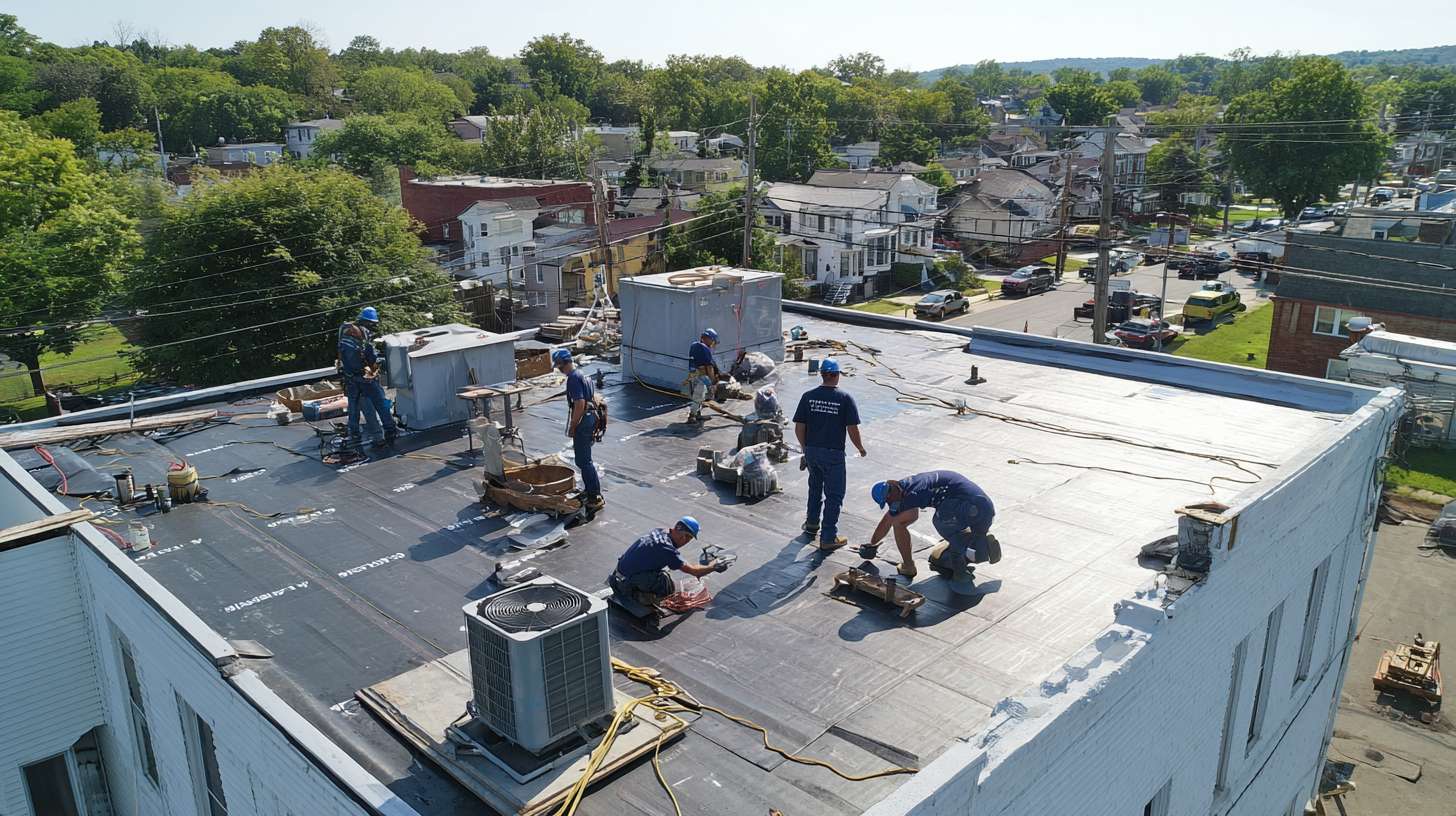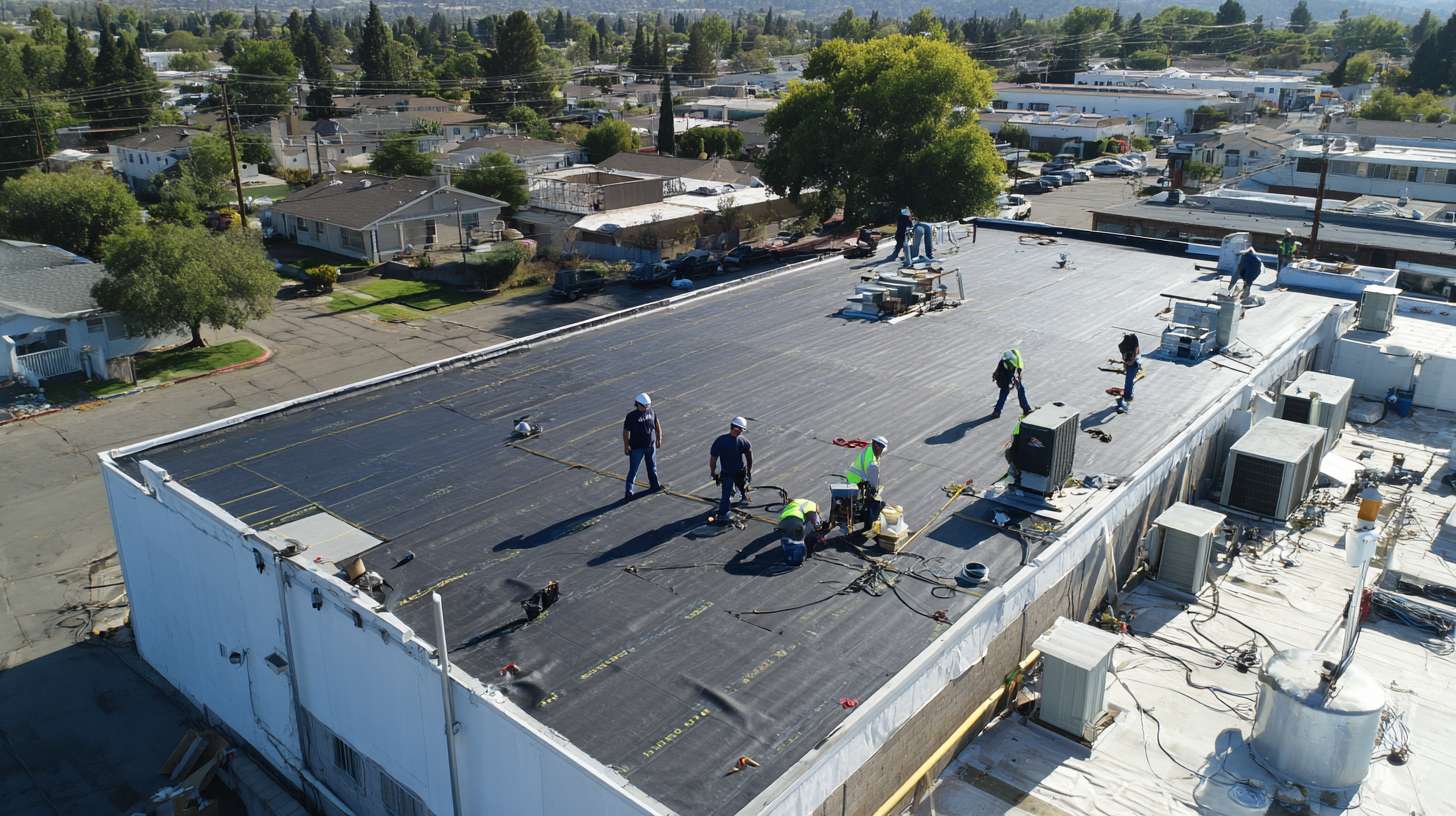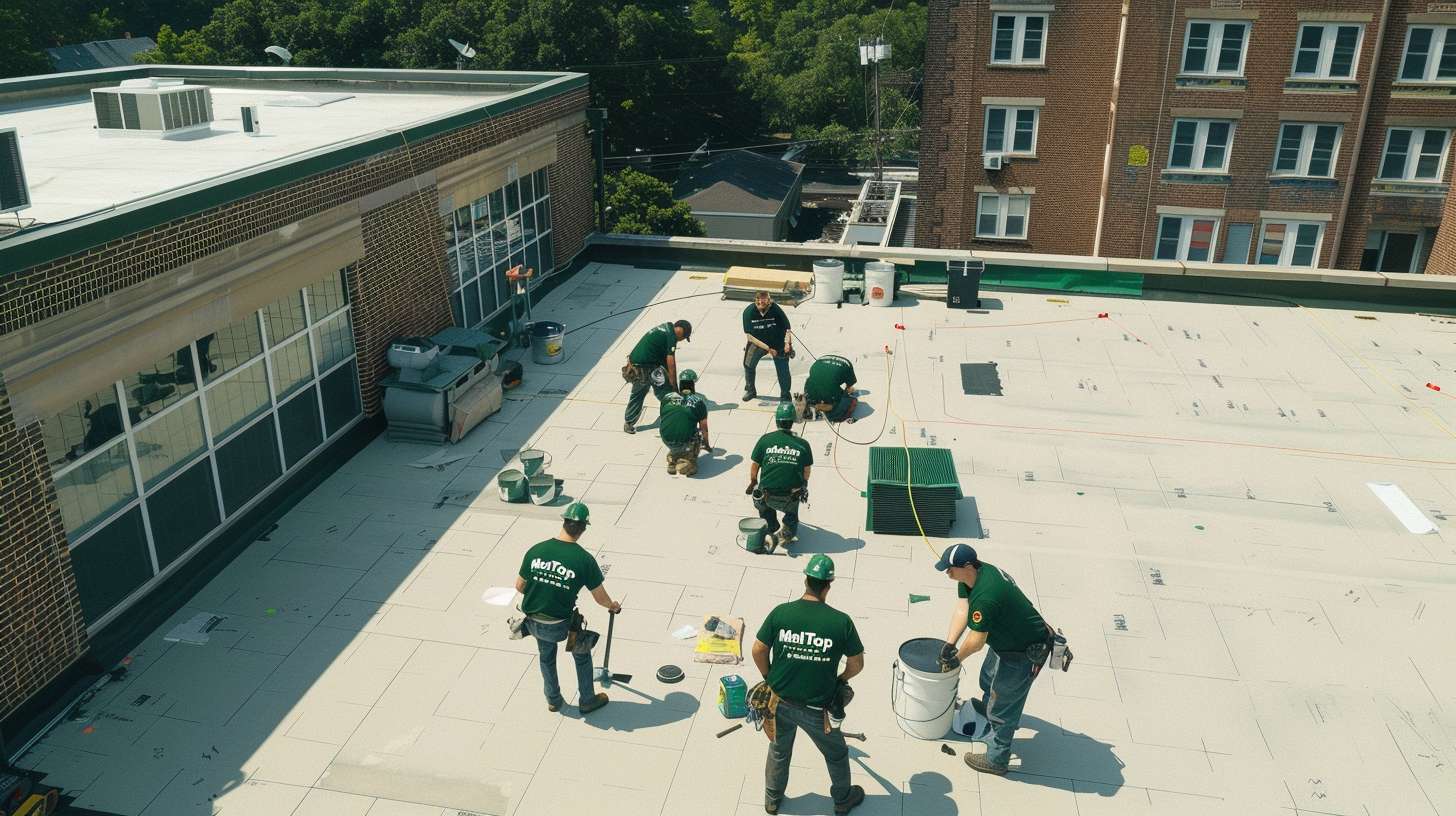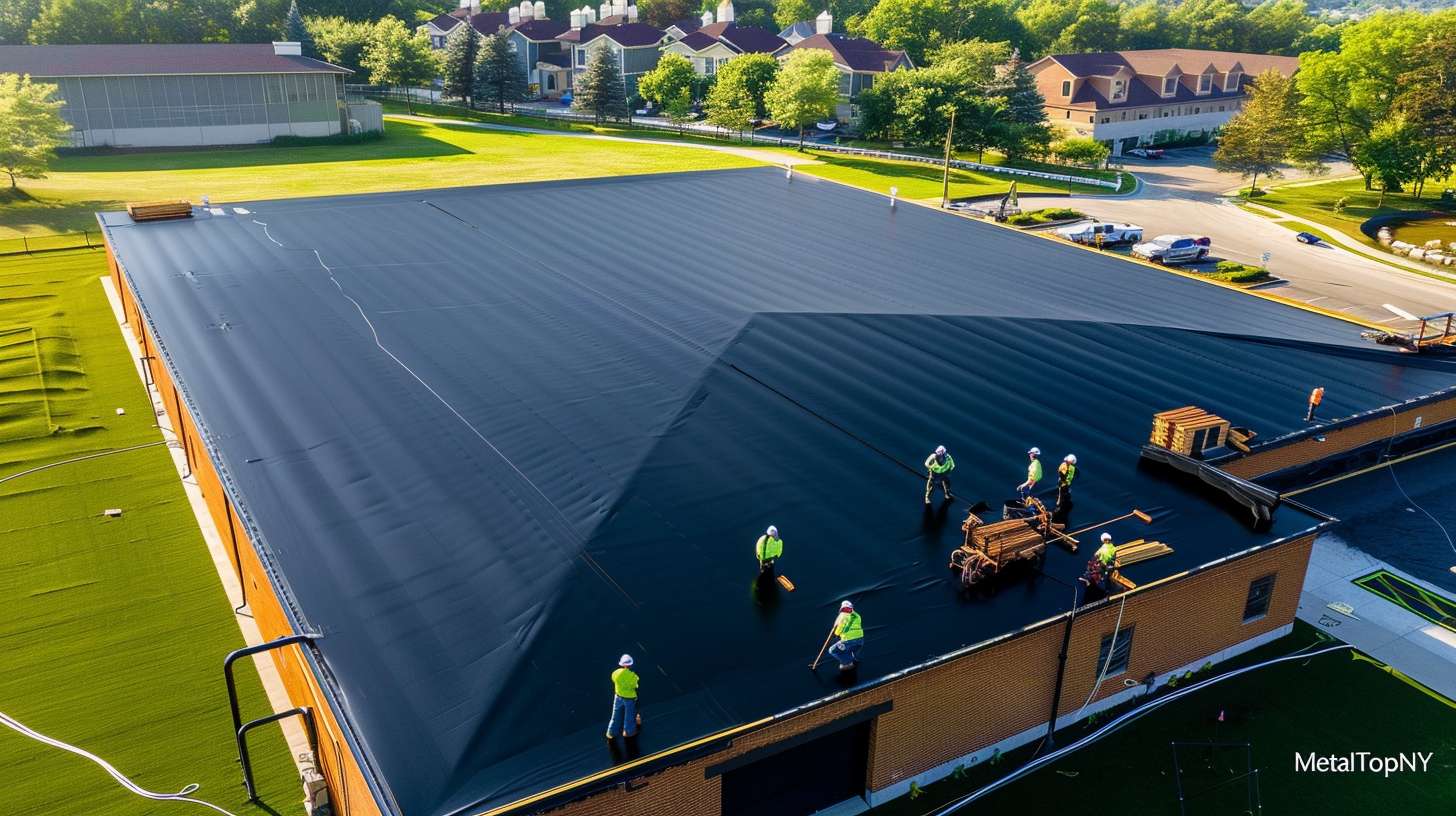
Expert Flat Roof Systems for Homes in Nassau County, NY
If you have-or are planning-a flat roof on your Nassau County home, which roofing system will actually keep your house quiet, dry, and comfortable for the next 20+ years? That’s not a simple question to answer, because most flat roofing information you’ll find online is written for commercial buildings-warehouses, strip malls, office parks-not for the space above your family room, master bedroom, or kitchen. The best residential flat roof system for a house in Merrick or Baldwin or Rockville Centre isn’t just about keeping water out; it’s about managing summer heat when the sun beats down on black rubber twelve inches above your ceiling, about not hearing every rainstorm like a drum solo, about integrating rooflights or a future deck, and about curb appeal in a neighborhood where you’re probably the only flat roof on the block.
I’ve spent 21 years designing and installing residential flat roofing systems across Nassau County-from 1950s Levitt Cape additions that needed modern insulation upgrades to brand‑new waterfront builds in Long Beach that had to handle salt air, solar arrays, and rooftop decks all at once. What I’ve learned is that the “cheap EPDM rubber” stereotype doesn’t match the reality of modern flat roof systems for residential applications anymore. Today’s residential flat roof solutions include heat‑reflective membranes, integrated insulation layers that push R‑values into the 30s or 40s, and factory‑fabricated details that look clean and last decades-but only if you choose the right system for how your family actually uses the space underneath.
Why Residential Flat Roof Systems Are Different (and Why That Matters)
Commercial flat roofs sit over conditioned warehouse space, retail stores, or offices with drop ceilings and massive HVAC systems. Residential flat roofs sit twelve to eighteen inches above your living room sofa or your daughter’s nursery. That difference changes everything:
- Noise: A lightweight single-ply membrane with minimal insulation will transmit every raindrop. On a Baldwin split‑level over a new family room, the homeowners called me back after their builder installed basic EPDM because they couldn’t watch TV during a storm.
- Heat: Dark membranes in full Long Island sun can hit 160-170°F on the surface. If your insulation strategy is wrong-or nonexistent-that heat radiates straight down into the room below, turning a top‑floor bedroom into an oven by 3 p.m. in July.
- Future plans: Homeowners add things. A skylight next year. Solar panels in five years. A rooftop deck when the kids are older. The best residential flat roof system is one that can accept those changes without a total tear‑off.
- Curb appeal: Your neighbors have shingles. You have a flat roof. If it looks like a tarp or shows seams and patches, it drags down your home’s appearance and resale value.
So when I design a flat roof for a Nassau County home, I start from the inside out: What happens in the room below? Is it conditioned space year‑round? Is it a primary bedroom, a home office, a playroom? How much insulation is already in the ceiling, and where does the thermal envelope sit? Once I know that, I can choose the membrane, the insulation strategy, and the drainage details that will actually deliver comfort, not just “a roof that doesn’t leak.”
The Five Main Residential Flat Roofing Systems (and What Each One Does Best)
There are five systems I specify most often for homes in Nassau County. Each has a sweet spot-a type of house, a budget range, a set of future plans-where it’s the right answer.
1. EPDM (Ethylene Propylene Diene Monomer) Rubber
EPDM is the black rubber membrane most people picture when they think “flat roof.” It’s been around since the 1960s, it’s affordable ($4.50-$6.50 per square foot installed for a residential job in Nassau County), and it works-if you design it correctly. The membrane itself is tough, flexible in cold weather, and lasts 20-25 years when installed as a fully adhered or mechanically fastened system over proper insulation.
Where EPDM works well: Budget‑conscious projects where the flat roof covers a garage, mudroom, or porch-spaces where summer heat and noise aren’t critical. I also use it on Levitt Cape additions where the homeowner wants a proven, low‑maintenance system and plans to add white EPDM coating in a few years to boost reflectivity.
Where it struggles: Over primary living spaces without a warm‑roof build‑up (insulation above the roof deck). Standard black EPDM absorbs 90+ percent of solar radiation. On a Merrick ranch with a flat roof over the master bedroom, I replaced a thin EPDM system that had been installed over minimal insulation; the homeowner’s air conditioning bills were brutal, and the upstairs was consistently 6-8°F warmer than the main floor. We re‑designed it as a warm roof with 4 inches of polyiso insulation above the deck, then a white TPO membrane on top-problem solved.
2. TPO (Thermoplastic Polyolefin)
TPO is a single‑ply membrane, usually white or light gray, that’s heat‑welded at the seams (no glue, no tape). It reflects 70-85 percent of solar radiation, which makes it the go‑to choice for energy efficiency over conditioned living space. Installed cost in Nassau County runs $6.00-$8.50 per square foot depending on membrane thickness (45‑mil, 60‑mil, or 80‑mil) and insulation.
Where TPO excels: Modern additions, new builds, and any flat roof over a primary living area where summer cooling costs matter. On a Massapequa Park extension-a second‑story addition over a new kitchen and dining room-we installed a warm‑roof TPO system with 3 inches of polyiso (R‑18) above the roof deck and a mechanically fastened 60‑mil white TPO membrane. The homeowner reported that the upstairs stayed cool even during the July heat waves, and the roof itself looks clean and modern from the street.
TPO also handles foot traffic reasonably well (better than EPDM), so if you’re planning a future rooftop deck or need HVAC service access, it’s a practical choice. The heat‑welded seams are stronger and more reliable than EPDM’s glued seams, and TPO doesn’t shrink or crack in cold weather the way early formulations did 15 years ago.
Where you need to be careful: TPO quality varies by manufacturer. Some early TPO membranes (2000s‑era formulations) had premature failures. Today, stick with established brands (Carlisle, GAF, Firestone) and make sure your installer is factory‑trained in heat welding-bad seams are the 1 TPO failure mode.
3. PVC (Polyvinyl Chloride)
PVC is TPO’s more expensive cousin-another heat‑welded single‑ply membrane, but with better chemical resistance, longer track record, and slightly higher reflectivity. Installed cost is $7.50-$10.00 per square foot in Nassau County. PVC membranes last 25-30+ years, and the seams are exceptionally durable.
Where PVC makes sense: Waterfront homes (salt air doesn’t faze it), roofs where you’re installing a rooftop deck or pavers (PVC handles foot traffic and cleaning chemicals better than TPO), and projects where longevity and low maintenance justify the premium. I specified PVC on a Long Beach contemporary home with a rooftop deck and outdoor kitchen; the homeowner wanted a 30‑year system that wouldn’t need attention, and PVC delivered. Five years later, the roof still looks new.
PVC is also the best choice if you’re planning solar panels. The membrane resists UV degradation even when partially shaded by racking, and the heat‑welded seams won’t fail under thermal cycling.
Trade‑off: Cost. For a typical Nassau County residential project, PVC runs 20-30 percent more than TPO. If budget is tight and you don’t need the extra chemical resistance or deck traffic, TPO is usually the smarter pick.
4. Modified Bitumen
Modified bitumen (“mod bit”) is an asphalt‑based system, usually two or three layers of reinforced membrane that’s either heat‑applied (torch‑down) or cold‑applied with adhesive. It’s tougher and quieter than single‑ply membranes, and the multi‑layer build‑up provides redundancy-if the top layer gets damaged, the second layer still protects the roof deck. Installed cost is $6.50-$9.00 per square foot depending on the number of plies and cap sheet finish (smooth, granulated, or reflective coating).
Where modified bitumen shines: Homes where noise is a concern (the multi‑layer system dampens rain sound better than thin EPDM or TPO), roofs with lots of penetrations (vents, skylights, HVAC curbs), and neighborhoods where a granulated cap sheet mimics the look of traditional shingles. On a Rockville Centre Tudor with a flat‑roof addition over the kitchen, the homeowner wanted the roof to visually “disappear”-we installed a two‑ply modified bitumen system with a gray granulated cap sheet that matched the existing slate roof. From the street, you’d never know there’s a flat roof back there.
Modified bitumen is also more forgiving during installation. If your roof has complex geometry, lots of angles, or tricky flashing details, the flexibility of mod bit makes it easier to detail correctly than wrestling with large TPO or PVC sheets.
Consideration: Standard black modified bitumen has the same solar heat problem as EPDM. If you’re covering living space, specify a white or reflective cap sheet, or plan to coat the roof with an elastomeric coating (adds $1.50-$2.50/sq ft but drops surface temperature by 30-40°F).
5. Liquid‑Applied and Spray Foam Systems
These aren’t “membranes” in the traditional sense-they’re coatings or foams applied directly to the roof deck (or over an existing roof). Spray polyurethane foam (SPF) is particularly interesting for residential flat roofs because it insulates and waterproofs in one step. A contractor sprays 2-4 inches of closed‑cell foam onto the roof deck, then applies a protective elastomeric coating on top. You end up with R‑6 to R‑7 per inch of foam, seamless waterproofing, and the ability to create slope for drainage where none existed before.
Installed cost for SPF is $8.00-$12.00 per square foot in Nassau County, depending on foam thickness and coating type. Liquid‑applied systems (acrylic, silicone, or polyurea coatings without foam) run $4.00-$7.00 per square foot and are often used to restore aging EPDM or modified bitumen roofs.
Where these systems work: Roof recovers (applying new waterproofing over an existing flat roof to avoid tear‑off costs and waste), complex roof shapes where seamed membranes would be difficult, and projects where you need to add significant insulation and drainage slope at the same time. I used SPF on a Bellmore ranch where the original flat roof over a family room addition had almost no slope and chronic ponding issues. The spray foam built up slope toward the scuppers, added R‑24 insulation, and eliminated the leaks-all without tearing off the old roof.
Trade‑offs: SPF requires skilled application (temperature, humidity, and wind all affect the foam), and the coating needs reapplication every 10-15 years to maintain UV protection. It’s also more expensive than EPDM or TPO for a straightforward new‑construction project.
Warm Roof vs. Cold Roof: The Most Important Design Decision
This is the single biggest factor in whether your residential flat roof system keeps the room below comfortable or turns it into an icebox in winter and a sauna in summer.
Cold roof: Insulation sits between the ceiling joists, just like a pitched roof. The roof deck and membrane are exposed to outside temperature swings. You need ventilation above the insulation to prevent condensation. Cold roofs are simpler to build and cheaper upfront, but they’re harder to insulate effectively (you’re limited by joist depth), and condensation risk is higher in Long Island’s humid climate.
Warm roof: Insulation sits above the roof deck, under the waterproofing membrane. The roof deck stays warm (close to interior temperature), so condensation risk drops to near zero, and you can stack as much insulation as you want without being limited by joist depth. Warm roofs cost more ($2-$4/sq ft for the insulation layer), but they deliver better thermal performance, eliminate the need for roof ventilation, and make the room below dramatically more comfortable.
For any flat roof over conditioned living space in Nassau County, I design warm roofs 95 percent of the time. The performance difference is night and day. On that Merrick master bedroom project I mentioned earlier, switching from a cold‑roof EPDM system (R‑19 in the joists) to a warm‑roof TPO system (R‑19 in the joists plus R‑18 polyiso above the deck) dropped the homeowner’s summer cooling costs by about 28 percent and eliminated the temperature differential between floors.
Comparing the Best Residential Flat Roof Systems: What to Choose When
| System | Best For | Cost Range (Installed, Nassau County) | Lifespan | Key Advantage |
|---|---|---|---|---|
| EPDM (black) | Garages, porches, budget projects | $4.50-$6.50/sq ft | 20-25 years | Lowest cost, proven durability |
| TPO (white) | Living spaces, energy efficiency | $6.00-$8.50/sq ft | 20-25 years | Reflectivity, heat‑welded seams |
| PVC | Waterfront, rooftop decks, solar | $7.50-$10.00/sq ft | 25-30+ years | Chemical resistance, longevity |
| Modified Bitumen | Noise control, complex details | $6.50-$9.00/sq ft | 20-25 years | Quiet, forgiving installation |
| Spray Foam (SPF) | Roof recovers, insulation upgrades | $8.00-$12.00/sq ft | 20+ years (with coating maintenance) | Seamless, adds insulation and slope |
Drainage, Slope, and the Details That Prevent Problems
A “flat” roof isn’t actually flat-it needs a minimum slope of ¼ inch per foot (some codes and manufacturers require ½ inch per foot) to drain properly. Ponding water-any water that sits on the roof for more than 48 hours after rain-degrades membranes, stresses seams, and voids most manufacturers’ warranties.
On residential flat roofs, I create slope in one of three ways:
- Tapered insulation: Polyiso insulation boards are factory‑cut with a taper. You install them over the flat roof deck, and the insulation itself creates the slope toward drains or scuppers. This is the cleanest approach for warm‑roof systems and adds no weight or complexity to the structure.
- Structural slope: The roof framing itself is built with a slope. This works well on new construction but is expensive to retrofit.
- Lightweight fill or spray foam: For roof recovers or problem roofs with existing low spots, you can use lightweight concrete fill or spray foam to build up slope. More labor‑intensive, but effective.
Drainage is either through interior drains (rare in residential; mostly used in modern designs or rooftop deck projects) or scuppers and gutters at the roof edge. I prefer scuppers with oversized downspouts for Nassau County homes because they don’t clog with leaves, they’re easier to maintain, and they handle the heavy downpours we get during summer thunderstorms and nor’easters.
Flashing-where the roof membrane meets walls, parapets, skylights, or HVAC penetrations-is where most leaks start. The best residential flat roof system in the world will fail if the flashing is wrong. I detail every termination with a combination of membrane flashing, metal counterflashing, and sealant, and I always bring the membrane up walls and curbs at least 8 inches (12 inches is better). On a Garden City addition with four skylights and two HVAC curbs, we fabricated custom metal counterflashing for every penetration and mechanically fastened it to the walls-no leaks in six years, even during Hurricane Isaias.
Planning for the Future: Solar, Decks, and Rooflights
One of the best things about residential flat roofing systems is that they give you options. A pitched roof is done-you’re not adding a deck or a bank of solar panels after the fact. But a flat roof can evolve with your family.
Solar panels: TPO and PVC are ideal substrates for solar racking. Most solar installers in Nassau County will ballast the racking (weigh it down with blocks) or use non‑penetrating mounts that sit on the membrane without puncturing it. If your roof was designed as a warm roof with adequate insulation, adding solar later doesn’t compromise thermal performance.
Rooftop decks: PVC or modified bitumen under pavers or a pedestal deck system works well. The key is planning the structural load during design-roof framing that’s adequate for snow load and roofing may not be adequate for deck furniture, planters, and people. I always recommend an engineer’s review before adding a deck.
Skylights and rooflights: Any membrane system can accommodate skylights, but modified bitumen and TPO are the easiest to flash around curbs. The trick is integrating the skylight curb into the drainage plan so water doesn’t pond behind it. On a Wantagh Cape with three Velux skylights in a flat‑roof dormer, we used tapered insulation to create a saddle behind each curb-water flows around the skylights, not into them.
Why Nassau County Homes Need Residential‑Specific Thinking
Nassau County isn’t a commercial district. We’re a patchwork of residential neighborhoods-post‑war Levitt developments, waterfront contemporaries, pre‑war colonials with modern additions, split‑levels, ranches, Tudors. Most homes here have pitched roofs, so when you add a flat roof-whether it’s a garage roof deck, a modern addition, or a new build-it stands out. You need a system that performs like a commercial roof but looks and behaves like it belongs on a house.
That means:
- Choosing membranes and cap sheets that blend with the neighborhood’s aesthetic
- Designing insulation strategies that handle our humid summers and cold winters without condensation problems
- Planning for the way families actually use flat roofs-decks, solar, rooflights, not just “keep the rain out”
- Working with local building departments that sometimes don’t see many flat‑roof residential projects and need documentation that the system meets code for fire rating, wind uplift, and insulation
The best residential flat roof system for your Nassau County home isn’t the one with the longest warranty or the lowest price. It’s the one that’s designed for how you live in that space, how your house is built, and what you’ll want to do with the roof in five or ten years. That’s the lens I bring to every project-21 years of watching how these systems actually perform over bedrooms, kitchens, and family rooms, not warehouses. When you get it right, a flat roof delivers decades of quiet, comfortable, low‑maintenance performance. When you get it wrong, you’re re‑roofing in ten years and fighting condensation problems in between.
At Platinum Flat Roofing, we design and install residential flat roofing systems across Nassau County with that inside‑out approach-starting with how your home is used, then building a roof system that delivers. Whether it’s a warm‑roof TPO system for a Massapequa addition, a modified bitumen roof with deck over a Rockville Centre kitchen, or a spray foam recover on a Bellmore ranch, the right system is the one that matches the house, the budget, and the family. That’s what 21 years of residential flat‑roof work has taught me: there’s no one “best” system, but there is a best system for your project-and finding it is where the expertise comes in.