How to Build Flat Roof Systems in Nassau County: Expert Guide
Here’s something most homeowners don’t realize: a proper flat roof in Nassau County isn’t actually flat, and it’s definitely not just plywood with a rubber sheet tossed on top. A well-built flat roof is a carefully engineered system with built-in slope (minimum ¼” per foot), continuous insulation, strategic drainage paths, and multiple layers working together to handle our heavy summer storms and brutal freeze-thaw cycles. The difference between a flat roof that lasts 25+ years and one that ponds water and leaks within three? It’s all in how you build the system from the joists up, not just what membrane you roll out at the end.
After two decades building flat roof systems on Nassau County homes, garages, and small commercial buildings, I’ve learned that most flat roof failures trace back to decisions made before any waterproofing was installed-inadequate slope, wrong insulation strategy, or drainage designed as an afterthought. Let me walk you through how to build a flat roof step by step, starting with the framework of decisions you need to make before cutting a single piece of lumber.
The Decision Framework: Six Choices That Define Your Flat Roof System
Before you build, you need to answer six interconnected questions. These aren’t isolated choices-each one affects the others, and together they determine whether you’re building a flat roof or just creating a future headache.
Structural support and span: What’s carrying the load? Most residential flat roofs in Nassau County use either engineered I-joists at 16″ or 24″ on center, or open-web steel joists for larger spans. Your span determines joist size, which affects your insulation cavity depth, which circles back to whether you can hit required R-values without building up above the deck. A 12-foot span might use 11⅞” I-joists; a 20-foot span needs 14″ or deeper, or you switch to steel. Calculate dead load (roofing system weight), live load (snow, maintenance access), and leave room in your height budget for insulation and slope.
Minimum code slope: New York State building code requires ¼” per foot minimum slope to primary drains. That’s non-negotiable. You create that slope in one of three ways: sloping the structural deck itself (joists installed at grade), tapered insulation panels laid on a level deck, or a combination of both. For small roofs under 400 square feet, I’ll often slope the framing. Larger roofs get level structure with tapered insulation-easier to frame, more predictable drainage.
Warm roof vs. cold roof build-up: This is critical in Nassau County’s climate. A cold roof puts all insulation between joists, below the deck, with ventilation above the insulation and below the deck-like a vented attic. Problem: you need massive joist depth to hit R-30+ and still have ventilation space, and moisture management gets tricky. A warm roof (unvented) puts continuous rigid insulation above the structural deck, keeping the deck and structure warm and eliminating condensation risk. The deck becomes part of your conditioned envelope. For almost every flat roof I build now, warm roof wins-better thermal performance, no ventilation battles, simpler air sealing.
Insulation type and thickness: You need R-30 minimum for residential (Nassau County follows NYS energy code). On a warm roof, that’s typically two layers of polyisocyanurate (polyiso) rigid foam-3″ total gives you about R-18 to R-20, then you add 2″ more for R-30+, or you use tapered polyiso that builds in your slope while hitting R-value. The top layer of insulation is often your tapered layer. Cold roof? You’re filling joist bays with fiberglass or spray foam, and you’d better have your ventilation and vapor barrier details perfect or you’ll grow mold.
Drainage strategy: Every flat roof needs primary drains (scuppers, internal drains, or low-edge gutters) and secondary overflow drains set 2″ higher, per code. On a 20×30 garage roof, I’m placing at least two primary drains diagonally opposite, with the slope directing water from high corners to low drain points. You design drainage before you frame, because drain location affects your slope plan and sometimes even your joist layout. A parapet roof (walls extending above the roof plane) uses internal drains or scuppers through the wall; an open-edge roof can drain to gutters, but you still need overflow scuppers in case gutters clog.
Membrane choice: Your final waterproofing layer. The four main options for Nassau County flat roofs: EPDM rubber (least expensive, good lifespan, seams are glued or taped), TPO (heat-welded seams, highly reflective, mid-price), modified bitumen (torch-applied or cold-applied, tough and repairable), or liquid-applied (spray or roll, seamless, great for complex shapes). Your membrane choice affects substrate requirements-some need smooth cover board, others go right over insulation.
How to Build a Flat Roof Step by Step: From Framing to Final Membrane
With your decisions made, here’s the actual construction sequence. This is the order that makes sense structurally and weatherproofs the building progressively, layer by layer.
Step 1: Frame and Install Structural Deck
Start with your joist installation. If you’re sloping the structure, establish your high point and low point, then set joists at the calculated grade-¼” per foot means a 20-foot run drops 5″. Use a laser level or string line to maintain consistent slope across all joists. More common: frame level. Set joists level and plumb, secure to bearing walls or beam, block as required (typically mid-span on joists over 12 feet).
Deck the joists with ½” or ⅝” CDX plywood or OSB, depending on joist spacing. At 16″ o.c., ½” is fine; 24″ o.c. needs ⅝”. Stagger seams, leave ⅛” gaps for expansion, and nail per code-typically 6″ on edges, 12″ in field. Your deck needs to be smooth, dry, and structurally sound because everything builds on this base. Any bounce or spring in the deck telegraphs up through your system and can stress membrane seams down the road.
This is also when you install any structural penetrations-HVAC curbs, vent pipes, anything that goes through the deck. Rough-frame them now; you’ll flash them later. For a warm roof, this deck is now inside your thermal envelope, so air-seal the perimeter where deck meets walls using sealant or spray foam.
Step 2: Install Air and Vapor Control Layers
On a warm roof, your primary air barrier is often the roof deck itself, sealed at edges and penetrations. Some designers add a peel-and-stick modified bitumen underlayment or self-adhered roof underlayment across the entire deck as both air barrier and temporary weather protection-this also gives you a second layer of waterproofing under the insulation if wind ever damages your membrane.
Vapor control: In a warm roof with exterior insulation, you generally don’t want a vapor barrier under the deck (it can trap moisture). The deck needs to dry to the interior. Your vapor control happens at the membrane or in the insulation layers. Check your building plans and energy code calculations-vapor drive direction in Nassau County (mixed climate, zone 4A) means you need smart design, not just plastic everywhere.
Step 3: Install Rigid Insulation in Layers
This is where warm roofs shine. Start with your base layer of rigid polyiso insulation, typically 2″ to 4″ thick, laid in a staggered pattern with joints offset from deck seams. Fasten through to the deck using insulation screws with large plastic plates-follow the insulation manufacturer’s fastener schedule, usually one fastener per 2 square feet plus perimeter and seam fastening. Tape the seams with foil tape or as specified.
Now install your second layer, typically tapered insulation if you’re building slope this way. Tapered panels come from the factory pre-calculated to create your ¼” per foot slope, and they’re labeled with a slope arrow and thickness at each corner. Lay them according to the slope plan (which you received from the insulation manufacturer after you sent them your roof dimensions and drain locations). Stagger seams from the first layer-never stack joints. Fasten again, this time with longer screws that reach through both insulation layers into the deck.
If you’re hitting R-49 or higher (commercial requirement), you might install three layers. Key principle: each layer is mechanically fastened independently, and seams are always staggered. This eliminates thermal bridging and wind uplift paths.
Step 4: Install Cover Board
Most membrane manufacturers require a cover board over rigid insulation-a hard, smooth surface that protects the insulation and gives the membrane a stable substrate. Common choices: ½” DensDeck (gypsum-based, dimensionally stable), ¼” HD polyiso cover board, or asphaltic fiber board. The cover board is mechanically fastened through the insulation into the deck below, and it’s where your membrane attachment really happens.
Cover board also provides impact resistance-if you’re planning rooftop access, solar panels, or HVAC service, that extra layer prevents foot traffic from denting the insulation and stressing the membrane. On a small residential garage roof where access is rare, some builders skip cover board and adhere membrane directly to polyiso, but I prefer the extra protection.
Step 5: Install Roof Drains and Edge Metal
Before the membrane goes down, all your drains must be set. Internal drains get clamped to the drain pipe below (which you roughed in earlier), with the drain bowl sitting on the structural deck or slightly recessed, and insulation and cover board cut and fit tight around the drain body. The drain flange sits at finished roof surface height-you’ll strip the membrane into it later.
Scuppers (openings through a parapet wall) get framed and flashed now. The scupper opening should be at least 4″ above the primary roof surface (so it acts as overflow) unless it’s your primary drain, in which case it sits at low-point elevation.
Edge metal: Install a continuous roof edge termination-either a gravel stop (if you’re doing a ballasted or gravel-surfaced roof), a drip edge, or a fascia/coping system. This metal gets mechanically fastened to the deck edge or wall, and it provides a clean termination point for your membrane. Metal must be sloped to drain, joints sealed, and corners mitered or pre-formed.
Step 6: Install Roofing Membrane
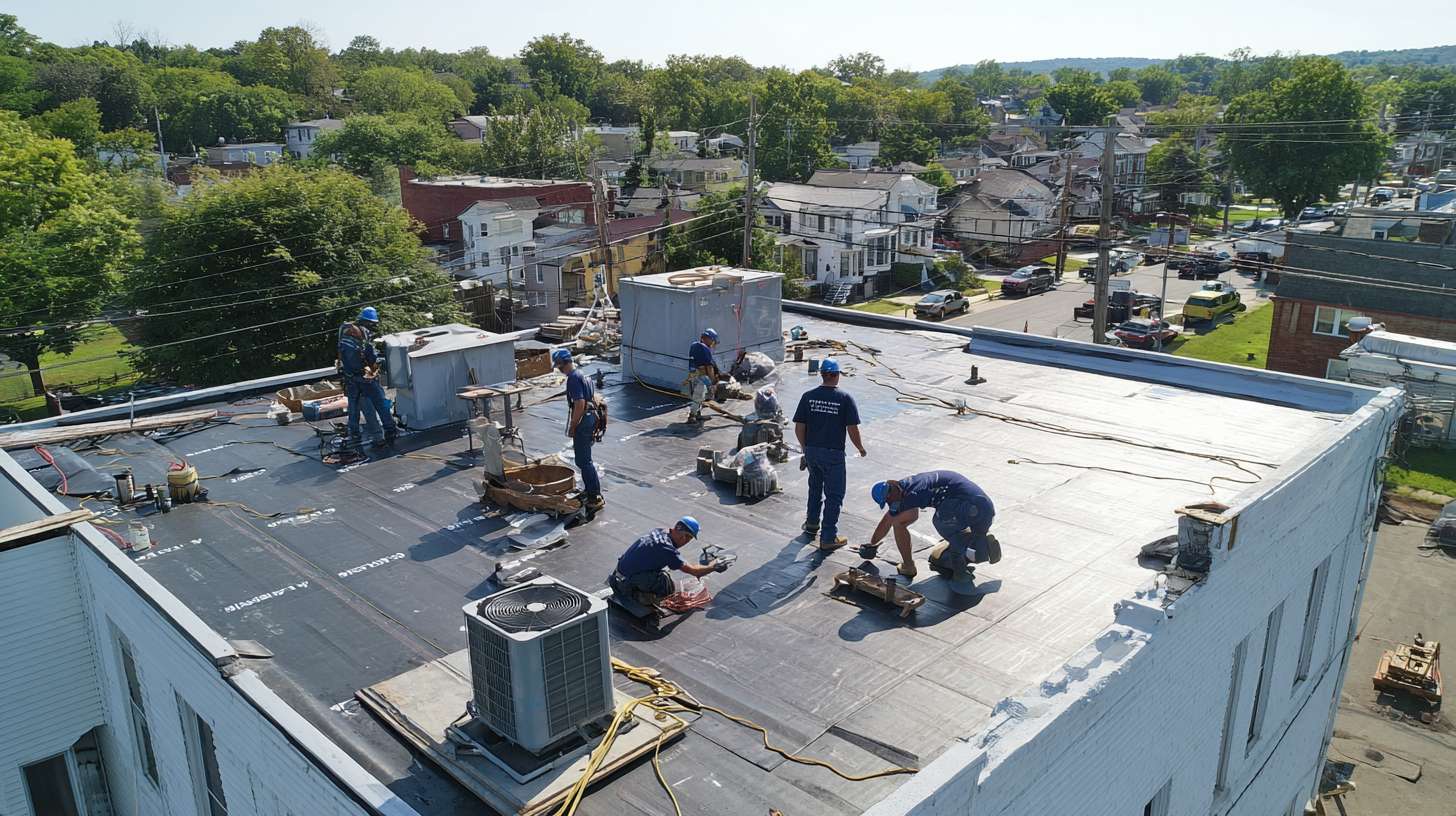
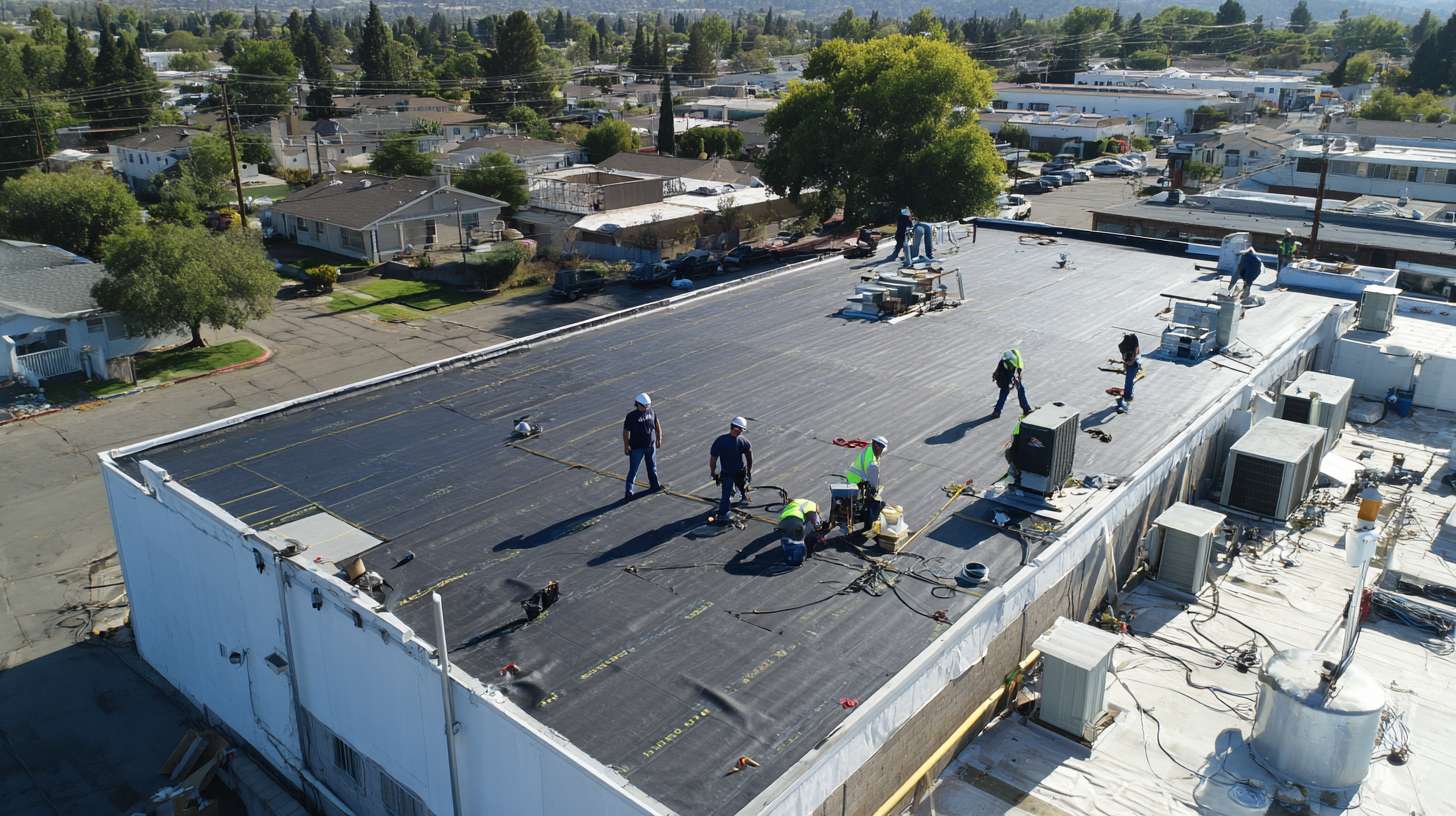
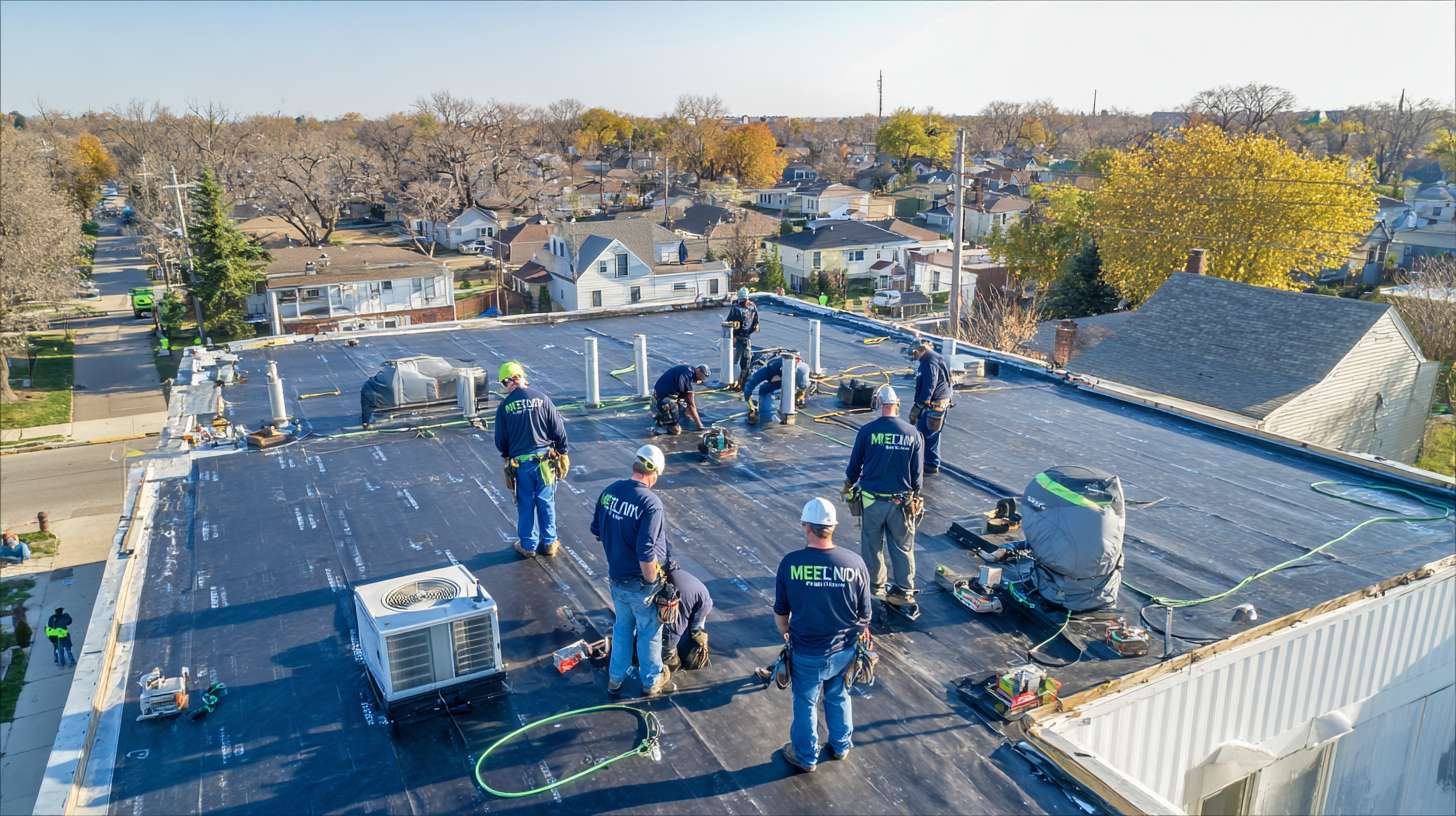
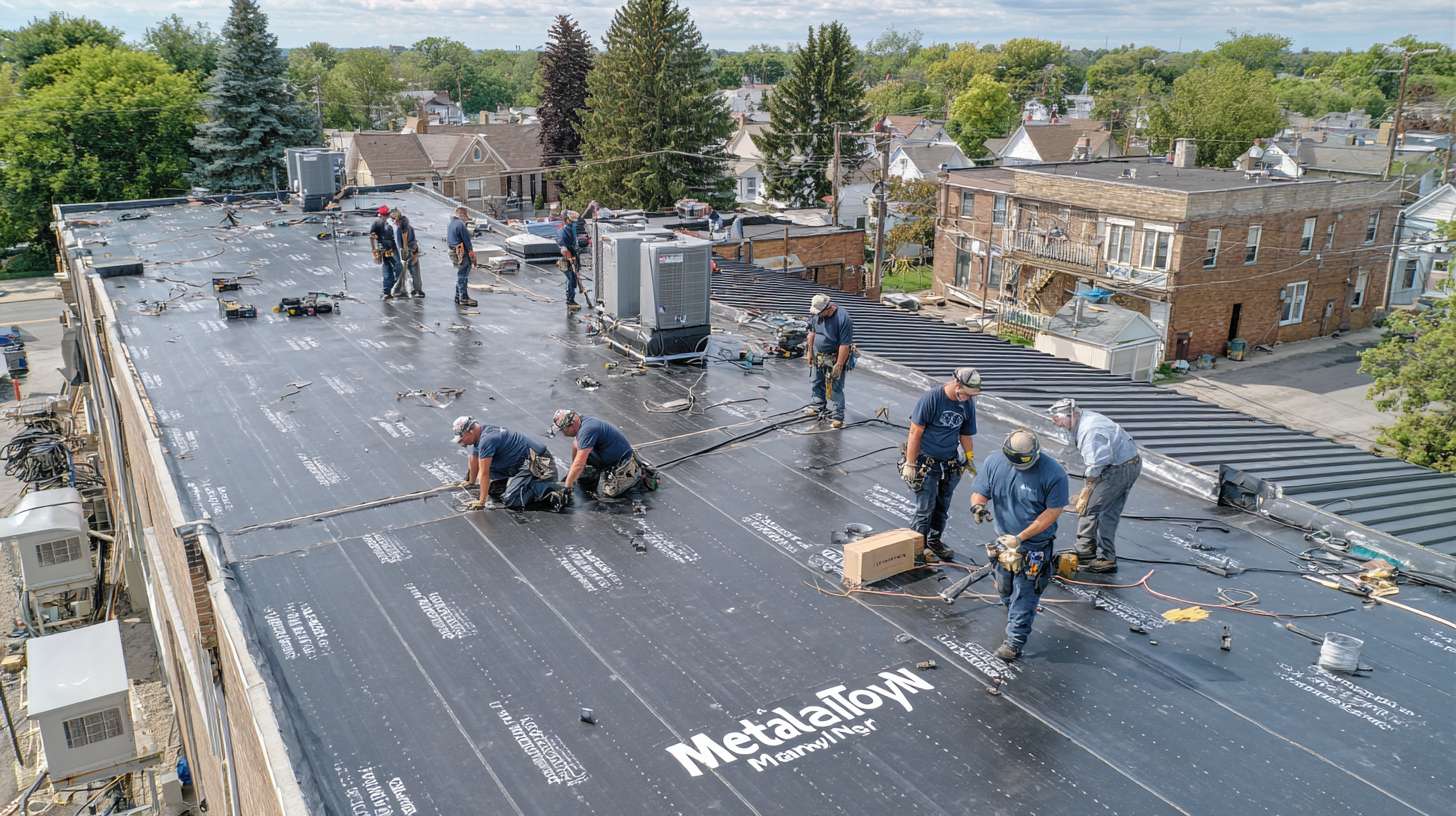
Finally, the waterproofing. The process varies by membrane type, but the principles are consistent: start at the low point (drain) and work toward high points, lap all seams in the direction of water flow (upper sheet over lower), and seal every seam and penetration.
EPDM rubber: Roll out sheets, allow them to relax, then either fully adhere with bonding adhesive, mechanically attach with plates and screws, or ballast with stone. Seams are cleaned, primed, and joined with seam tape or liquid adhesive. Corners, penetrations, and edges get custom-cut flashing pieces, typically bonded with pourable seam filler or mastic.
TPO: Similar rollout, but seams are heat-welded with a hot-air gun, creating a permanent molecular bond stronger than the sheet itself. TPO reflects more heat (bright white), which keeps the roof cooler in summer-valuable on a flat roof with a living space below. Mechanically attached or fully adhered; mechanical is faster, adhered gives better wind performance.
Modified bitumen: Two-ply system, typically a base sheet mechanically fastened or adhered, then a granule-surfaced cap sheet torch-applied (propane torch melts the back of the sheet as you roll it out, bonding it to the base) or cold-applied with adhesive. Modified is tough, repairable, and familiar to most commercial roofers. On a small garage or home addition, it’s often the most cost-effective premium option.
Liquid-applied: Rolled or sprayed, builds up in multiple coats to specified thickness (typically 60-80 mils total). Seamless, so no weak points, and excellent for roofs with lots of penetrations or complex shapes. Requires careful surface prep and ideal weather (no rain for 24-48 hours while curing).
Regardless of membrane, every penetration gets detailed: pipes get compression rings and seam tape or mastic; HVAC curbs get step-flashed or stripped in with membrane; parapets and walls get base flashing (membrane turned up at least 8″ onto the wall) and counterflashing (metal cap over the top). Drains are stripped in with concentric rings of membrane and sealant, creating a watertight cone directing water into the drain.
Step 7: Final Flashing, Sealants, and Walkway Pads
Once the membrane is down, install all termination bars (metal bars that clamp membrane to walls), finish your coping caps (the metal cap on top of a parapet wall), and run a fat bead of compatible sealant at every metal-to-membrane joint. Check every fastener, every corner, every transition.
If the roof will see foot traffic for HVAC service or future solar installation, install protection: rubber walkway pads along the path from roof access to equipment, or pavers on adjustable pedestals (which also keeps the membrane shaded and cooler).
Nassau County-Specific Build Considerations
Building in Nassau County adds a few wrinkles you won’t find in other climates:
Wind uplift off the Great South Bay and Atlantic: Coastal exposure means higher wind design pressures-you’ll often need a wind design per ASCE 7, and your membrane attachment needs to meet calculated uplift resistance. That might mean closer fastener spacing on mechanical attachment, full adhered membrane in critical zones, or even increased edge metal fastening. Buildings within a mile of the water get extra scrutiny from inspectors on this point.
Heavy summer rain events: We routinely see 2-3 inches of rain in an hour during July and August thunderstorms. Your drainage system must handle design storm intensity without water backing up onto the roof. I size drains at one primary drain per 1,000 square feet minimum, and I always add secondary overflow even when code might let me skip it on small roofs. The overflow scupper saved a Westbury garage I built in 2019 when leaves clogged the primary drain during a downpour-water rose to the overflow, drained safely through the scupper, no interior damage.
Freeze-thaw and ice damming: Even though we’re not as cold as upstate, our winter pattern of freeze-thaw cycles is brutal on flat roofs. Water gets into tiny gaps, freezes, expands, opens up seams or flashing. This is why warm roof design is so valuable here-keeping the entire deck warm eliminates the temperature differential that causes ice dams and condensation. And it’s why we always use cold-temperature-rated sealants and adhesives; some products get brittle below 20°F and crack.
Building department inspections: Nassau County towns (Hempstead, Oyster Bay, North Hempstead) each have their own inspectors, but all follow NYS code with local amendments. You’ll typically need inspections at framing (before deck goes on), rough-in (after deck, before insulation), and final (after membrane). Inspectors here pay close attention to structural attachments, insulation R-values (they may check thickness with a probe), and drainage details. Have your engineer’s plans and product spec sheets on site.
Common Flat Roof Build Mistakes (and How to Avoid Them)
Most flat roof problems I’m called to fix trace back to one of four build errors:
Inadequate slope or reverse slope: The deck was framed level (or worse, sagging), tapered insulation wasn’t used, and now water ponds in the middle of the roof. Ponding water degrades every membrane type, holds heat in summer and cold in winter, and eventually finds a way through. Fix: Always confirm slope with a 10-foot level during deck installation, and if using tapered insulation, double-check that panels are installed with arrows pointing the right direction. I’ve seen tapered systems installed backward.
Membrane attached in wrong order or at wrong temperature: Adhesives and sealants have temperature windows-too cold and they don’t bond, too hot and they slump or overapply. TPO welded in freezing weather may look good but the seam doesn’t develop strength. Modified bitumen torched in 95°F heat can blister. Follow manufacturer specs, and don’t rush membrane installation to beat weather-you’ll pay for it later in callbacks.
Skipping cover board or using damaged insulation: Membrane applied directly over insulation that’s been rained on, has gaps, or is crushed. The membrane follows every dip and ridge, creating stress points. Or worse, wet insulation loses R-value permanently and can rot the deck from above. Fix: Protect insulation with tarps if rain threatens, replace any damaged boards, and use cover board-it’s cheap insurance.
Poor flashing details at penetrations and edges: Pipes flashed with a smear of sealant, no compression ring, no reinforcing fabric. Parapet base flashing that’s only 4″ tall instead of 8″, or not mechanically terminated at top. These details are where leaks start. Fix: Follow membrane manufacturer’s details exactly, use their compatible flashings and sealants, and don’t try to save $40 by skipping a termination bar. I’ve re-flashed dozens of flat roofs where the only problem was someone thought sealant alone would hold membrane to a wall.
Flat Roof System Comparison: Quick Reference
| System Component | Option A | Option B | Best Use Case |
|---|---|---|---|
| Structure Type | Engineered I-joists | Open-web steel joists | I-joist: residential, spans under 24′. Steel: commercial, longer spans, HVAC access below |
| Slope Method | Sloped framing | Level framing + tapered insulation | Sloped framing: small roofs, simple shapes. Tapered insulation: large roofs, complex drainage |
| Insulation Strategy | Warm roof (above deck) | Cold roof (between joists) | Warm roof: Nassau County standard, better performance. Cold roof: only if ventilation is easy |
| Insulation Type | Polyiso rigid foam | Spray foam or fiberglass | Polyiso: warm roof, cost-effective R-value. Spray foam: cold roof or irregular cavities |
| Membrane Type | TPO (heat-welded) | EPDM (glued/taped) | TPO: reflective, strong seams, mid-high budget. EPDM: lower cost, proven lifespan |
| Drainage Type | Internal drains | Scuppers through parapet | Internal drains: cleaner look, better for large roofs. Scuppers: simpler install, easier maintenance |
How Much Does It Cost to Build a New Flat Roof in Nassau County?
For a complete flat roof system-framing, insulation, drainage, and membrane-you’re looking at $18-$28 per square foot for a garage or small addition, and $22-$38 per square foot for a home roof with higher spec or more complex details. That’s installed, including materials and labor.
Break it down: On a 20×30 garage (600 sq ft), a basic warm roof build with I-joists, polyiso insulation to R-30, EPDM membrane, and two scupper drains runs $12,000-$15,500. Upgrade to TPO membrane and internal drains, add another $2,500-$3,500. A cold roof build costs less in insulation ($1,800 vs. $3,200 for rigid foam) but more in framing (deeper joists, ventilation baffles), so overall cost is similar.
Modified bitumen systems run $1,800-$2,400 more than EPDM for that same garage, but you’re getting a tougher membrane. Liquid-applied adds $3,000-$4,000 but eliminates seams entirely. For a roof that’ll see rooftop mechanicals or solar down the road, I’d spend the extra.
Those numbers include engineering (required on most new flat roofs in Nassau County), permits ($350-$900 depending on town and project size), and inspections. They don’t include demo of an existing roof if you’re replacing rather than building new, or structural work if your walls or beams aren’t ready to carry the roof load.
When to Hire a Pro vs. DIY Flat Roof Construction
Building a small flat roof-say, over a shed or covered patio-is within reach of a skilled DIYer who’s comfortable with framing, understands how to maintain slope, and can follow membrane installation instructions carefully. You’ll need a building permit, and you’ll need to show your plan to the inspector, but it’s doable.
Hire a professional flat roofing contractor for anything attached to your home’s living space, any roof over 400 square feet, or any roof that involves complex drainage, parapets, or integration with existing structure. Flat roofs are systems, and a mistake in insulation continuity, air sealing, or membrane attachment creates problems that won’t show up for 2-3 years-long after you think the job was successful. A pro has the tools (hot-air welders for TPO, torches for modified, laser levels for slope), the material connections (you can’t buy commercial membrane at Home Depot), and the insurance if something goes wrong.
At Platinum Flat Roofing, we build 30-40 new flat roof systems a year in Nassau County, from small garage additions to multi-unit residential buildings. We handle engineering coordination, permits, all trades (framing through final flashing), and we warranty the complete system-structure, insulation, and membrane-so there’s one point of accountability. If you’re planning a new flat roof build and want it done right the first time, we’ll walk you through your options, calculate costs for each build approach, and deliver a roof that’ll handle everything Nassau County weather throws at it.
Building a flat roof correctly means building it as a system-every layer planned, every detail executed, and every component working together to keep water out and energy in. That’s the difference between a flat roof and a flat roof system, and it’s the difference between 25 years of trouble-free service and a callback in year three.