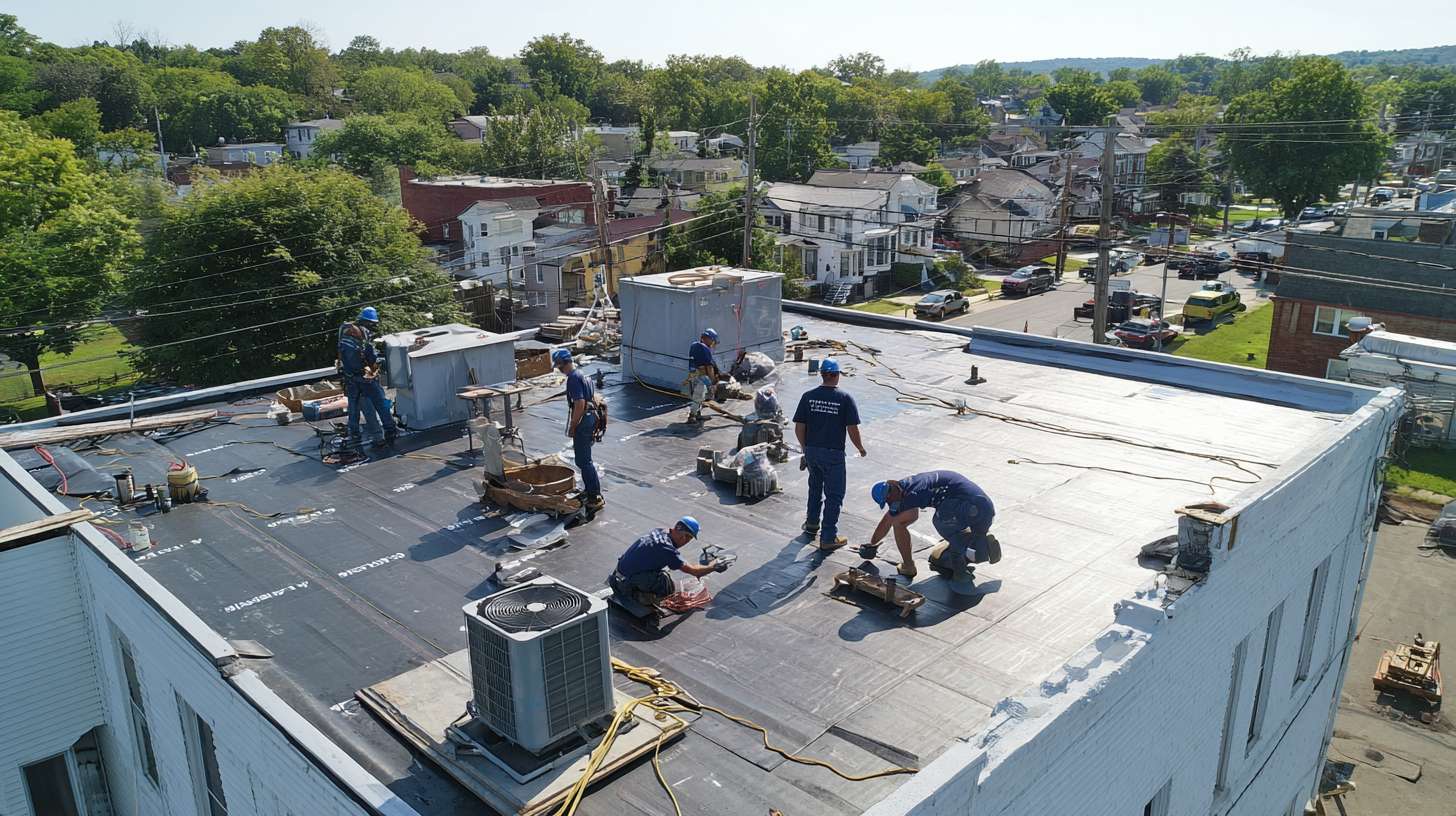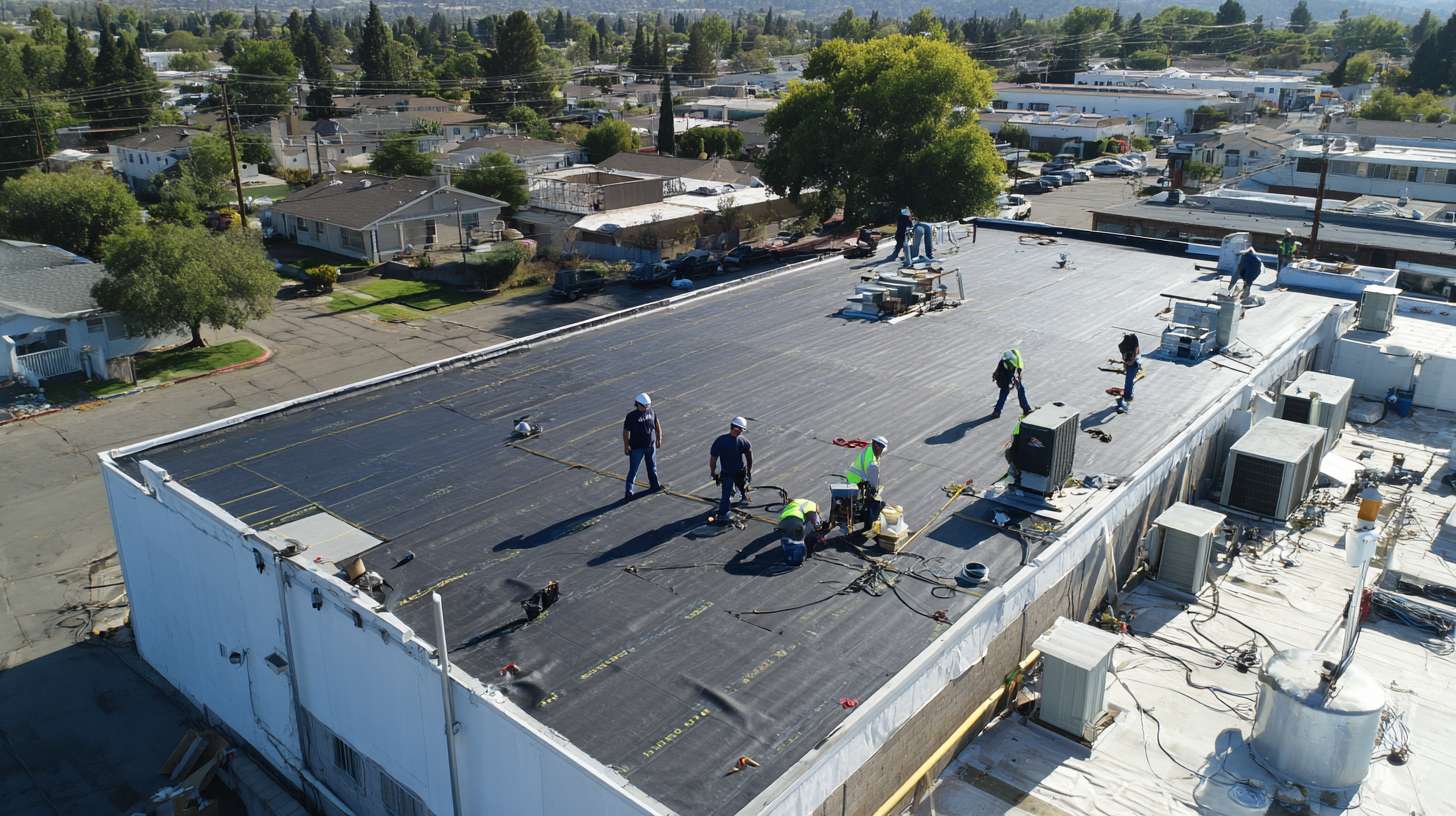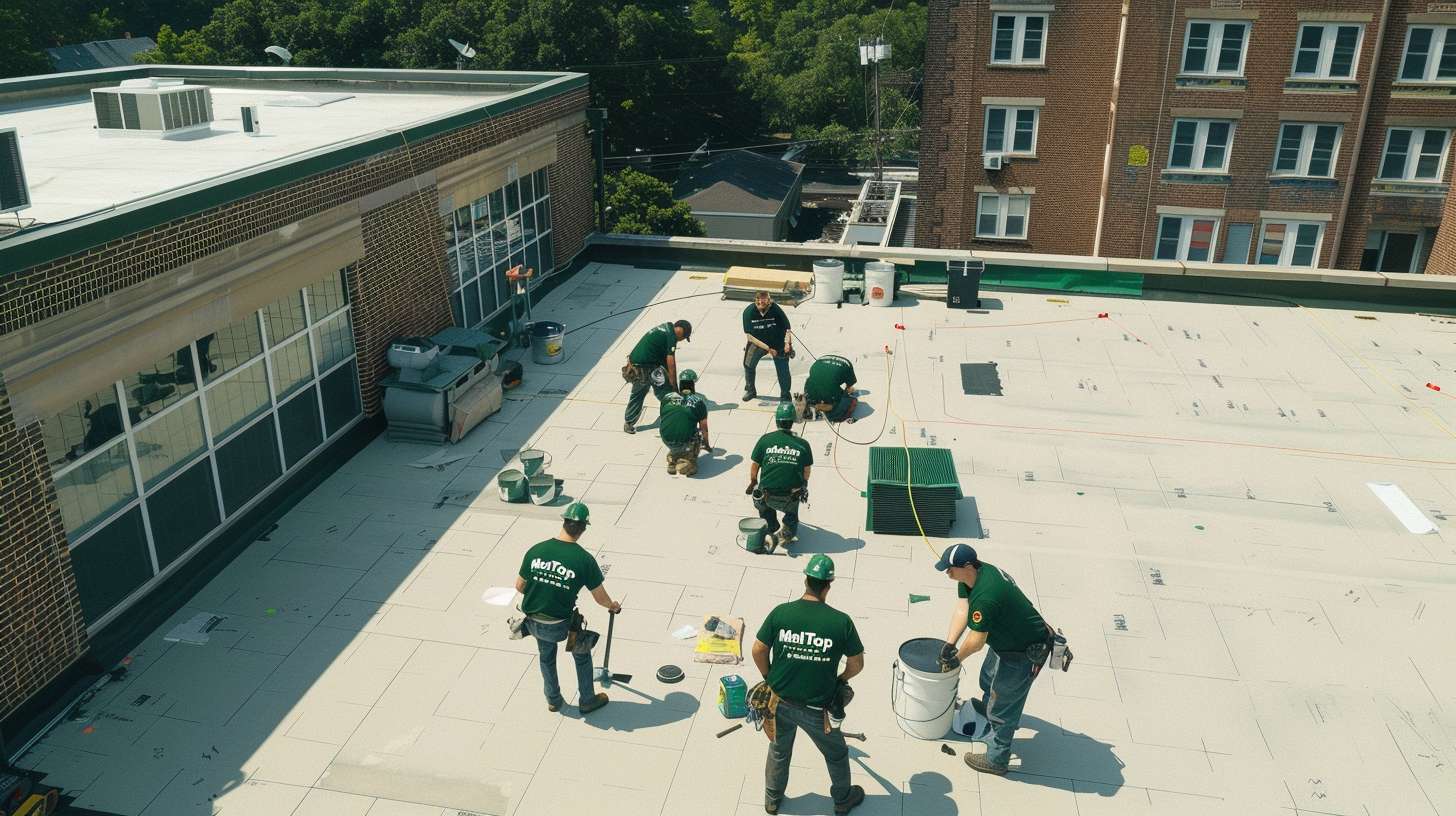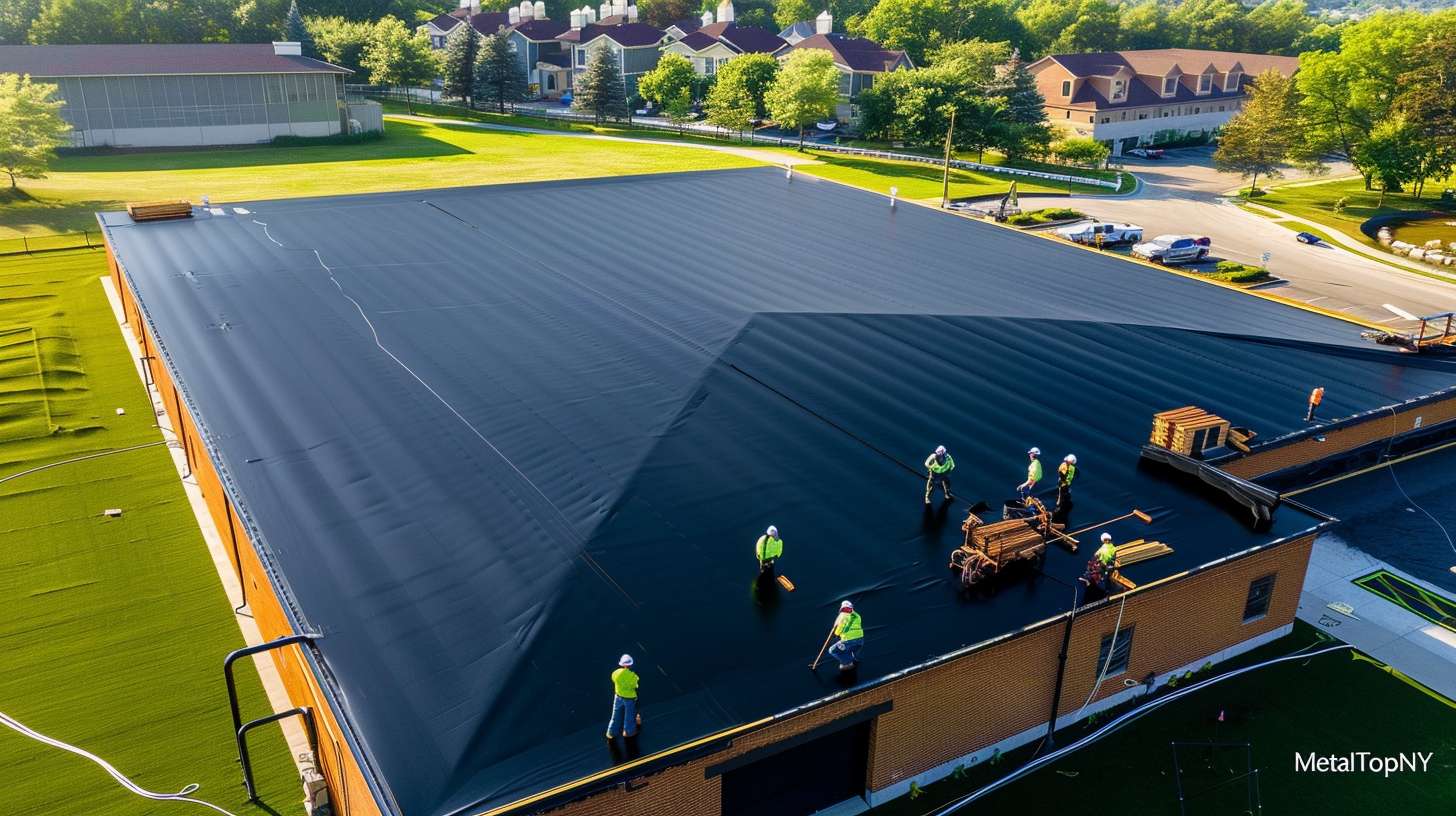
How to Seal a Flat Roof: Your Nassau County Expert Guide
Here’s the single biggest mistake I see every spring in Nassau County: a homeowner walks into a big-box store, grabs a five-gallon bucket labeled “Roof Coating & Sealant,” and spends their Saturday rolling thick white goop over a dirty, cracking flat roof. Two months later-after a few summer storms and UV exposure from Long Island sun-that coating is already bubbling, peeling at the edges, or cracking along seams. Worse, they’ve now trapped moisture underneath, making the eventual proper repair twice as expensive because the new layer has to be removed first.
The truth about sealing a flat roof in Nassau County? Done right, with proper cleaning, repairs, compatible products, and correct application technique, a professional sealing system can extend your flat roof’s life by 8-12 years and cost 60-70% less than full replacement. Done wrong-or done on the wrong roof-it’s wasted money that often creates bigger problems than you started with.
Professional flat roof sealing services in Nassau County typically run $2.80-$5.50 per square foot for complete cleaning, repair, priming, and coating application. That’s roughly $2,800-$5,500 for a standard 1,000-square-foot flat garage or home addition, compared to $8,000-$14,000 for complete tear-off and replacement. But here’s what nobody tells you: not every flat roof should be sealed. Before you even think about what to use to seal a flat roof, you need to know if yours is a candidate-and that starts with understanding what’s under your feet.
Is Your Flat Roof Actually Worth Sealing? The Moisture Test You Must Do First
On a weathered modified bitumen roof in Freeport last fall, the homeowner called me for a coating estimate. The surface looked decent-some granule loss, a few small cracks, but structurally sound. Before quoting, I ran a moisture meter across twenty different spots. Eleven of them showed trapped moisture in the insulation layer underneath. Sealing that roof would’ve been like putting a bandage over an infected wound-cosmetically nice for a few months, then catastrophic failure when freeze-thaw cycles expanded that trapped water all winter.
Here’s the decision framework I use, and it’s the same one you need before spending a dollar on sealant:
Your flat roof is a good sealing candidate if:
- The membrane is 8-20 years old (not brand new, not falling apart)
- Less than 20% of the surface shows cracking or damage
- No soft spots when you walk on it (indicating saturated insulation)
- No active leaks or water staining on interior ceilings below
- Seams and flashings can be repaired without major reconstruction
- Proper drainage exists-no standing water more than 48 hours after rain
Your flat roof needs replacement, not sealing, if:
- Multiple areas feel spongy or flex under foot pressure
- More than 25-30% of the surface is cracked, blistered, or delaminating
- You have a history of recurring leaks in multiple locations
- The roof is over 25 years old with original membrane
- Moisture meter readings show widespread saturation
- Metal deck or plywood substrate underneath shows rust or rot
That moisture check is non-negotiable. In Nassau County’s humid summers and freeze-thaw winters, trapped moisture under a sealed surface will expand, contract, and destroy your roof from the inside out. Any contractor who offers to seal your flat roof without checking for moisture or repairing damage first? Walk away. They’re either incompetent or dishonest-both are expensive.
Know Your Flat Roof Material: What to Use to Seal a Flat Roof Depends Entirely on This
I learned this lesson the expensive way fifteen years ago when I was still green. Used an acrylic coating system on a modified bitumen roof without proper primer. The coating looked beautiful-bright white, perfectly rolled, two thick coats. Six weeks later, half of it was peeling off in sheets because acrylic doesn’t chemically bond to asphaltic surfaces without the right intermediary primer. I ate that job, re-did it correctly with asphalt-compatible primer and an asphaltic emulsion coating, and never made that mistake again.
Here’s what actually works on Nassau County’s most common flat roof types:
| Roof Type | Best Sealing Products | Required Prep | Expected Lifespan |
|---|---|---|---|
| EPDM Rubber | Acrylic or silicone elastomeric coatings (after EPDM primer) | Pressure wash, repair seams with EPDM tape/caulk, apply bonding primer | 10-15 years |
| Modified Bitumen (Torch-Down) | Asphalt emulsion or asphaltic aluminum coatings; silicone with proper primer | Clean with degreaser, repair seams with mastic/fabric, prime granulated surfaces | 8-12 years |
| Built-Up Roof (Tar & Gravel) | Asphalt-based coatings or cold-applied asphaltic emulsions | Remove loose gravel, clean surface, repair cracks with mastic, prime if needed | 7-10 years |
| TPO/PVC | Generally not sealed-repair with heat-welded patches or replace | These membranes are designed to reflect UV; coating voids warranties | N/A |
| Metal | Elastomeric or silicone coatings (after rust treatment and metal primer) | Remove rust, prime bare metal, seal seams with butyl tape, apply coating | 10-15 years |
The single most common mistake? Using the wrong product. That “universal roof sealant” at the hardware store? It’s usually an asphalt-based product that won’t adhere properly to EPDM rubber, or an acrylic that’ll delaminate from modified bitumen without primer. If you’re asking “what is the best way to seal a flat roof,” the answer starts with identifying your exact membrane type-preferably by finding your original roofing invoice or having a professional inspect it.
The Prep Work That Actually Matters: Why 70% of Sealing Success Happens Before You Open the Bucket
On a small commercial building in Hicksville two summers ago, another contractor had quoted the owner $3,200 for a “complete roof restoration.” When I arrived for a second opinion, I found out why his price was so low: his written estimate said “clean, coat, done.” No repairs. No primer. No detail work around the dozen HVAC penetrations and parapet walls. That roof would’ve failed within eighteen months, guaranteed.
Here’s what legitimate prep looks like for sealing flat roofs, and why each step is non-negotiable:
Step 1: Power Washing and Surface Cleaning
You cannot coat over dirt, algae, oxidized material, or loose granules. Period. Professional pressure washing at 2,500-3,000 PSI removes surface contaminants and loose material. On modified bitumen roofs, this also helps you see where the granules have worn completely through-areas that need extra attention. In Nassau County’s salt-air environment near the coast, this step also removes corrosive salt deposits that would prevent proper coating adhesion.
Step 2: Detailed Repair of Cracks, Seams, and Damage
Every crack wider than 1/8 inch gets filled with compatible mastic or sealant. Every seam-especially on EPDM roofs where the rubber sheets overlap-gets inspected, cleaned, and resealed with proper tape or liquid adhesive. Every blister gets cut open, dried, and patched. Penetrations around vents, pipes, and roof drains get recaulked with polyether or silicone sealant (not cheap acrylic caulk, which fails in 2-3 years here).
This is where costs vary wildly between contractors. A roof with minimal damage might need only $200-$400 in repair materials and labor. A heavily weathered roof could require $1,200-$2,000 in seam repairs, crack filling, and detail work before you even think about coating. Any estimate that doesn’t itemize repairs separately? Red flag.
Step 3: Priming (When Required)
Smooth EPDM, weathered modified bitumen with exposed asphalt, bare metal-all need primer for coating adhesion. The primer creates a chemical bridge between dissimilar materials. Skip it, and your coating will look great for 4-8 weeks before it starts peeling. Priming adds $0.45-$0.85 per square foot to your project, but it’s the difference between a coating that lasts a decade and one that fails before winter.
The Right Way to Apply Flat Roof Sealant: Thickness, Technique, and Temperature Windows
If you’re determined to DIY this project-and I’ll be honest, it’s physically demanding and technique-sensitive-you need to understand that how you apply sealant matters as much as what you apply.
Application Thickness: Most elastomeric and silicone coatings need 15-20 mils wet thickness (which dries to 10-15 mils) for proper performance. That’s about twice as thick as interior paint. You’re not “painting” your roof-you’re building a protective membrane. On weathered surfaces or over dark modified bitumen, that often means two coats: a base coat at 10-12 mils and a topcoat at 10-12 mils, applied 24-48 hours apart.
Tools That Work: Forget the standard paint roller. You need a 3/4-inch nap roller for most coatings, and even then, you’ll use 3-4 times more material per square foot than you expect. Seams, penetrations, and edges get brush application first-these are your leak-prone areas and need extra material. For larger commercial projects, airless sprayers work, but they require significant experience to maintain proper mil thickness.
Weather Windows in Nassau County: This is where DIYers get burned. You need temperatures between 50°F and 90°F, no rain in the forecast for 24-48 hours (depending on product), and humidity below 85% for proper curing. Early spring and late fall? Tricky-morning dew can prevent adhesion even if afternoon temperatures are perfect. Mid-summer? You’re racing against fast flash-off times where the coating skins over before you can maintain a wet edge. Professional crews watch weather obsessively and sometimes delay jobs three or four times waiting for the right 48-hour window.
The detail work around penetrations is where most DIY jobs fail. Every vent pipe, HVAC curb, and roof drain needs reinforcing fabric embedded in extra coating. You cut the fabric (fiberglass mesh or polyester), embed it in wet coating, then apply another coat over top. Skip this step, and you’ll have leaks within a year at every penetration point-I guarantee it.
Sealing Flat Roof Costs and ROI: The Math That Determines If This Makes Sense
Let’s talk real numbers from recent Nassau County projects, because this is where you decide if sealing makes financial sense or if you’re just postponing the inevitable.
Professional Sealing Investment:
- Small residential (500-800 sq ft): $1,800-$3,600
- Standard garage/addition (1,000-1,200 sq ft): $2,800-$5,500
- Large residential/small commercial (1,500-2,000 sq ft): $4,500-$9,000
Full Replacement Costs for Comparison:
- Modified bitumen replacement: $7.50-$11.00 per sq ft installed
- EPDM replacement: $6.50-$9.50 per sq ft installed
- TPO replacement: $8.00-$12.00 per sq ft installed
The math works when your roof has 60-75% of its useful life remaining structurally but is weathering cosmetically. A $4,000 sealing investment that gives you 10 more years on a roof that would cost $12,000 to replace? Smart money. A $4,000 sealing job on a roof that needs replacement in 3-4 years anyway? You just delayed the inevitable and spent money you could’ve put toward the real solution.
Here’s my rule: If professional inspection reveals your roof can’t make it another 8-10 years even with sealing, replacement is the better investment. If it can make it 10-15 years with proper sealing and maintenance, coating is a financially sound decision.
Products I Actually Use and Why (No Affiliate Links, Just Experience)
After twenty years and hundreds of flat roofs sealed across Nassau County, these are the coating systems that perform consistently in our specific climate:
For EPDM Rubber Roofs: Acrylic elastomeric coatings (after proper EPDM bonding primer) hold up well to our UV exposure and temperature swings. They’re easy to apply, relatively forgiving, and cost $48-$75 per 5-gallon bucket. Silicone coatings also work excellent on EPDM-they’re more expensive ($85-$120 per 5-gallon) but handle ponding water better if your roof has drainage issues.
For Modified Bitumen: Asphaltic aluminum coatings are my go-to for torch-down roofs. They’re chemically compatible with the asphalt, reflect heat well, and run $42-$65 per 5-gallon bucket. On weathered mod-bit roofs that still have some granules, I’ll use an asphalt emulsion first coat (to penetrate and seal) followed by aluminum topcoat for UV protection.
For Metal Flat Roofs: Elastomeric or silicone over proper metal primer. The key is rust treatment first-any rust left will continue spreading under your coating. These systems run more expensive ($95-$140 per 5-gallon for quality silicone) but a properly sealed metal roof can go 15+ years in coastal Nassau County conditions.
The products that fail? Cheap “driveway sealer” type coatings, anything under $30 for 5 gallons, products that claim they work on every roof type without primer, and coatings sold at big-box stores with no technical data sheet showing mil thickness, elongation properties, or compatibility testing.
When to Call a Professional vs. When DIY Might Work
Look, I make my living sealing roofs, so take this with appropriate skepticism-but I’ll be straight with you about when DIY makes sense and when it’s penny-wise, pound-foolish.
DIY might work if:
- Your roof is small (under 600 square feet), low-slope, and easily accessible
- You’ve correctly identified your roof material and bought compatible products
- Damage is minimal-no major seam failures or widespread cracking
- You’re comfortable working on a roof and can dedicate a full weekend
- You have realistic expectations about a 5-7 year lifespan vs. 10-15 professional
Call a professional when:
- Your roof is over 1,000 square feet or has significant pitch/slope
- You see widespread cracking, multiple seam failures, or structural concerns
- The building is occupied (home, office) where a coating failure means interior damage
- You’re not 100% sure what membrane type you have
- Your roof has complex penetrations, multiple levels, or parapet walls
- Local building codes require permits and inspections (some Nassau County municipalities do for commercial buildings)
The hidden cost of DIY failure isn’t just the $400-$800 you spent on materials. It’s the moisture damage to the substrate underneath when your coating fails. It’s the additional cost to remove your failed coating before doing it right. And it’s the headache of emergency repairs when your “sealed” roof starts leaking in February during a nor’easter.
Maintenance After Sealing: The 30 Minutes Twice a Year That Protects Your Investment
A properly sealed flat roof isn’t maintenance-free-it’s low-maintenance. Big difference. On a small residential flat roof in Massapequa that I sealed in 2016, the homeowner has done nothing but clear leaves and debris twice a year. That roof still looks good today because it had zero standing water, proper drainage, and the coating never had to sit under wet leaves or fight ponding water. Expected to re-coat it in 2028-twelve years of service from a $3,200 investment.
Your post-sealing maintenance checklist:
Spring (April-May): Clear all debris, especially from roof drains and scuppers. Check for any coating cracks around penetrations-catch them early with a tube of compatible sealant and they never become leaks. Look for any blistering or peeling at edges.
Fall (October-November): Same debris clearing. Remove leaves before they sit wet all winter, which can degrade even the best coatings. Check that drainage is still functioning-standing water is coating’s biggest enemy.
After Major Storms: Walk the roof (carefully) after hurricanes or severe nor’easters. Look for new damage, displaced HVAC equipment that might have scraped the coating, or debris punctures. Address small issues immediately.
Most sealed flat roofs in Nassau County need a maintenance “refresh coat” at year 8-10. This isn’t a full re-do-it’s a single topcoat over cleaned surface, typically running $1.20-$2.00 per square foot. That refresh coat can extend your sealed roof’s life another 5-8 years. Skip it, and you’re back to full prep and multi-coat application when the coating finally fails.
The Bottom Line: Is Sealing Your Flat Roof the Right Move?
Sealing a flat roof isn’t a universal solution, but when applied to the right candidate roof with proper prep, compatible materials, and correct application technique, it’s one of the smartest investments you can make. In Nassau County’s challenging climate-salt air, UV exposure, freeze-thaw cycles, occasional nor’easters-a professional flat roof sealing can genuinely add a decade of watertight protection for 40-50% the cost of replacement.
The key is honest assessment upfront. Don’t seal a roof that needs replacing. Don’t skip prep work to save time or money. And don’t use incompatible products just because they’re cheaper or more convenient.
At Platinum Flat Roofing, we’ve built our reputation on telling Nassau County property owners the truth-even when that truth is “your roof needs replacement, not sealing.” Because a coating system is only as good as the roof underneath it, the prep work that precedes it, and the application technique that delivers it.
If you’re unsure whether your flat roof is a sealing candidate, we offer detailed inspections with moisture testing, material identification, and written assessments that give you the information you need to make the right financial decision-whether that’s sealing, repairing, or replacing. No pressure, no upselling, just straightforward analysis from contractors who’ve sealed enough Nassau County flat roofs to know what works and what’s a waste of your money.