Professional Installing a Flat Roof Services in Nassau County
If you’re installing a new flat roof on your Nassau County home, how do you know it’s being done the right way-not just the fastest, cheapest way? That’s the question most homeowners don’t know to ask until water starts pooling or seeping through. A proper flat roof installation in Nassau County typically costs between $8-$14 per square foot for residential work, but that number means nothing if you don’t know what’s included: deck inspection and repair, proper slope creation, multiple insulation layers, the membrane itself, and detailed flashing at every penetration and edge. Let me walk you through what a professional flat roof installation looks like from bare deck to final inspection, so you can compare it to what’s actually happening-or about to happen-on your project.
Why “Flat Roof Installation” Isn’t One Job-It’s a System
Here’s what trips up most people: all the quotes say “new flat roof,” but they’re pricing completely different scopes of work. One contractor is installing just a membrane over whatever’s there now. Another is tearing everything off, fixing the deck, building new slope, adding two layers of insulation, then installing the membrane. Same term, different universes of quality and longevity.
On a recent EPDM roof over a Merrick garage addition, the homeowner had three bids ranging from $4,200 to $11,800. Turns out the low bid was membrane-only, leaving the soggy ISO board underneath to rot. The high bid included full tear-off, new tapered insulation to fix drainage, deck repairs, and proper edge metal. Not apples to apples.
When I say “flat roof installation,” I’m talking about the complete system:
- Structural deck assessment and repair – before anything goes down
- Slope creation or verification – flat roofs that pond water fail early
- Insulation layers – thermal performance and dimensional stability
- Air and vapor barriers – controlling moisture movement through the assembly
- Primary waterproofing membrane – EPDM, TPO, modified bitumen, or built-up
- Flashing details – walls, penetrations, drains, edges, terminations
- Drainage components – scuppers, drains, overflow provisions
Every one of those layers matters. Skip one or do it halfway, and you’re not installing a flat roof-you’re scheduling a leak.
Deck Inspection and Repair: What You Can’t See Will Hurt You
First day on any flat roof installation, we’re looking at the deck. In Nassau County, that’s usually plywood or OSB sheathing over joists, sometimes old tongue-and-groove planks on older homes, occasionally a concrete deck on a commercial building. Before we install anything new, we need to know that deck is solid, dry, and properly fastened.
The red flag phrase here is: “We’ll just go right over it.” No inspection, no probing for soft spots, no moisture meter readings. I’ve torn off roofs in Baldwin and Oceanside where 30-40% of the deck was spongy from years of slow leaks. You can’t membrane over that and expect it to hold fasteners or stay flat.
Professional flat roof installation starts with:
- Walking the entire deck surface, checking for deflection and soft spots
- Pulling back a test section of old roofing to check deck condition
- Moisture meter readings across the deck, especially near drains and edges
- Marking any areas that need replacement or reinforcement
- Verifying fastener schedules-plywood should be nailed every 6 inches at edges, 12 inches in the field per code
Deck repairs add cost, usually $4-$7 per square foot for plywood replacement depending on access and scope, but there’s no workaround. Install a $12,000 membrane over a rotten deck and you’ll be back in two years doing it again.
Slope: The Most Skipped Step in Flat Roof Installation
Here’s the thing about “flat” roofs: they shouldn’t be flat. Code requires minimum ¼ inch per foot slope to drainage points. In practice, I aim for ½ inch per foot on anything I install, because roofs settle, insulation compresses slightly, and that extra slope is your margin for real-world performance.
On a garage roof in East Meadow last summer, the homeowner showed me photos of standing water that sat for days after every rain. Previous installer had put down a perfectly level membrane over flat insulation. No slope, no drainage. “The salesman said flat roofs are supposed to be flat,” he told me. Technically true, nominally. Practically a disaster.
Creating proper slope during flat roof installation happens three ways:
Tapered insulation systems: This is the professional standard. Insulation boards come pre-cut in a tapered layout, thicker at the high points, thinner near drains, designed specifically for your roof’s dimensions and drain locations. Costs more upfront ($2.50-$4.50 per square foot for the taper, depending on thickness and layout), but it’s permanent, stable, and you can dial in the exact slope you need.
Structural slope (framing): Ideal for new construction or major renovations where you can sister new joists or add sleepers on top of the deck to create slope. Labor-intensive, but it keeps your insulation uniform and creates slope at the structural level. More common on new additions than retrofit installations.
Layered flat insulation with cant strips: Budget approach-use flat insulation boards and create slope with tapered cant strips at the edges. This works for very small areas (under 200 square feet) but doesn’t give you the field drainage you need on larger roofs. Water still ponds in the middle.
The shortcut you’ll hear: “We’ll just make sure the drains are clear.” That’s not slope. That’s hoping gravity works harder than physics allows.
Insulation: Thermal Performance and Dimensional Stability
Insulation in a flat roof does two jobs: keeps heat in (or out), and provides a stable, firm substrate for the membrane. Most residential flat roof installations in Nassau County use polyisocyanurate (ISO) insulation, usually in two layers for a total R-value of R-20 to R-30 depending on building type and energy goals.
Why two layers? Because we stagger the seams. First layer goes down in one direction, second layer perpendicular, so water can’t track along seams from top to bottom. We mechanically fasten the first layer to the deck (screws and plates every 16-24 inches depending on wind zone-Nassau County is 110-120 mph design wind speed depending on proximity to water), then fully adhere the second layer to the first with low-rise foam adhesive or hot asphalt.
The red flag: “We’ll reuse your old insulation if it’s dry.” Even if it looks dry, insulation that’s been under a leaking roof for years has gone through wet-dry cycles that destroy its R-value and dimensional stability. It’s a $1.50-$2.50 per square foot savings that guarantees thermal and flatness problems down the line.
Another warning sign: single-layer insulation on anything bigger than a small porch. That’s a water-tracking pathway waiting to happen, and it saves maybe $1 per square foot while compromising the entire installation.
Membrane Selection and Installation Methods
Now we get to what most people think of as “the flat roof”-the waterproofing membrane itself. In Nassau County residential and light commercial work, you’re looking at four main options:
| Membrane Type | Installation Method | Typical Cost (Installed) | Best For |
|---|---|---|---|
| EPDM (rubber) | Fully adhered or mechanically attached | $8-$11 per sq ft | Residential, simple shapes, proven longevity |
| TPO (thermoplastic) | Mechanically attached or fully adhered | $9-$13 per sq ft | Energy efficiency (white surface), commercial look |
| Modified bitumen | Torch-applied or cold-applied | $7-$10 per sq ft | Durability, foot traffic areas, traditional systems |
| Built-up (BUR) | Hot-mopped multiple plies | $8-$12 per sq ft | Heavy traffic, proven multi-ply redundancy |
For most Nassau County homes, I’m installing either fully adhered EPDM or mechanically attached TPO. EPDM has a 40-year track record and handles freeze-thaw cycles beautifully-important with our winters. TPO offers better reflectivity if you’re under an upstairs window or want energy performance, and the heat-welded seams are bomber when done right.
Installation method matters as much as membrane choice. Fully adhered (bonding the membrane to the insulation with adhesive across the entire surface) gives you wind uplift resistance and eliminates the billowing you see with loose-laid systems. Mechanically attached uses plates and screws through the membrane into the deck-faster, often more economical on bigger roofs, but you’re penetrating the membrane and relying on those fastener seals.
On a Westbury office addition last year, we went with fully adhered 60-mil EPDM. The building sits exposed with no surrounding structures, so wind is a factor. Full adhesion gave us uplift ratings that kept the building insurance happy and eliminated any worry about fastener back-out over time. Job took an extra day compared to mechanical attachment, but it’s the right system for that exposure.
Flashing Details: Where Most Flat Roofs Actually Fail
Here’s what nineteen years has taught me: membranes don’t fail in the field. They fail at the details-where the roof meets a wall, where a pipe comes through, at the edge terminations, around drains. That’s where water finds its way in, and that’s where installing a flat roof separates professionals from guys just rolling out rubber.
Every penetration and transition gets individual attention:
Wall flashings: Membrane needs to run up the wall at least 8 inches, preferably more, and terminate under a metal counter-flashing that’s embedded into the wall (not just caulked on top of siding). On a proper install, we’re cutting a reglet into the wall, tucking the metal flashing into it, and sealing it so water tracking down the wall can’t get behind the flashing. The shortcut is membrane running up the wall with a bead of caulk at the top. That’ll last one season.
Pipe penetrations: Pre-fabricated pipe boots or field-fabricated flashings, never just membrane wrapped around the pipe with sealant. The boot should be two-piece (base flashing integrated into the membrane, top storm collar clamped around the pipe) so thermal movement doesn’t pull the seal apart.
Drains: Drain bodies should be clamped to the drain strainer with the membrane sandwiched between-mechanical compression, not just adhesive. I like seeing a fabric-reinforced sealant bed under the drain flange, then the membrane set into it, then the clamping ring torqued down. Water’s going to test that detail every rain for the next thirty years.
Edge terminations: Membrane has to terminate against a positive stop-usually a metal edge flashing that’s mechanically fastened to the deck, with the membrane running up and over it, then a drip edge on the outside. The worst installs just tuck the membrane under the fascia and hope. Wind and water will peel that back inside of two years.
Inside and outside corners: These are stress points where the membrane wants to bridge or tear. Proper installation means reinforcement patches (extra membrane or reinforcing fabric) at every corner before the field membrane goes down, so you’re building in redundancy where stress concentrates.
I can look at a flat roof installation and tell you in five minutes if it’s going to leak based purely on the flashing details, regardless of what membrane they used. That’s not about the material-it’s about understanding how water moves and not giving it any openings.
Drainage Components: More Than Just Holes in the Roof
Every flat roof in Nassau County needs primary drainage and secondary overflow drainage per building code. Primary is your main drains or scuppers that handle normal rainfall. Secondary is your “oh hell” system when those get clogged or overwhelmed-usually set 2 inches higher than the primary, so if water starts backing up, it has somewhere to go before it ponds deep enough to threaten your parapet height or structural capacity.
On a Levittown home with a second-story addition, we installed four main drains (one per quadrant, given the roof was subdivided with crickets) and two scuppers as overflow. Scuppers are just rectangular openings through the parapet with a downspout on the outside-simple, reliable, and you can see when they’re working. Some inspectors want them, some are fine with overflow drains. I prefer scuppers because they’re harder to clog and homeowners can see them doing their job.
Drain sizing matters. For Nassau County rainfall intensity (about 4 inches per hour for a 10-year storm), you need one square inch of drain opening per 100 square feet of roof area, minimum. A 600 square foot garage roof needs at least 6 square inches of combined drain area. That’s typically two 4-inch drains or one 4-inch and two scuppers. Undersized drainage means ponding, and ponding means accelerated weathering and leaks.
What Installing a Flat Roof Looks Like on Your Property
Let me walk you through a typical residential flat roof installation timeline so you know what to expect. This is for, say, an 800 square foot garage roof-large enough to be real work, small enough to be done in a reasonable timeframe.
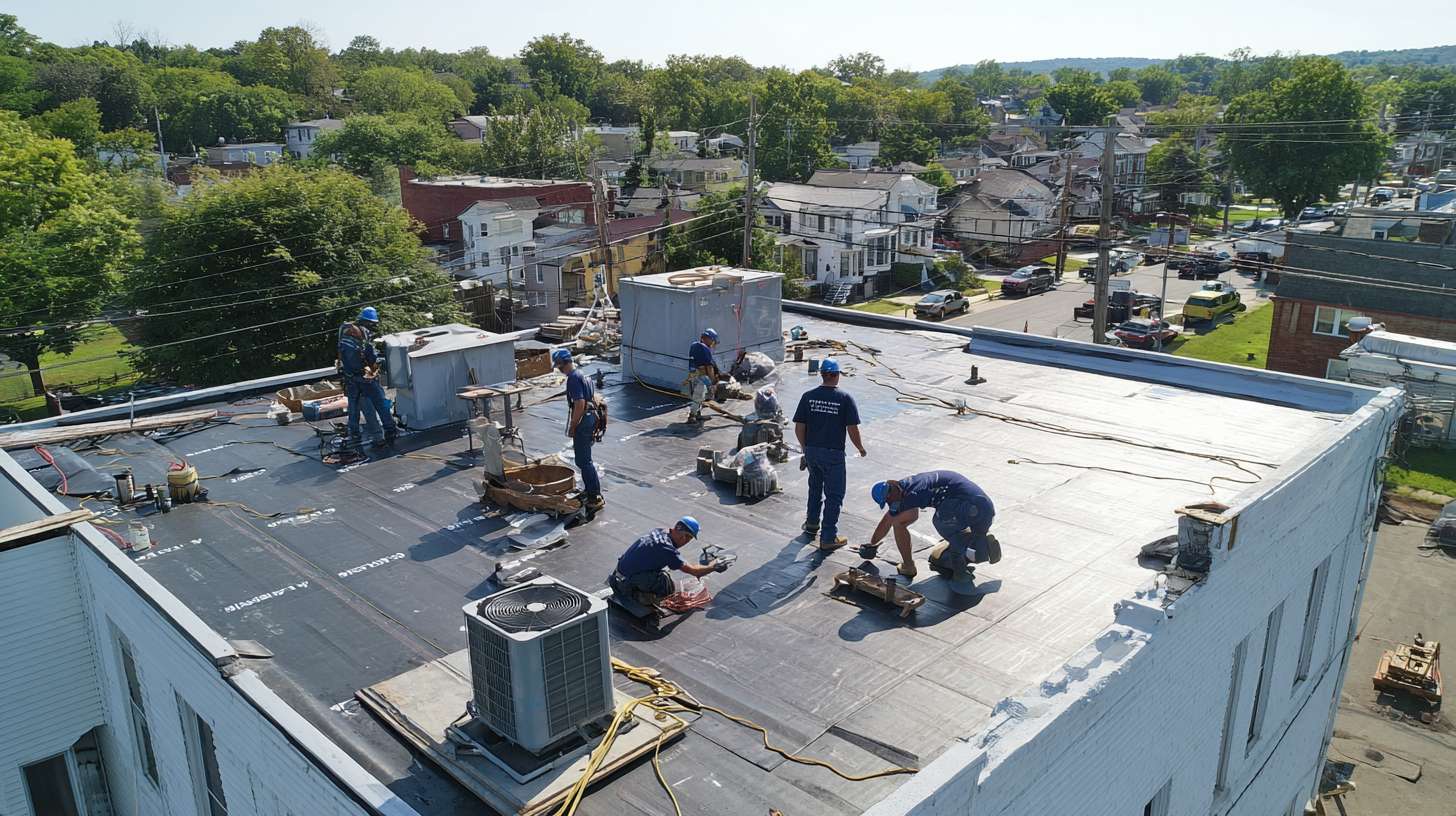
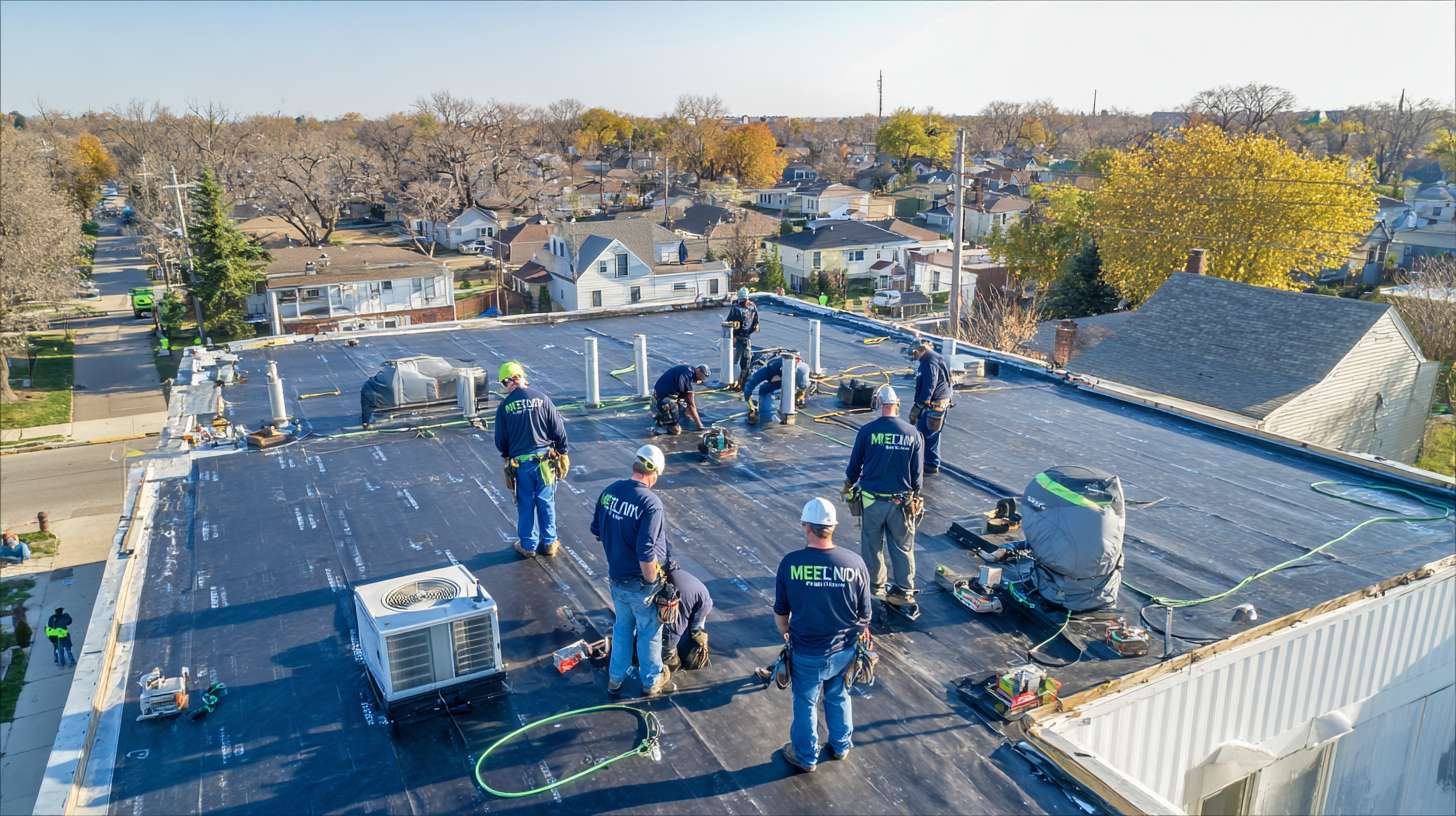
Day 1 – Tear-off and deck prep: Crew shows up, sets up tarps and debris chute or dumpster, and starts pulling off the old roof. Everything comes off down to the deck unless we’ve specified a recover (rare, and only over existing single-ply in good shape). We inspect the deck as we go, mark repairs, and by end of day the deck should be bare, swept clean, and any obvious repairs identified. If weather’s uncertain, we’ll tarp overnight or have a contingency membrane ready to throw down.
Day 2 – Deck repairs and first insulation layer: Replace any damaged sheathing, reinforce as needed, then start laying the first insulation layer. This gets mechanically fastened per the specified pattern-on residential work in Nassau County, that’s usually 4-5 fasteners per 4×8 board, more at perimeter and corners. By end of day, first layer should be down and we’re ready for the second.
Day 3 – Second insulation layer and membrane prep: Second insulation layer goes down, fully adhered to the first with foam or adhesive, seams staggered. We’re checking slope and drainage flow as we go-if we’re doing tapered, this is where the slope becomes visible and we can verify water’s going to move the direction we planned. Prep all the detail areas-inside corners get reinforcement patches, outside corners get pre-formed boots, wall flashings get primed.
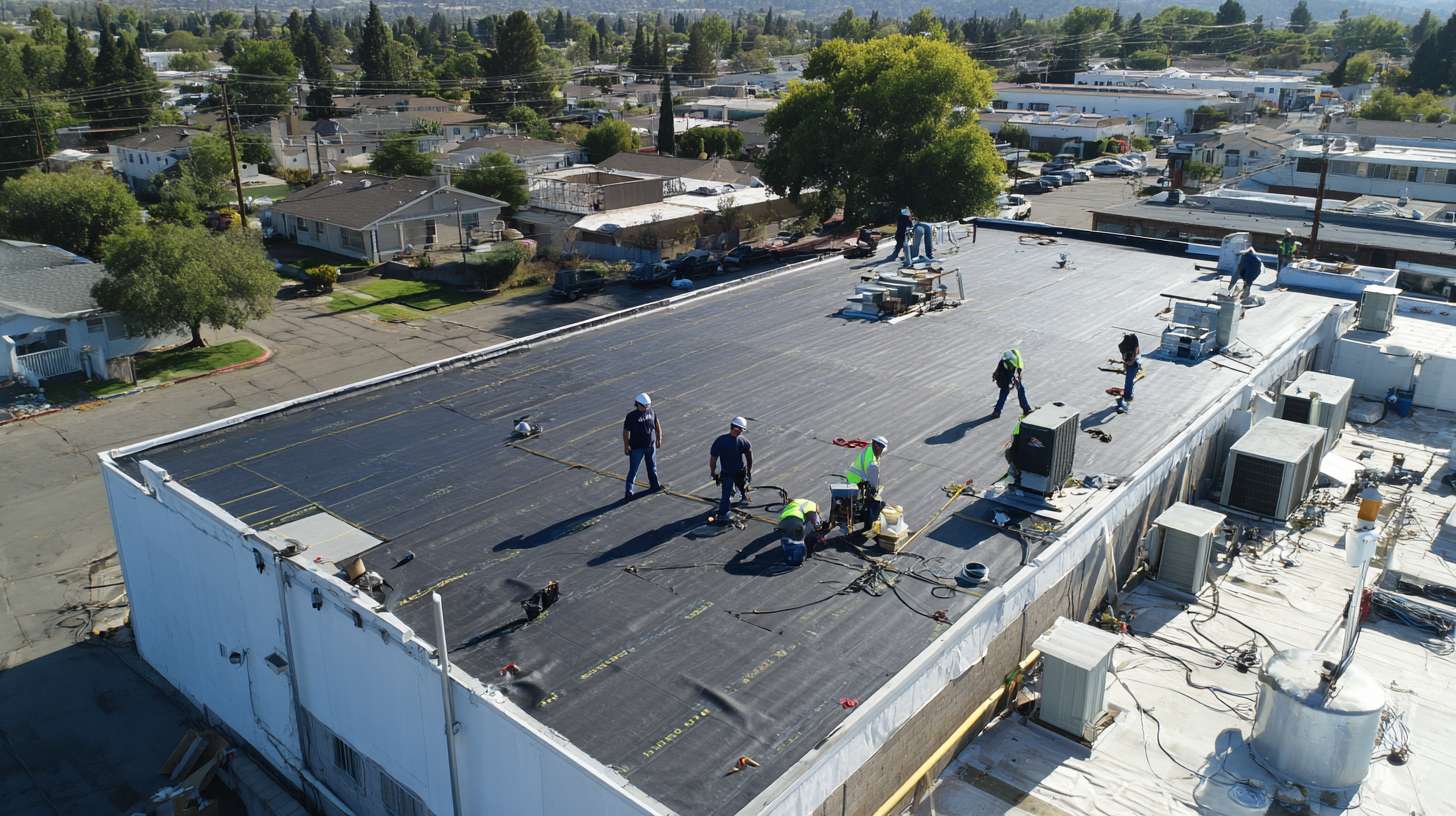
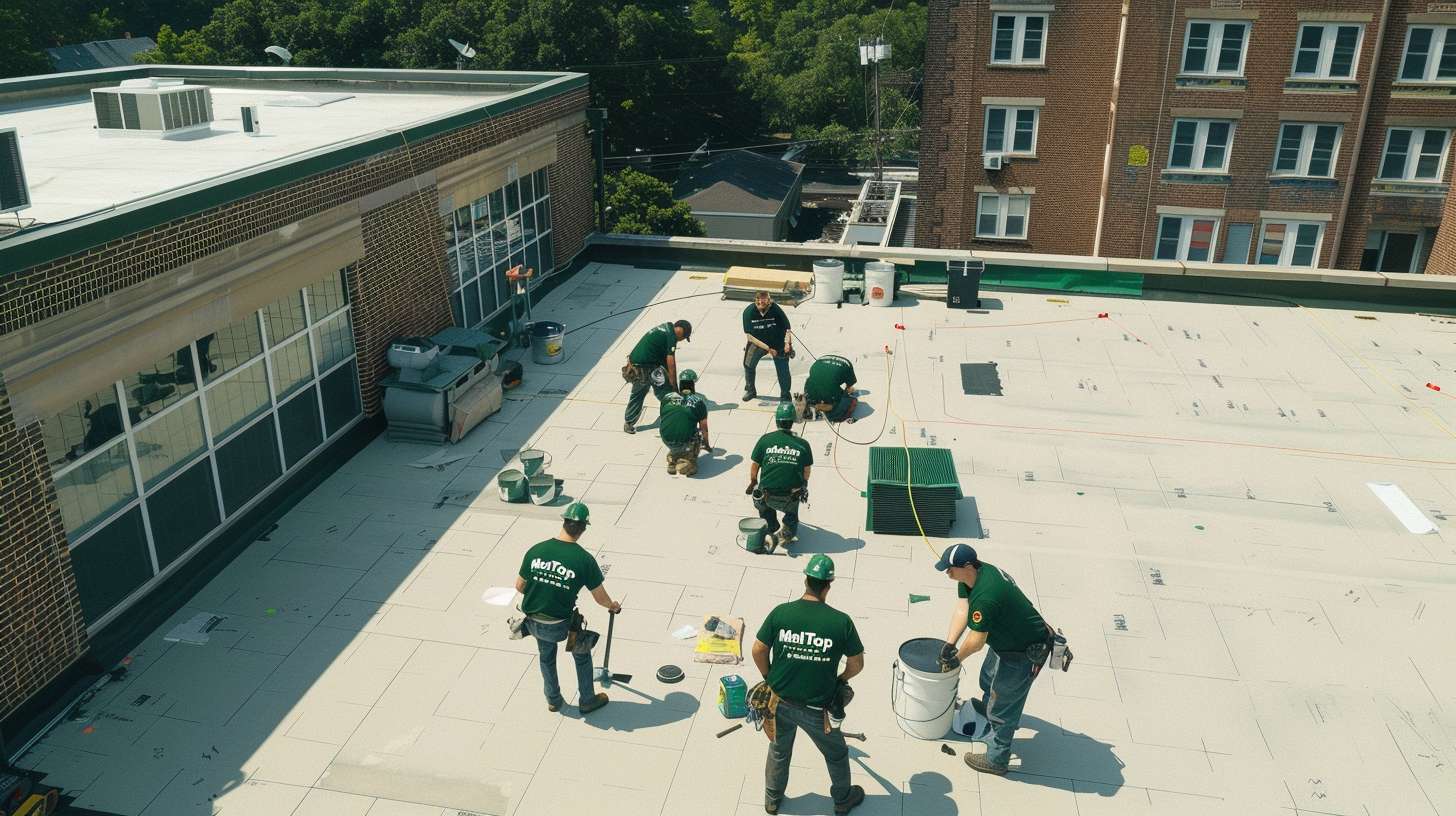
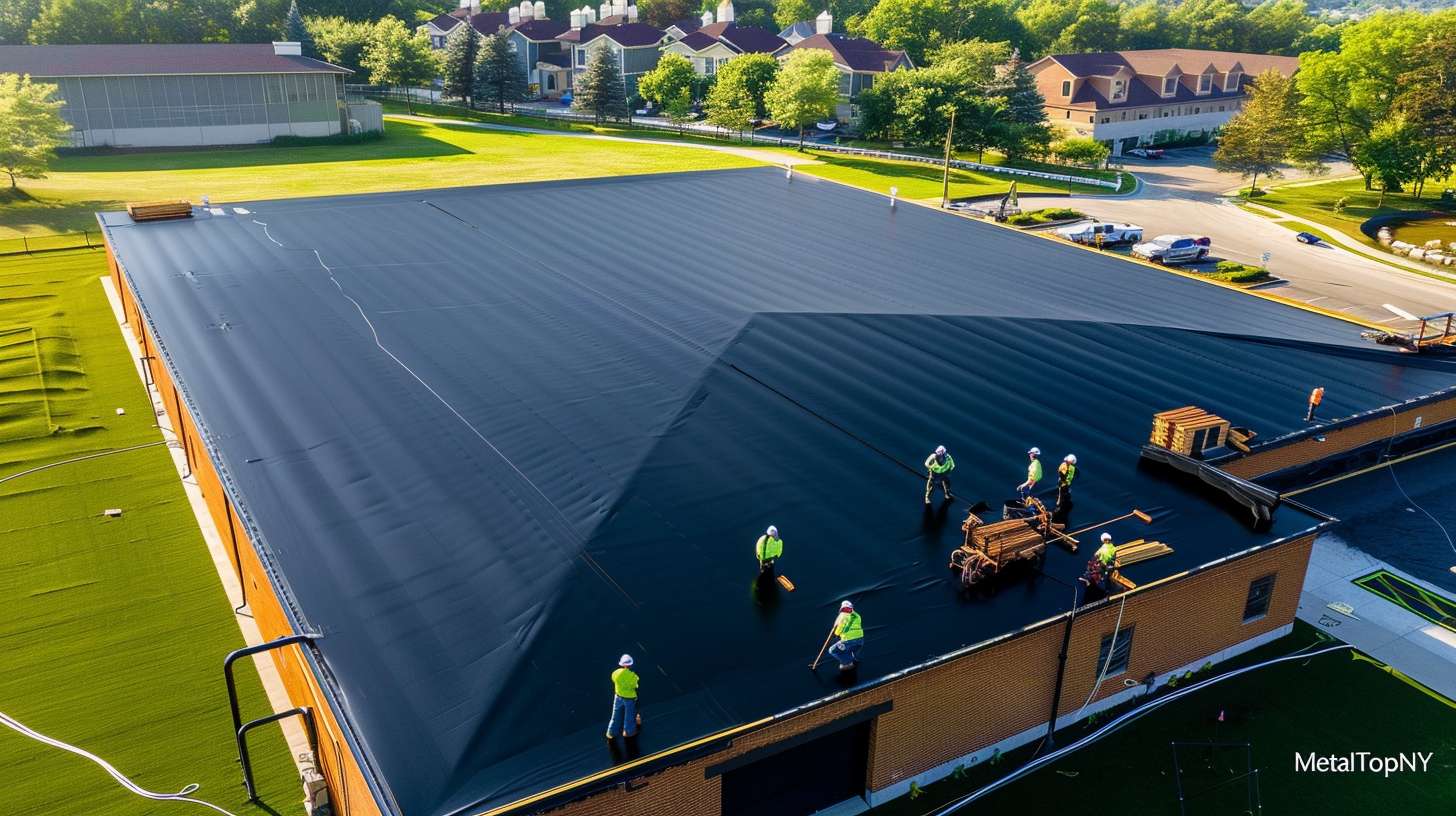
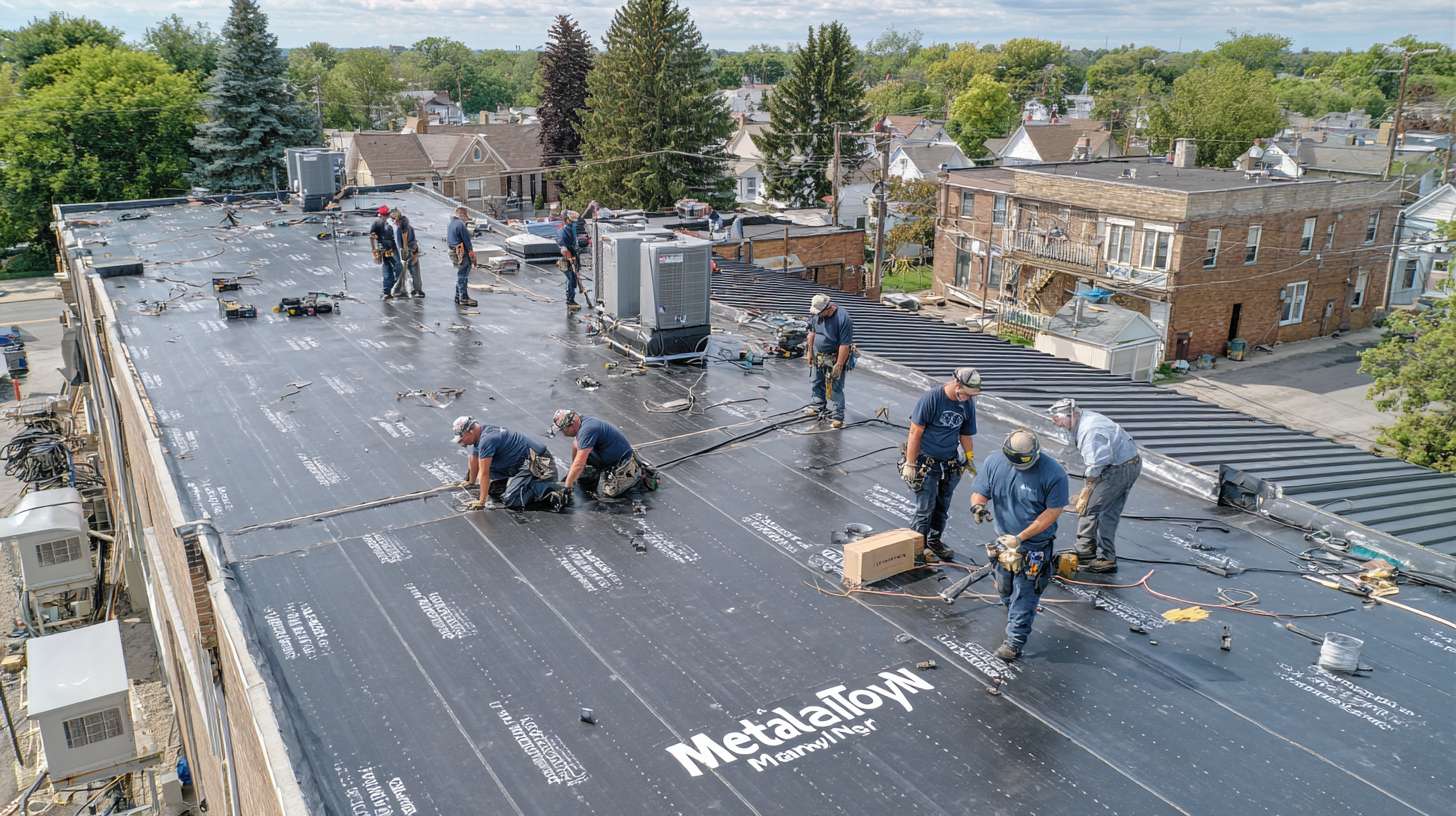
Day 4 – Membrane installation: Field membrane goes down. If it’s EPDM, we’re rolling out the rubber, letting it relax, then folding it back in sections to apply adhesive and rolling it into place with heavy rollers to ensure full contact. Seams are either taped (lap sealant and cover tape) or spliced (if we’re doing a heat-weld system like TPO). All penetrations get flashed as we go-no “we’ll come back to those.”
Day 5 – Details, edges, and cleanup: Wall flashings go up and get counter-flashed, edge metal gets installed, drains get their storm collars and final sealant checks. We’re walking the entire roof looking for any fish-mouths (bubbles or wrinkles), checking every seam, testing every flashing. Final cleanup, haul away debris, walk you through the warranty paperwork and maintenance recommendations.
That’s a best-case timeline assuming good weather and no surprises. Reality? Add a day or two for weather delays, unexpected deck rot, or material delivery hiccups. A professional crew won’t rush critical steps just to hit a schedule.
Red Flags When Installing a Flat Roof in Nassau County
You’re comparing bids and trying to figure out who’s going to do this right. Here are the phrases and approaches that should make you ask harder questions:
“We don’t need to tear off, we’ll just go over what’s there.” Maybe, if you’ve got a single layer of EPDM in good shape and the insulation underneath tests dry and firm. But “going over” two layers of old shingles, wet insulation, and deteriorated flashing? That’s not a flat roof installation, that’s just hiding problems under new material.
“We’ll reuse the old insulation to save you money.” Wet insulation has no R-value and won’t provide a firm substrate. This is false economy that costs you more in energy bills and early membrane failure.
“Flat roofs don’t need slope, they’re designed to be flat.” Technically, minimally sloped. But anyone telling you ponding water isn’t a problem either hasn’t done this long or is planning to be gone before you notice the leak.
“We’ll caulk all the flashings, that’ll seal it up.” Caulk is a maintenance item, not a primary seal. Proper flashing details use mechanical compression, adhesion, and geometry to keep water out. Caulk is the backup, not the plan.
“We don’t pull permits for flat roofs.” In Nassau County, any roof replacement or new roof installation requires a building permit, period. Contractor pulls it, inspector comes out to check the work, you get a signed-off permit when it’s done. No permit means no inspection, no accountability, and potential problems selling the house later.
A professional flat roofing contractor will explain what they’re doing at each layer, show you similar completed projects, provide a written scope that breaks down every component (not just “new flat roof”), and pull the permit without you having to ask.
Working with Platinum Flat Roofing on Your Nassau County Installation
When you’re ready to move forward with installing a new flat roof, you need a crew that thinks in systems, not just products. At Platinum Flat Roofing, we’ve been installing flat roofing systems across Nassau County long enough to know that the deck inspection matters as much as the membrane choice, that proper slope prevents 80% of callback issues, and that flashing details separate roofs that last from roofs that leak.
We provide written specifications that detail every layer of your flat roof installation-from deck fastening schedules to insulation R-values to flashing configurations-so you know exactly what you’re getting. We pull permits, coordinate inspections, and provide material and labor warranties that mean something because we’re local and we’ll be here when you need us.
If you’re installing a flat roof in Nassau County and you want it done right the first time-proper slope, correct insulation, detailed flashings, and a membrane that’s going to protect your building for the next 20-30 years-give us a call. We’ll walk the roof with you, explain what needs to happen and why, and give you a detailed proposal that you can compare line-by-line to any other bid.
Because a flat roof installation isn’t a commodity-it’s a system. And every layer matters.