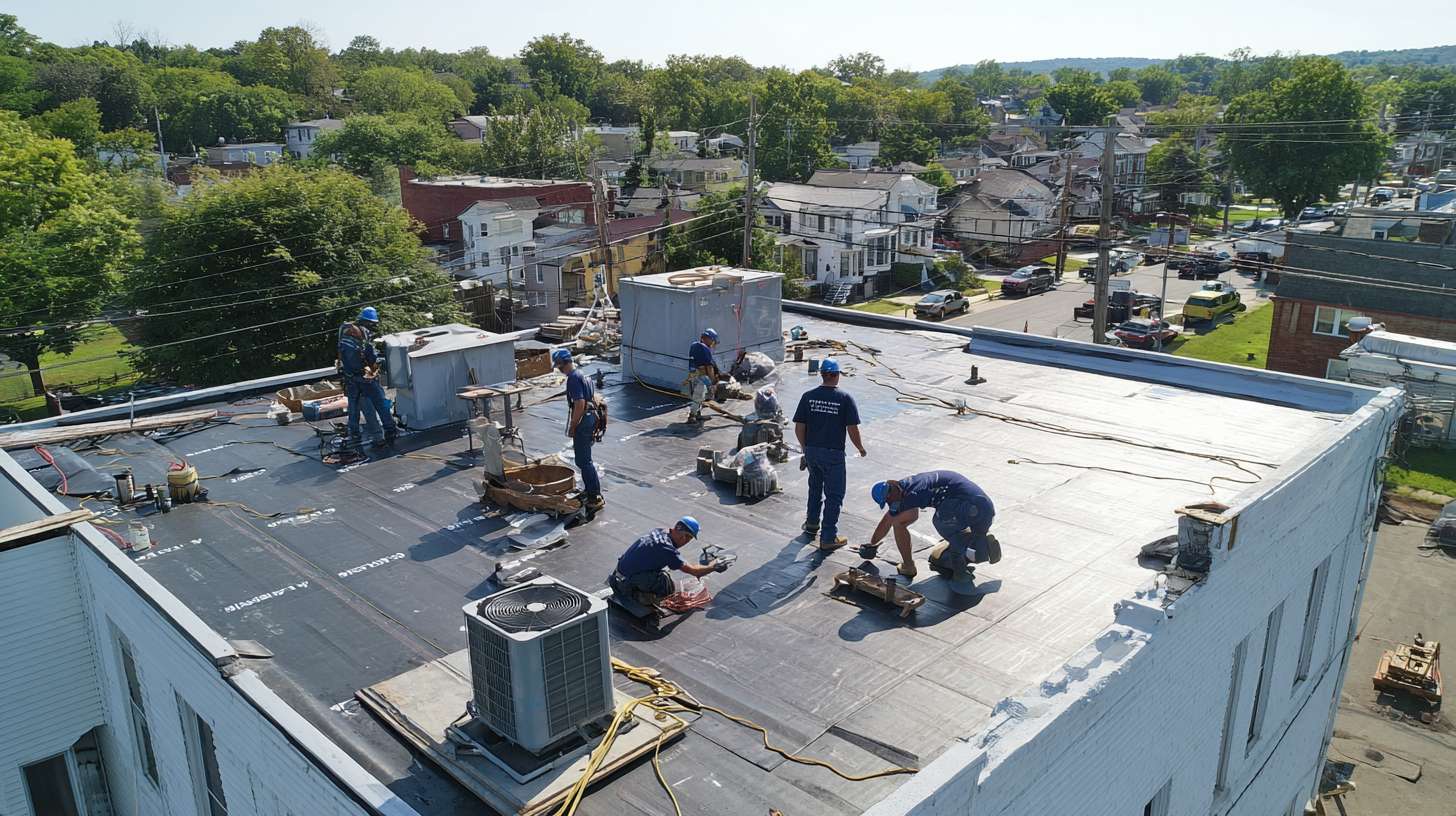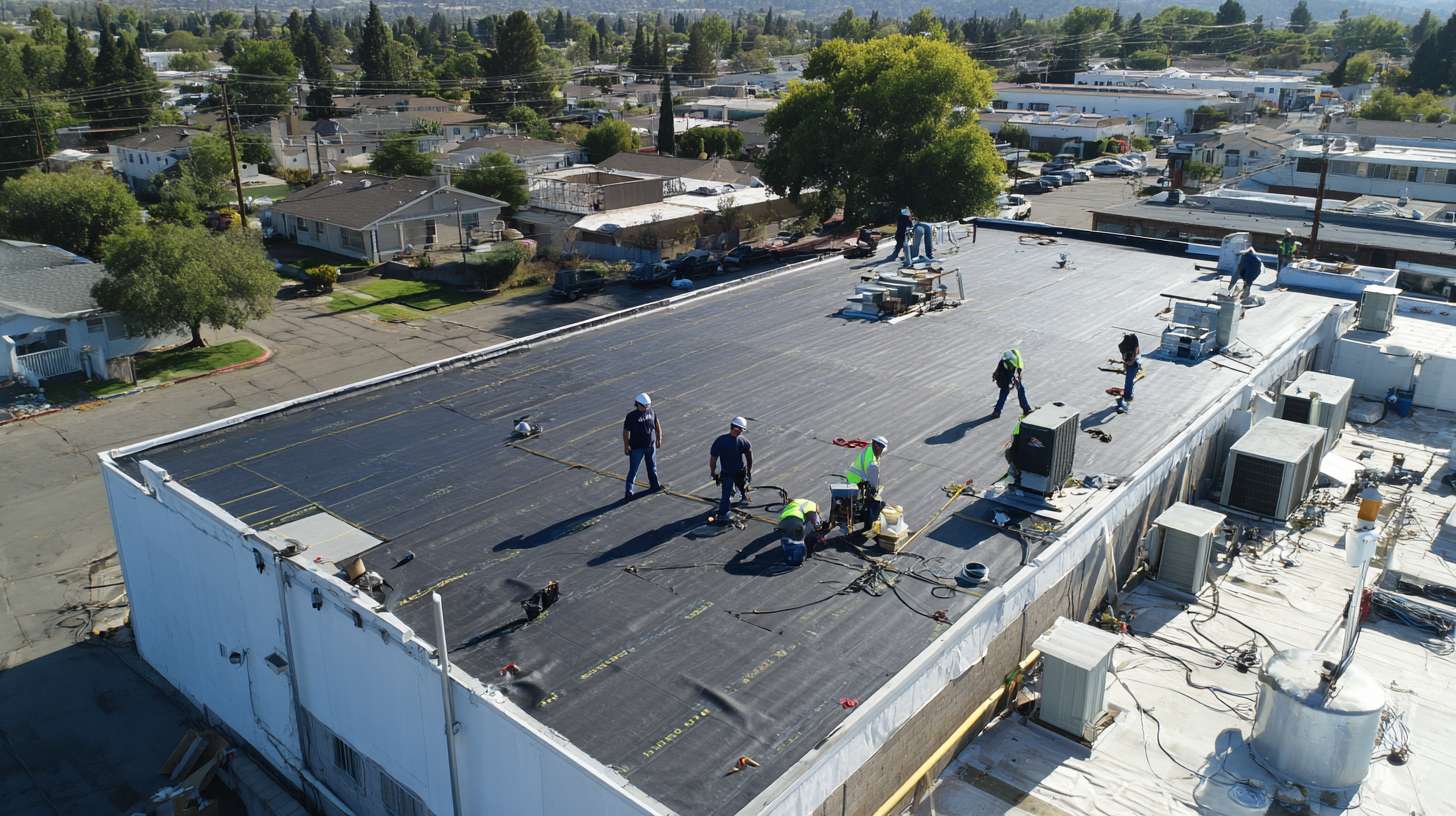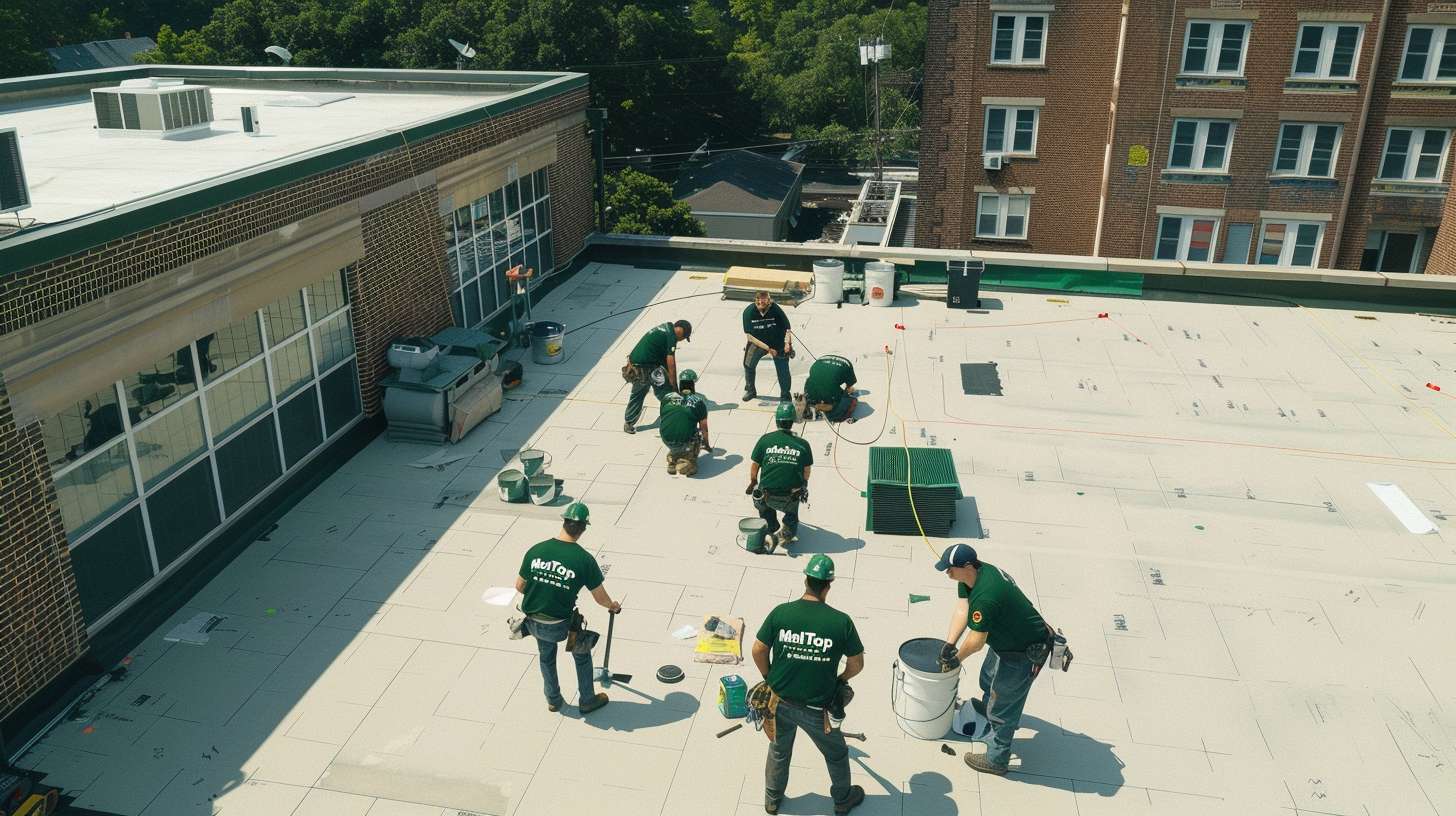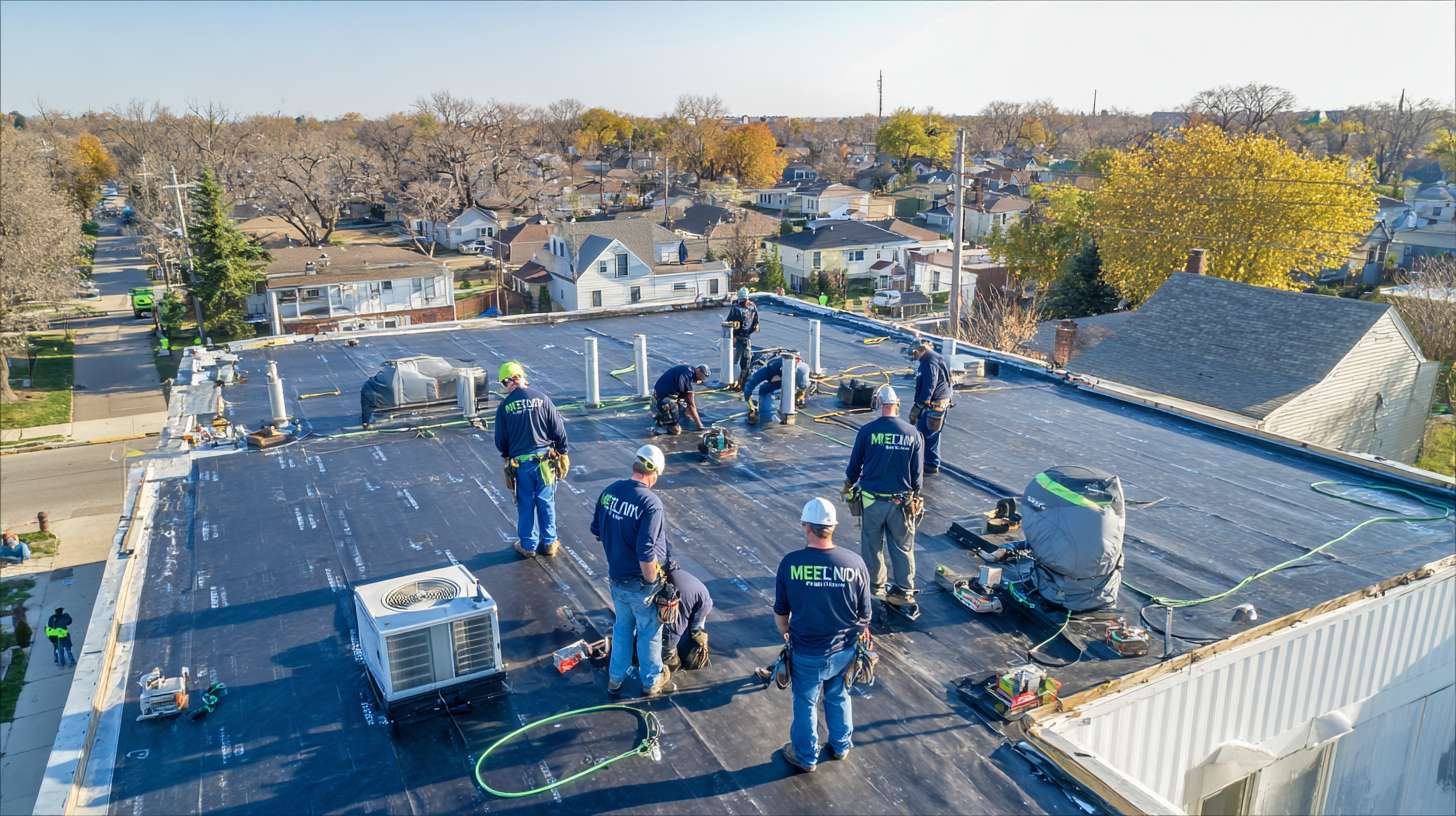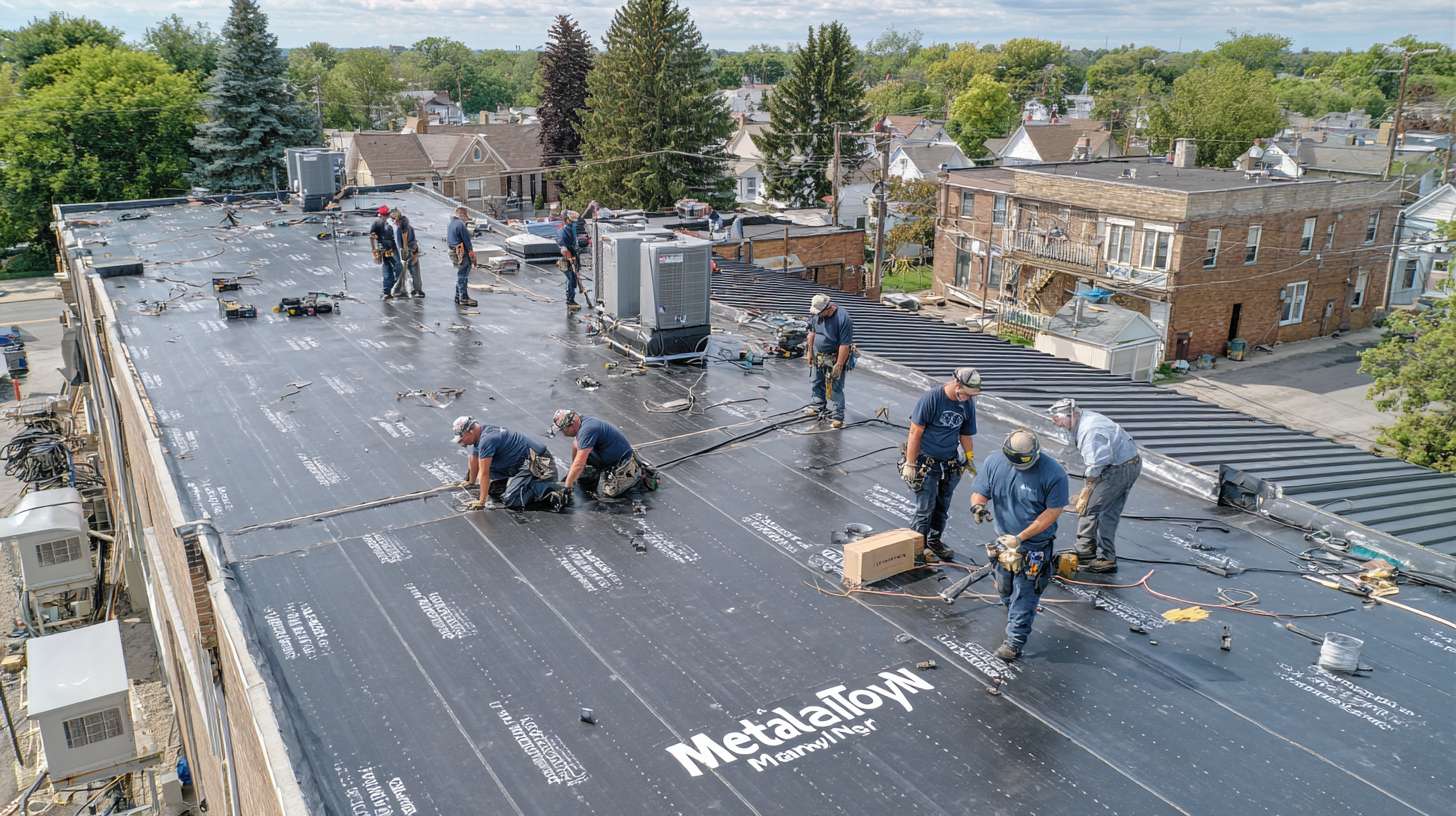
Professional Installing Flashing on Flat Roof in Nassau County
Here’s something most property owners don’t realize: between 80 and 90 percent of flat roof leaks don’t start in the middle of your roof membrane. They start at transitions-where your roof meets a parapet wall, wraps around a skylight curb, terminates at an edge, or flashes around a pipe penetration. Understanding how to install flashing on a flat roof correctly means the difference between a roof that lasts 2 years before it starts dripping and one that protects your building for 20 seasons straight through Atlantic Nor’easters, summer downpours, and freeze-thaw cycles that split sealant like an egg.
When a contractor tells you they’ll “redo the flashing,” most homeowners and even commercial property managers nod along without any clear picture of what that actually involves. Professional flat roof flashing installation is a layered, sequenced process where sheet metal and membrane work together to turn every vertical interruption into a watertight barrier. If your roofer skips steps-uses undersized metal, fastens counterflashing too low, or doesn’t follow the manufacturer’s lap requirements-you’re set up for failure before the first rain.
Why Flashing Is the Armor of Your Flat Roof
I spent my first four years in roofing at a metal fabrication shop in Hempstead, bending edge metal, counterflashings, copings, and custom reglet trims for commercial jobs across Nassau County. When I moved onto actual roof installations, I saw the same pattern over and over: the field of the roof-the big open expanse of EPDM, TPO, PVC, or modified bitumen-was almost always fine. The leaks? They were at walls. At roof drains. At the skylight we flashed three years ago that’s now peeling away because someone used roofing cement instead of proper base and cover flashing.
Flashing is the armor. It’s where your horizontal waterproof membrane transitions to vertical surfaces that shed water differently. Metal flashing-typically aluminum, galvanized steel, copper, or stainless depending on budget and exposure-works with the membrane to create overlapping layers that direct water down and away. When you’re installing flashing on a flat roof, you’re solving a physics problem: water doesn’t flow the same way on a wall as it does on a nearly horizontal surface, and wind-driven rain in Long Beach or Oceanside will test every unsealed edge.
The Five Critical Flashing Locations on Every Flat Roof
Before we get into step-by-step installation sequences, you need to understand where flashing happens. Every flat roof has at least three of these five locations, and most have all five:
- Parapet walls: Where your roof membrane runs up the interior face of a perimeter wall that rises above the roof deck
- Roof-to-wall junctions: Where a flat roof abuts a vertical wall-penthouse, stairwell enclosure, adjoining taller building
- Penetrations: Pipes, vents, conduit, HVAC supports-anything that punctures your roof membrane
- Skylights and curbs: Raised frames that require flashing on all four sides
- Roof edges and gutters: The perimeter where your roof terminates at a drip edge, gutter, or scupper
Each location requires a different flashing strategy, but the principle is the same: base flashing (the first layer attached to the roof deck and membrane) always goes on first, and counterflashing (the second layer attached to the wall or vertical surface) overlaps it from above, shedding water outward.
How to Install Flashing on a Flat Roof: Base Flashing First
On a walk-up building in Long Beach three years back, we tore off a 15-year-old EPDM roof that was leaking at every parapet. The previous crew had installed the counterflashing before the base flashing-literally backwards-so every time rain hit the wall, water ran behind the metal and straight onto the wood blocking. The interior drywall was black with mold four feet down from the roofline.
Proper flat roof flashing installation starts with base flashing, sometimes called “cant flashing” when installed over a triangular cant strip. Here’s the correct sequence for a typical parapet wall:
Step 1: Install the cant strip. A cant strip is a beveled piece of wood or rigid insulation (usually 4×4 inches) that sits at the junction of the roof deck and the wall. It creates a gradual transition so your membrane doesn’t have to make a hard 90-degree bend, which would stress and eventually crack the material. Fasten the cant strip to the deck with appropriate fasteners-typically screws or nails every 6 inches.
Step 2: Apply the field membrane up to the cant. Your main roof membrane-whether it’s EPDM, TPO, PVC, or modified bitumen-gets installed across the roof deck and terminates at the base of the cant strip. For adhered systems, you’re using bonding adhesive or heat-welding. For mechanically attached systems, you’re fastening and plating every 12 inches within 6 feet of the perimeter (Nassau County wind zone requirements).
Step 3: Install base flashing over the cant and up the wall. Base flashing is a separate piece of the same membrane material, typically a strip 18 to 24 inches wide. You adhere or weld one edge to the field membrane (with a minimum 4-inch overlap), run it up and over the cant strip, then continue it vertically up the wall. Code in New York requires a minimum base flashing height of 8 inches above the roof surface, but I won’t install less than 12 inches-and 16 inches is better on any wall that takes wind-driven rain. On Long Island, that’s every wall.
Step 4: Fasten the base flashing at the top. The top edge of your base flashing gets mechanically fastened to the wall with termination bar-a continuous metal strip (aluminum or steel) with fasteners every 8 to 10 inches. Some contractors use individual fasteners and big washers or nails with plastic or metal caps. That’s not sufficient. Wind will peel those edges. Termination bar is continuous and distributes stress along the entire run.
Step 5: Seal the termination bar. After the bar is fastened, you run a bead of compatible sealant-polyether, polyurethane, or butyl depending on your membrane type-along the top edge and both sides of the bar. This is not structural; it’s a secondary seal. The real waterproofing is the overlap of metal counterflashing that goes on next.
Counterflashing: The Second Layer That Sheds Water
Counterflashing is sheet metal-typically .032 or .040-inch aluminum for residential, sometimes 24-gauge galvanized or copper for commercial-that mounts to the wall above the base flashing and overlaps it by at least 4 inches (I prefer 6). The bottom edge of the counterflashing is left loose so it can expand and contract with temperature changes without tearing the membrane below.
There are three ways to attach counterflashing to a wall, and the method depends on the wall construction:
Reglet (surface-mounted or embedded): A reglet is a metal receiver-a slot or kerf-cut or embedded into the wall. You slide the top edge of your counterflashing into the reglet and lock it in place, then seal the joint with sealant. Embedded reglets are installed during masonry construction. Surface-mounted reglets are fastened to the wall after the fact. This is the cleanest, longest-lasting method and the one I use on any brick or CMU parapet.
Through-wall fastening: On wood-framed walls or walls where you can’t cut a reglet, you fasten the counterflashing directly through the face of the metal into the wall structure with corrosion-resistant screws every 10 to 12 inches. Each fastener gets a dab of sealant under the head and over the top after driving.
Cleat system: For longer runs or walls prone to movement, you use intermittent cleats (small metal clips) fastened to the wall, and the counterflashing snaps or hooks onto the cleats. This allows expansion and contraction without fastener holes telegraphing stress into the metal.
The bottom edge of counterflashing must clear the roof surface by at least 2 inches and overlap the base flashing by 4 to 6 inches. That overlap is the rain shield. Water runs down the wall, hits the counterflashing, follows the metal down, and drips off the bottom edge onto the field membrane-never getting behind the flashing.
Roof-to-Wall Junctions: Step Flashing for Vertical Abutments
On a Garden City commercial building last fall, we found water pouring into the second-floor office every time it rained. The roof itself was new-a white TPO system installed 18 months earlier. The problem was the wall flashing where the flat roof met a three-story brick wall. The roofer had used one continuous piece of base flashing, no counterflashing at all, and relied on a bead of caulk at the top. Caulk failed in six months. Water wicked behind the membrane, saturated the wood nailers, and rotted out 14 feet of roof edge.
When you’re flashing a flat roof against a vertical wall-especially a long run-you need step flashing, not one continuous strip. Step flashing consists of individual L-shaped metal pieces, each about 8 to 10 inches long, that overlap each other like shingles as they run up the wall. This allows the wall and roof to move independently without tearing the flashing.
Here’s the sequence for installing flashing on a flat roof at a wall junction:
- Install field membrane up to within 6 inches of the wall
- Cut individual step flashing pieces-each piece 8-10 inches along the roof, 8-12 inches up the wall, bent at 90 degrees
- Set the first step flashing piece at the low end of the wall, fasten the vertical leg to the wall, and adhere or weld the horizontal leg to the roof membrane
- Install the next piece 6 inches up the wall, overlapping the first piece by 3-4 inches
- Continue up the wall, each piece overlapping the one below
- Install counterflashing over the step flashing, using reglet or fasteners as described above
- Seal all terminations and seams with compatible sealant
Step flashing is more labor-intensive than running one continuous strip, which is why contractors skip it. But it’s the only method that handles building movement and thermal expansion correctly on a long wall.
Pipe Penetrations and Vents: Flashing Boots and Pitch Pans
Pipes and vents puncture your roof membrane, and each one is a potential leak point. There are two main ways to flash them: prefabricated boots (best for small pipes and vents) and custom pitch pans (for larger or odd-shaped penetrations).
Prefabricated pipe boots: These are one-piece rubber or thermoplastic flashings with a conical shape that slips over the pipe. The base is a square or round flange that adheres or welds to the roof membrane with 4 to 6 inches of overlap in all directions. EPDM boots bond to EPDM membranes with contact cement and primer. TPO and PVC boots heat-weld directly to the membrane. The top of the boot gets clamped around the pipe with a stainless-steel hose clamp or compression ring.
I don’t trust boots that rely on sealant alone. The sun bakes it, it shrinks, and in 3-5 years you have a gap. Mechanical compression at the pipe and full adhesion or welding at the base are non-negotiable.
Custom pitch pans: For larger penetrations-HVAC supports, grouped pipes, conduit racks-you build a custom flashing out of sheet metal. The metal forms a “pan” around the penetration with sides at least 4 inches tall. The bottom flange overlaps the roof membrane and gets fastened and sealed. You fill the inside of the pan with pourable sealer or elastomeric flashing cement to a depth of at least 2 inches. Some contractors use roofing tar. Don’t. It dries out and cracks. Use a two-part polyurethane or purpose-made pitch pan filler that stays flexible.
On Nassau County roofs near salt air-Oceanside, Long Beach, Freeport-use stainless steel or copper for pitch pans. Galvanized steel corrodes in 8-10 years and then the whole detail fails.
Skylight and Roof Curb Flashing
Skylights and equipment curbs (for HVAC units, exhaust fans, hatches) require four-sided flashing. The principle is the same as wall flashing-base flashing up the sides, counterflashing over the top-but you have to manage four corners and ensure water can’t get trapped behind the curb.
The correct sequence:
- Set the curb on the roof deck and fasten it down
- Install cant strips around all four sides of the curb base
- Run field membrane up to the cant strips
- Install base flashing up and over each cant strip, adhering or welding the bottom edge to the field membrane and fastening the top edge to the curb with termination bar
- At corners, cut the base flashing at a 45-degree angle and overlap the pieces, or use a prefabricated corner piece
- Install metal counterflashing on all four sides, starting with the low side (typically downslope) and working upslope so each piece overlaps the one below
- Seal all laps and terminations
Corners are where most skylight leaks start. You cannot just fold base flashing around a 90-degree corner; it will tear or pull loose. Cut and overlap, or use molded rubber or thermoplastic corner boots that match your membrane.
Roof Edge Flashing: Drip Edges, Gravel Stops, and Scuppers
The perimeter of your flat roof-where it meets a gutter, terminates at a fascia, or drains through a scupper-needs metal edge flashing to protect the roof edge and direct water into the drainage system. There are three common edge flashing profiles:
Drip edge: A simple L-shaped metal trim that extends the roof membrane over the edge and directs water into a gutter or off the building. The vertical leg fastens to the fascia or roof deck edge, and the horizontal leg sits under the membrane. Minimum overhang: 1.5 inches past the fascia.
Gravel stop: A taller, more robust edge flashing used on roofs with gravel ballast or when you need a raised edge to contain insulation or pavers. The vertical face is typically 4 to 8 inches tall and includes a continuous cleat along the top for attaching the membrane. The horizontal flange extends onto the roof deck and gets fastened every 10-12 inches. Your membrane terminates at the gravel stop and gets clamped or adhered under the cleat.
Scupper flashing: Where your flat roof drains through an opening in a parapet wall, you need custom sheet-metal scupper flashing that lines the opening and extends onto the roof deck 12-18 inches. The membrane gets clamped under the scupper’s inner edge, and the metal throat directs water out through the wall. Scuppers leak when contractors don’t extend the metal flashing far enough onto the roof or when they don’t properly seal the scupper to the wall opening.
| Flashing Location | Base Flashing Material | Counterflashing Material | Minimum Height Above Roof | Overlap Requirement |
|---|---|---|---|---|
| Parapet wall | EPDM / TPO / PVC / Mod-Bit | .032″ aluminum or 24-ga. galvanized | 12 inches (8″ min code) | 4-6 inches |
| Roof-to-wall junction | Same as field membrane | Step flashing, aluminum or copper | 8-12 inches | 3-4 inches between steps |
| Pipe penetration (under 4″) | Prefab boot (EPDM / TPO / PVC) | None (boot is single-piece) | Boot collar 2-4″ above pipe | 4-6 inches at base flange |
| Skylight curb | Same as field membrane | .032″ aluminum, all 4 sides | 6-8 inches up curb | 4-6 inches |
| Roof edge (gravel stop) | Membrane clamps under cleat | .040″ aluminum or 24-ga. steel | 4-8 inches vertical face | 6 inches at end laps |
Common Mistakes in Flat Roof Flashing Installation
I’ve repaired enough bad flashing to write a book on what not to do. Here are the five mistakes that cause 90% of the callbacks I see:
1. Using sealant as primary waterproofing. Caulk and mastic are secondary seals. They fill gaps and stop minor water infiltration, but they’re not structural waterproofing. If your roofer’s flashing plan relies on a bead of caulk to keep water out, you’ll be calling someone else in 18 months.
2. Skipping termination bar. Individual fasteners-even with big washers-don’t distribute stress. Wind gets under the edge of base flashing, peels it loose, and water runs straight down the wall. Continuous termination bar every time.
3. Insufficient counterflashing overlap. If your counterflashing only overlaps the base flashing by 2 inches, capillary action and wind-driven rain will pull water up and behind the metal. Minimum 4 inches, 6 is better, and on any wall that faces the ocean I go 8 inches.
4. Not following membrane manufacturer requirements. Every TPO, PVC, EPDM, and modified bitumen system has published flashing details. If you deviate-wrong adhesive, insufficient lap, incompatible materials-your warranty is void. On a Westbury office building, we found a contractor had used EPDM primer and adhesive on a TPO roof. The base flashing peeled off in sheets after one winter.
5. Ignoring thermal movement. Metal expands and contracts. So does your roof membrane. If you lock both ends of a 40-foot run of counterflashing tight with no expansion joints, something will buckle or tear. Long runs need slip joints every 10-12 feet, and you never fasten the bottom edge of counterflashing.
Material Selection: Metal Types and Thickness
Not all flashing metal performs the same on Long Island. Salt air accelerates corrosion, freeze-thaw cycles stress seams, and UV exposure degrades sealants. Here’s what I use based on location and budget:
Aluminum (.032″ or .040″): My default for most Nassau County roofs. It doesn’t rust, forms easily, and holds up 20-25 years in coastal environments. Use .040-inch thickness on any edge or parapet over 6 feet tall. The extra rigidity prevents oil-canning (wavy appearance).
Galvanized steel (24-gauge): Stronger than aluminum, less expensive, but it will rust in salt air within 10 years unless it’s painted or powder-coated. I use galvanized only on inland roofs-Hicksville, Westbury, Garden City-never within 2 miles of the ocean.
Copper (16-ounce): Premium material. Lasts 50+ years, develops a protective patina, and looks beautiful on historic buildings. Expensive-about four times the cost of aluminum-but if you’re flashing a slate or tile roof on a high-end home in Oyster Bay or Locust Valley, copper is the correct choice.
Stainless steel (26-gauge): Best corrosion resistance, especially in salt environments. I use stainless for scuppers, pitch pans, and any flashing that’s constantly wet. It’s harder to form and costs more than aluminum, but it’s bulletproof.
Why Flashing Matters More in Nassau County Than You Think
We get weather here that tests every roof detail. Nor’easters blow horizontal rain against parapets at 40-50 mph. Winter freeze-thaw cycles expand water in every crack and joint. Summer heat bakes sealant until it’s brittle. Salt air corrodes metal. And when a hurricane pushes 3 inches of rain in two hours, any gap in your flashing becomes a waterfall into your building.
Building code in New York-based on the International Building Code with state amendments-sets minimum standards for flashing heights, fastening, and materials. But code is a baseline. It’s the least you can do and still pass inspection. On a flat roof in Freeport or Massapequa that’s 300 feet from the Atlantic, minimum code might get you 5-7 years before you’re dealing with leaks. Proper installation-12-inch base flashing, continuous termination bar, 6-inch counterflashing overlap, corrosion-resistant metals-gets you 20 years.
When you’re getting estimates for flat roof flashing installation, ask these questions:
- What thickness metal are you using for counterflashing?
- How are you fastening the base flashing at the top?
- What’s the overlap between base and counterflashing?
- Are you using reglets or surface fasteners for counterflashing?
- What type of sealant, and is it compatible with my membrane?
If the contractor can’t answer those questions with specific numbers, they’re not qualified to flash your roof.
Working with Platinum Flat Roofing
At Platinum Flat Roofing, we treat every flashing detail like it’s going to be tested by the worst storm Nassau County will see in the next 20 years-because it will be. We fabricate custom counterflashing and edge metal in-house, follow every manufacturer’s specification to protect your warranty, and use only corrosion-resistant fasteners and long-term sealants rated for coastal environments. Installing flashing on a flat roof isn’t a side task; it’s the most critical part of the job, and we won’t walk off your roof until every transition is layered, sealed, and tested.
If you’re seeing water stains on your ceiling near a wall or parapet, if your roof is more than 15 years old and you’re not sure when the flashing was last inspected, or if you’re planning a roof replacement and want it done correctly the first time, call us. We’ll walk your roof, show you exactly what’s failing or at risk, and explain-in plain language-what proper flat roof flashing installation looks like on your building. No guesswork. No shortcuts. Just flashing that works.