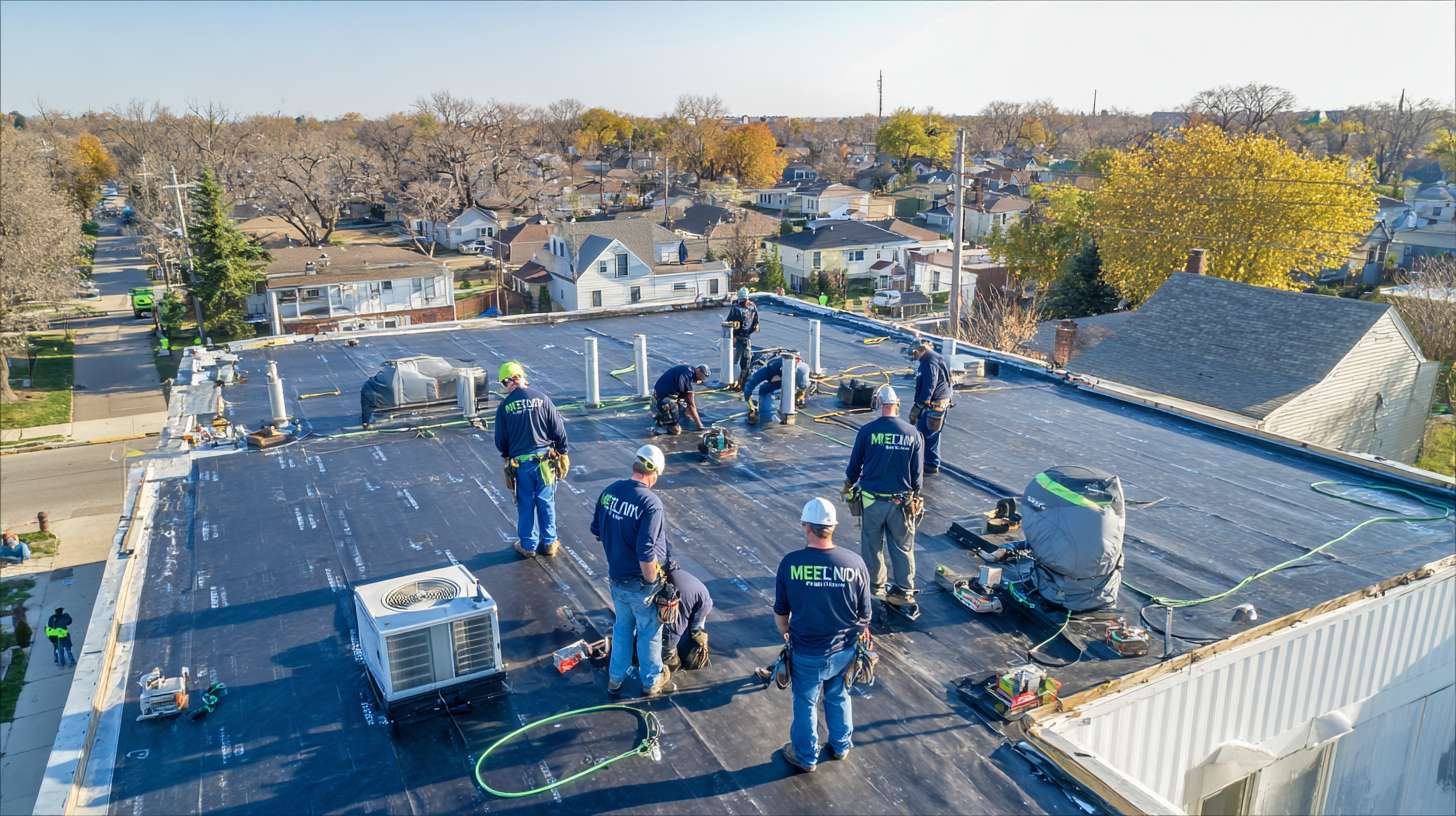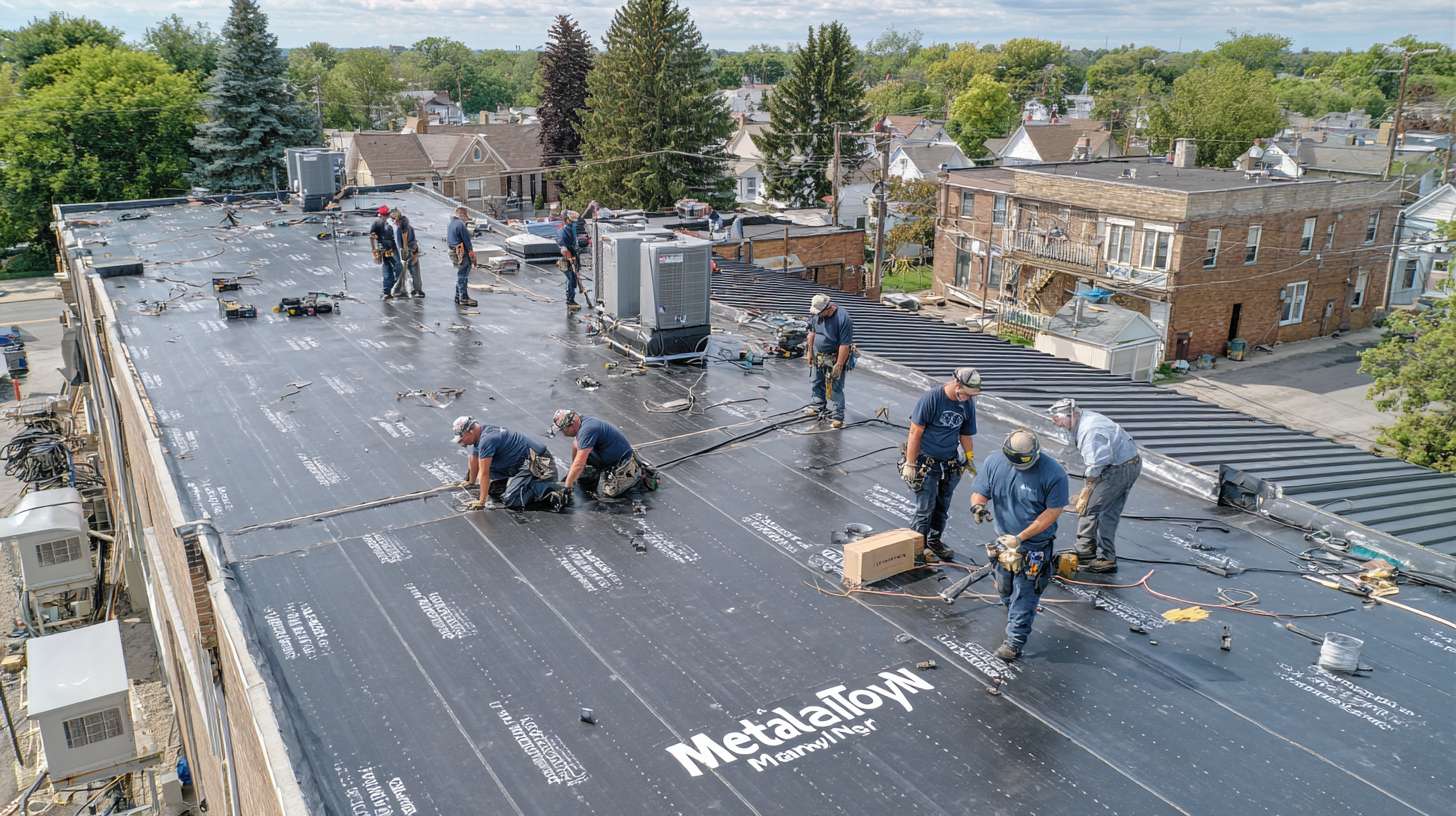
Expert Installing Roof Drains on Flat Roofs in Nassau County
Here’s something most flat-roof owners in Nassau County don’t know: by code and manufacturer warranty standards, water on a properly designed flat roof should drain completely within 24 to 48 hours of the last raindrop. If you’re still looking at puddles three days after a storm, you don’t have a “normal flat roof”-you have a drainage problem that’s eating away at your membrane, adding dangerous weight to your structure, and setting you up for interior leaks. Installing roof drains on flat roofs correctly solves ponding permanently, but only if you understand where drains belong, how they connect to your building’s plumbing, and how to tie them into your membrane without creating the very leaks you’re trying to prevent. This guide walks through exactly how to install a roof drain on a flat roof-from planning and placement through cutting, setting, flashing, and testing-so you fix standing water without compromising your roof system.
Why Flat Roof Drain Installation Is Critical in Nassau County
Professional roof drain installation on flat roofs ranges from $850 to $2,400 per drain in Nassau County when you include the drain assembly, cutting and structural work, interior plumbing connection, and proper membrane flashing. That’s not cheap-but compare it to what happens when you ignore standing water: accelerated membrane aging (TPO and EPDM warranties can be voided if ponding exceeds 48 hours), dangerous overloading on older timber roof decks common in pre-1970 Nassau homes, ice dams in winter when that pond freezes and blocks other drainage paths, and eventual catastrophic leaks when UV-weakened membrane finally gives way under the constant water exposure.
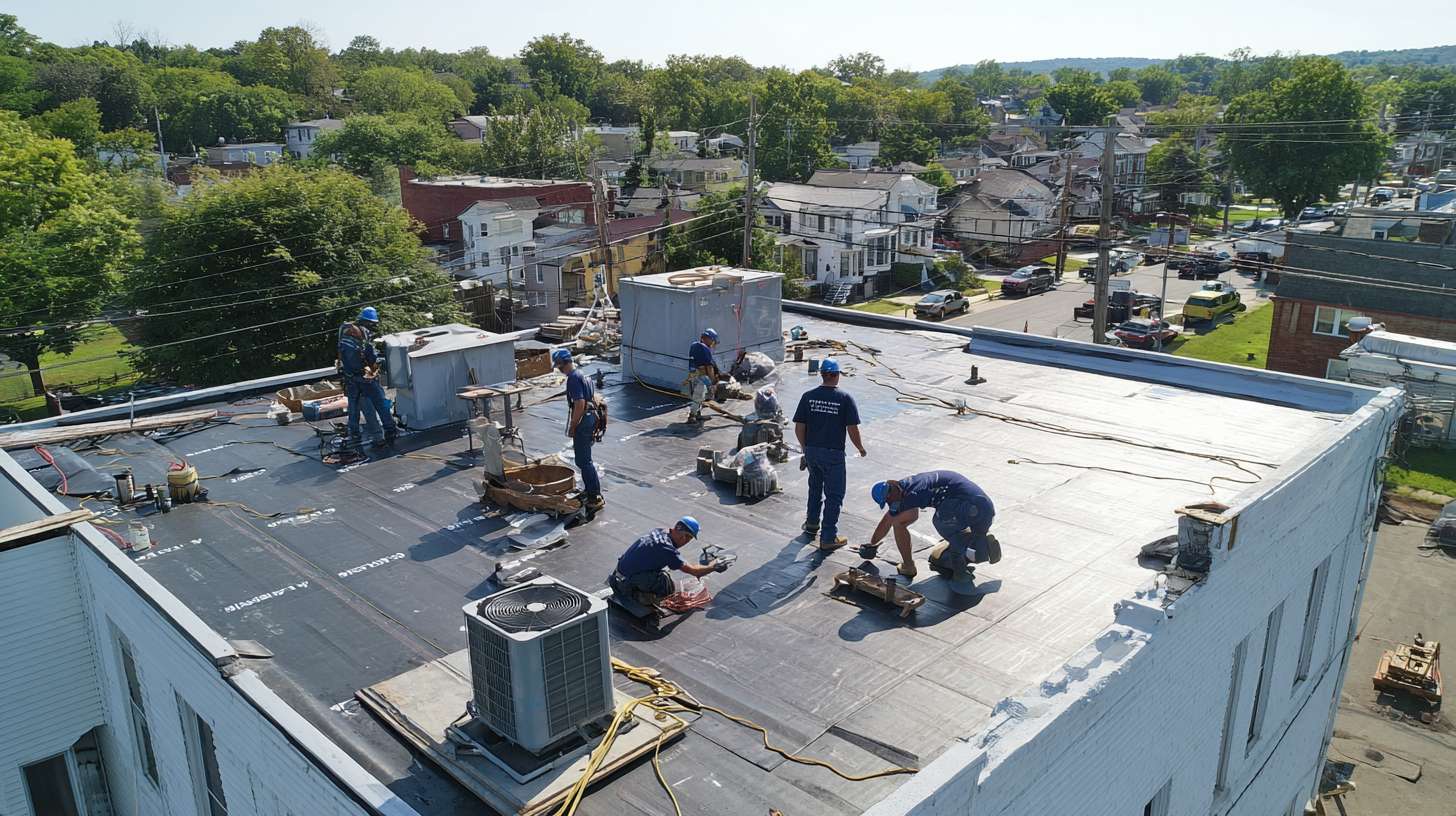
I’ve worked on two-family homes in Hempstead where 6 inches of standing water sat in the center of the roof all summer because the original builder installed just one undersized drain at the edge-water had nowhere to go. On a Garden City mixed-use building, we found three drains that were technically installed but placed so poorly relative to the roof’s actual low points that water flowed away from them and ponded against a parapet instead. Installing roof drains on flat roofs isn’t just about cutting a hole and dropping in hardware; it’s about reading the roof’s topography, understanding the structure underneath, coordinating with plumbing systems, and executing membrane tie-ins that will hold for 20+ years.
Understanding Flat Roof Drainage Types Before You Install
Before you touch a knife or drill, you need to choose the right drain type for your situation. Nassau County flat roofs typically use three drainage strategies, and most code-compliant installations combine two of them:
Internal roof drains penetrate through the roof deck and connect to vertical plumbing leaders inside your building walls or structure. These are your primary workhorses-they handle the bulk of routine rainfall by collecting water at the roof’s low points and sending it through pipes that discharge at grade level or into your storm sewer connection. Internal drains require coordination with a plumber because you’re tying into your building’s drainage system, and on existing buildings that often means opening ceilings below to run new piping.
Scuppers are openings through parapet walls or roof edges that let water sheet off the side of the building. They’re simpler to install since they don’t require interior plumbing-water just flows through the wall opening and down a conductor (downspout) on the exterior. Scuppers work great as secondary or overflow drainage, but they’re less reliable as sole primary drains in Nassau’s variable weather because leaves, ice, and debris can block them easily. I use scuppers most often on small residential additions and garages where running interior plumbing isn’t practical.
Overflow drains (emergency drains) are required by code on most commercial flat roofs and strongly recommended on residential buildings. They’re set 2 inches higher than your primary drains, so they only activate when primaries are blocked or overwhelmed. Overflows prevent catastrophic ponding-when a primary clogs during a cloudburst, the overflow kicks in before water weight becomes dangerous. They discharge separately from primaries (never tie them together) and must be visible from the ground so you can see when they’re running, which tells you immediately that your primaries need service.
On a typical Nassau County two-family flat roof, I’ll install at least two internal primary drains at opposite low points plus one overflow scupper-this creates redundancy so a single clog or freeze can’t flood your roof.
How to Plan Drain Location: Reading Your Roof’s Actual Topography
This is where most DIY attempts and even some contractors fail: they install drains where it’s convenient instead of where water actually wants to go. You must map ponding areas after a real rain event-walk the roof (safely, when it’s stopped raining) and photograph where water collects. On supposedly “flat” roofs, I routinely find 2- to 4-inch variations in deck height that create permanent low spots invisible to the eye but obvious once water sits there.
On that Hempstead two-family I mentioned, the original drain was installed near a corner because that’s where the existing plumbing stack was-easy for the plumber, useless for drainage. The actual low point was 18 feet away in the center. We had to run new interior piping to place a drain where physics demanded it, but that’s what finally solved 15 years of ponding. You can’t negotiate with gravity.
Once you’ve identified true low points, confirm your structure can support a drain penetration there. Internal drains require a clear vertical path down through your building-you need accessible ceiling space below (or you’ll be opening and patching drywall), and you can’t run leader pipes through structural beams without engineering approval. If your low point sits over a load-bearing beam or where running plumbing is impossible, you have two options: slightly relocate the drain and build tapered insulation to slope water toward it, or redesign the roof slope entirely with tapered polyiso panels. The second option adds $4-$7 per square foot but is sometimes the only real solution for severely mis-sloped roofs.
Step-by-Step: How to Install a Roof Drain on a Flat Roof
This is the actual installation sequence a professional crew follows. If you’re a homeowner reading this, use it to understand what your contractor should be doing-and to recognize when corners are being cut. If you’re handy enough to attempt this yourself, understand that one mistake can create a leak worse than the ponding you’re trying to fix, and membrane work typically voids manufacturer warranties unless performed by certified installers.
Phase One: Structure and Plumbing Coordination
Before anyone touches the roof, the plumber and roofer must meet and plan together. The plumber determines leader size (usually 3-inch or 4-inch for residential drains), verifies the vertical path down through the building, and confirms the discharge point-either a connection to your storm sewer lateral or daylight to grade at least 10 feet from the foundation. On older Nassau homes, we often discover the existing storm system is undersized or non-existent, requiring new underground piping from the building out to the street-that can add $2,500-$4,800 to the project.
From below, the plumber marks the exact drain location on the ceiling. From above, the roofer transfers that mark to the roof surface. This coordination is critical-I’ve seen jobs where the roofer cut the drain hole, the plumber came up with his pipe, and they were 8 inches apart. Now you’re patching a roof penetration and cutting a new one.
Check what’s under your roof deck. Most Nassau flat roofs are either plywood/OSB over joists or concrete. Timber decks need blocking installed between joists around the drain opening for support-the drain assembly and any water pooling near it create point loads. Concrete decks may need coring if you’re retrofitting into existing concrete, which requires specialized equipment.
Phase Two: Cutting the Drain Opening
Mark your drain opening size per the manufacturer’s spec sheet-typically 6 to 8 inches in diameter for the drain body. Cut and strip back the existing roofing membrane at least 12 inches beyond the drain opening in all directions. You need this extra material removed so you can properly flash the new drain to the deck itself, not just lay it on top of old membrane.
Cut through the roof deck with a circular saw (timber) or core drill (concrete). The opening must be clean and square-ragged edges prevent proper drain seating. If you’re working on a timber deck, some contractors install a plywood backer collar around the opening for extra support and to create a smooth landing surface for the drain flange.
Here’s a step most amateurs skip: prime the exposed deck. Whether you’re working with EPDM, TPO, or modified bitumen, the deck around your new penetration must be primed with the appropriate primer for your membrane system. This ensures your flashing actually bonds instead of just sitting there waiting to peel up in the next windstorm.
Phase Three: Setting the Drain Assembly
A flat roof drain assembly has multiple parts that work together. From bottom to top: the drain body (cast iron or PVC, threaded to accept plumbing pipe from below), a clamping ring, a strainer dome, and sometimes an extension collar for roofs with thick insulation layers. The membrane gets sandwiched and compressed between the drain body flange and the clamping ring-this mechanical compression is what keeps water out.
From inside the building, the plumber installs the vertical leader pipe and threads it into the drain body from below. The drain body has a wide flange that sits on the roof deck-this flange has pre-drilled bolt holes. Set the drain body in a bed of elastomeric sealant appropriate for your membrane type (TPO-compatible for TPO roofs, asphalt-compatible for modified bitumen, EPDM primer/adhesive for rubber). This sealant bed is your first line of defense against leaks.
The tricky part: the drain must be set at exactly the right height so its top surface will be flush with or slightly below your finished roof surface after you’ve reinstalled insulation and membrane. Set it too high and water can’t enter-it pools around the drain instead of in it. Set it too low and your membrane flashing will bridge over it, again preventing water entry. On retrofit jobs where we’re adding a drain to an existing roof system, we often need an adjustable extension collar that telescopes to match the exact roof buildup height.
| Drain Component | Purpose | Common Nassau County Sizing |
|---|---|---|
| Drain Body | Primary water collection and plumbing connection | 3-4 inch outlet for residential; 4-6 inch for commercial |
| Clamping Ring | Compresses membrane between ring and body flange | 12-15 inch diameter; must exceed membrane flashing by 2 inches |
| Strainer Dome | Keeps leaves and debris out of drain throat | 4-8 inch diameter; larger for low-slope roofs prone to debris |
| Extension Collar | Adjusts drain height for thick insulation or retrofit work | 2-6 inch height range; used on 90% of Nassau retrofits |
| Overflow Drain (if used) | Emergency drainage when primary clogs or is overwhelmed | Set 2 inches above primary inlet; separate discharge required |
Phase Four: Membrane Flashing and Tie-In
This is where craftmanship separates pros from hacks. The membrane flashing around your new drain must be absolutely watertight and must integrate seamlessly with your existing roof membrane. The technique varies by membrane type:
For EPDM rubber roofs: Cut a circular piece of EPDM at least 24 inches in diameter. Prime both the back of this patch and the cleaned deck around the drain. Apply EPDM adhesive and press the patch down, working from the drain outward to eliminate wrinkles and bubbles. Cut a small X in the center and fold the flaps down into the drain opening. The clamping ring will compress these flaps against the drain body. Where your patch overlaps the existing field membrane, you’ll create a minimum 3-inch lap seam using EPDM seam tape or liquid adhesive-this connection must be watertight. Some installers use a pourable sealer pocket around the clamping ring as extra insurance.
For TPO thermoplastic: The process is similar but uses heat welding instead of adhesive. Your TPO flashing patch gets heat-welded to the cleaned deck substrate and then heat-welded to the existing field membrane. The advantage of TPO is that heat welds create molecularly bonded seams stronger than the base membrane itself-when done correctly. The disadvantage is that improper heat settings burn through the material or create weak welds that look good but fail in a year. We probe-test every TPO drain weld before we leave the job.
For modified bitumen torch-down: You’re torch-applying layers of modified bitumen flashing around the drain, each layer overlapping the previous. Start with a base sheet torched directly to the primed deck, then add your reinforcing layers, then cap with a granulated cap sheet that matches your field membrane. The drain clamping ring captures the edge of your bitumen flashing, and you torch a final seal around the perimeter of the ring. Modified bitumen is forgiving because you can see the asphalt bleed-out that indicates a good bond, but it requires skill with a torch to avoid overheating and damaging the membrane or underheating and creating voids.
After the membrane is flashed and the clamping ring is bolted down tight (but not over-tightened-you’ll deform the flange), install the strainer dome. This threads or snaps onto the drain body and keeps leaves, roof gravel, and debris from entering the drain throat and clogging your leader pipe.
Phase Five: Testing the Installation
Never assume your new drain works until you’ve proven it. On the same day as installation, we flood-test every drain. Using a garden hose, create a pool of water around the drain and watch it drain. You’re checking for two things: flow rate (water should disappear steadily, not slowly trickle) and leaks (have someone stationed at the ceiling below watching for any moisture at the leader pipe connections).
A properly sized 4-inch residential drain should handle 75-100 gallons per minute in ideal conditions-that’s more than adequate for Nassau County’s typical rainfall intensity. If your test shows slow drainage, you either have undersized piping, inadequate slope to the drain, or a partially blocked leader (this happens on retrofits when debris falls into the pipe during construction).
Check again 24 hours later and after the first real rain. Early leak failures usually show up within the first weather cycle when the membrane expands and contracts. If you see moisture staining on the ceiling below, you have a flashing failure-the membrane tie-in wasn’t properly sealed. This must be torn out and redone; there’s no reliable way to patch a failed drain flashing from above.
Adding Overflow and Secondary Drainage
Building codes for commercial flat roofs require separate secondary (overflow) drainage sized to handle the same flow as your primary system. Residential codes are less strict, but I strongly recommend overflow drainage on every Nassau County flat roof-our weather is too unpredictable and the consequences of failure too severe to skip this protection.
Overflow drains install exactly like primaries but with two critical differences: they’re set 2 inches higher (so they only engage when primaries fail), and they discharge independently-never tie overflow piping into your primary drain piping. The reason is simple: if a clog blocks your primary piping downstream, you want your overflow to have a completely separate exit path. Most overflow systems discharge through a scupper or a dedicated exterior conductor that’s visible from the ground, so you know immediately when it’s running.
On a three-family in Long Beach, we installed two primary drains and one overflow scupper. During a summer thunderstorm six months later, the owner called-water was sheeting off the overflow. We came out and found both primaries completely blocked by a plastic bag that had blown onto the roof and wedged into one drain, then the backup water pressure pushed it into the second drain. The overflow did its job perfectly, preventing roof collapse, and we cleared the primaries in 20 minutes. Without that overflow, thousands of gallons would have pooled on the roof with nowhere to go.
Slope Considerations: When Installing Drains Isn’t Enough
Installing roof drains on flat roofs only works if water can actually reach them. Code requires a minimum ¼ inch per foot slope to drains, but in practice I design for ½ inch per foot whenever possible-this ensures positive drainage even as the roof ages and develops minor sags.
If your existing flat roof is dead-flat or slopes the wrong direction, you have three options. One: install tapered polyiso insulation panels that create slope artificially. These panels are manufactured with a built-in pitch and are laid in a cricket design that directs water toward your new drain locations. This is the most common solution for retrofit drain installations on existing flat roofs and adds $4-$7 per square foot to the project. Two: add a new tapered concrete layer (only on structural concrete decks that can handle the weight), or three: sister new framing on top of the existing deck to create slope-expensive but sometimes necessary on severely mis-built roofs.
On older Nassau homes with timber framing, I’ve encountered flat roofs with reverse slope-they actually pitch away from the intended drain locations because the structure settled over 50+ years. In those cases, we’re not just installing drains; we’re restructuring the roof plane, which means the project jumps from $3,000 to $12,000+.
Maintenance: Keeping Your New Drains Flowing
A perfectly installed flat roof drain will still fail if you don’t maintain it. Inspect and clean strainer domes quarterly-more often in fall when leaves drop. Pull the dome and remove any debris accumulation inside the drain body. Once a year, flush the drain from above with a hose while someone watches the discharge point to confirm flow.
Check the membrane around clamping rings annually for any pulling away or cracking-this indicates the flashing is starting to fail and needs resealing before it becomes a full leak. If you have interior access to the leader pipes, inspect connections for rust or corrosion-old cast iron leaders corrode through at joints, and suddenly your perfectly good roof drain is dumping water into your ceiling cavity instead of outside.
After major storms, walk your roof and verify all drains cleared completely. If you find standing water 24 hours after rain stopped, you either have a clogged drain, undersized drainage capacity, or inadequate slope. Don’t ignore ponding-every day water sits on your membrane, it’s degrading the material and voiding your warranty.
When to Call Platinum Flat Roofing
Professional roof drain installation on flat roofs in Nassau County requires coordinated expertise in roofing, plumbing, and structural systems. If your flat roof has chronic ponding, if water takes more than 48 hours to disappear after storms, or if you’re planning a re-roof and want to upgrade your drainage at the same time, Platinum Flat Roofing brings 21 years of experience designing and installing drainage systems that actually work.
We survey your roof’s real topography, coordinate with licensed plumbers, specify the right drain types and locations for your building, and execute membrane tie-ins that hold for decades. Every drain installation includes flood testing, and we design primary and overflow systems together so you have true redundancy. Don’t wait until ponding water destroys your membrane or leaks destroy your interior-contact Platinum Flat Roofing for a drainage evaluation and let us show you how proper drain placement and installation solves standing water permanently.