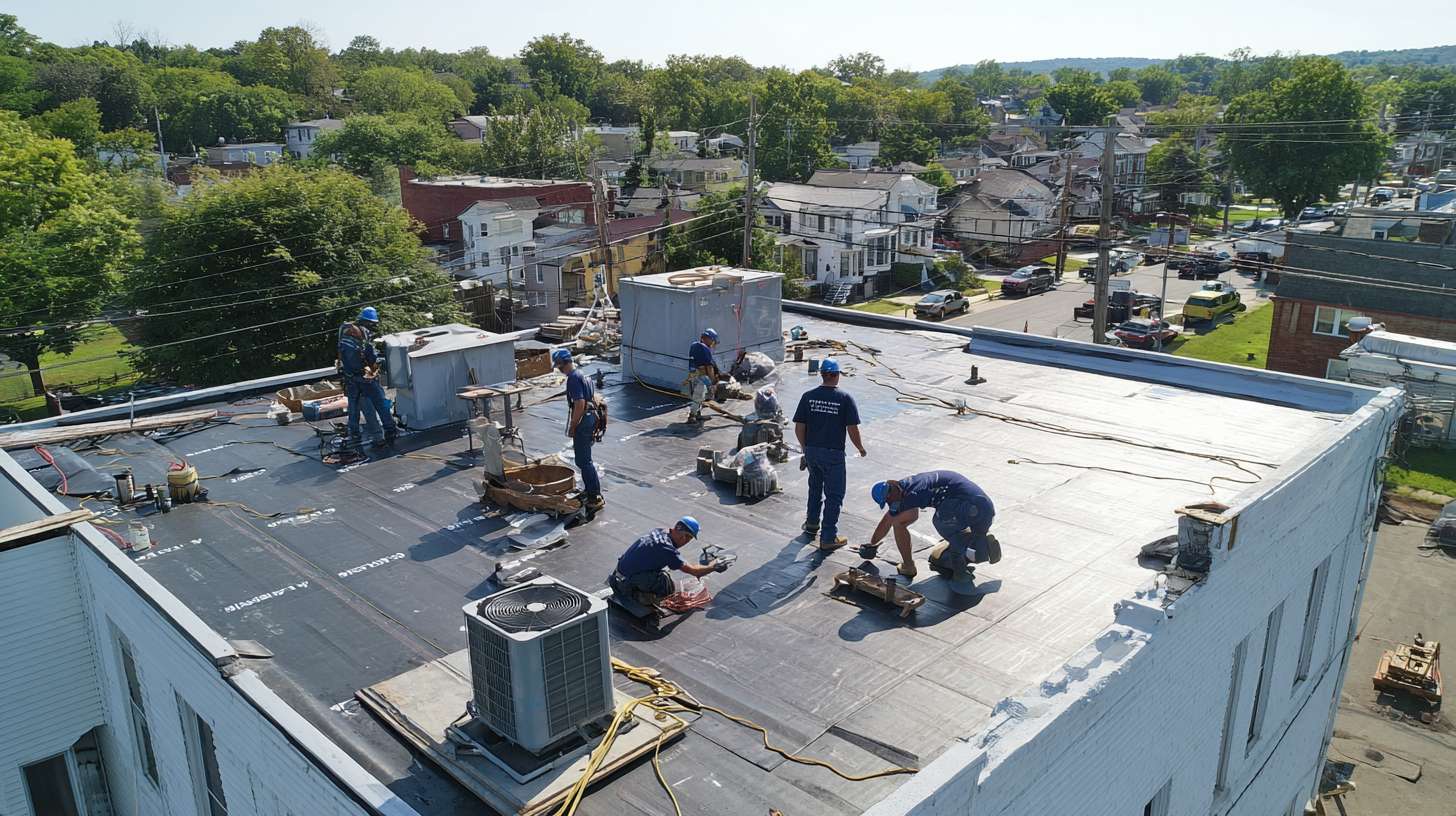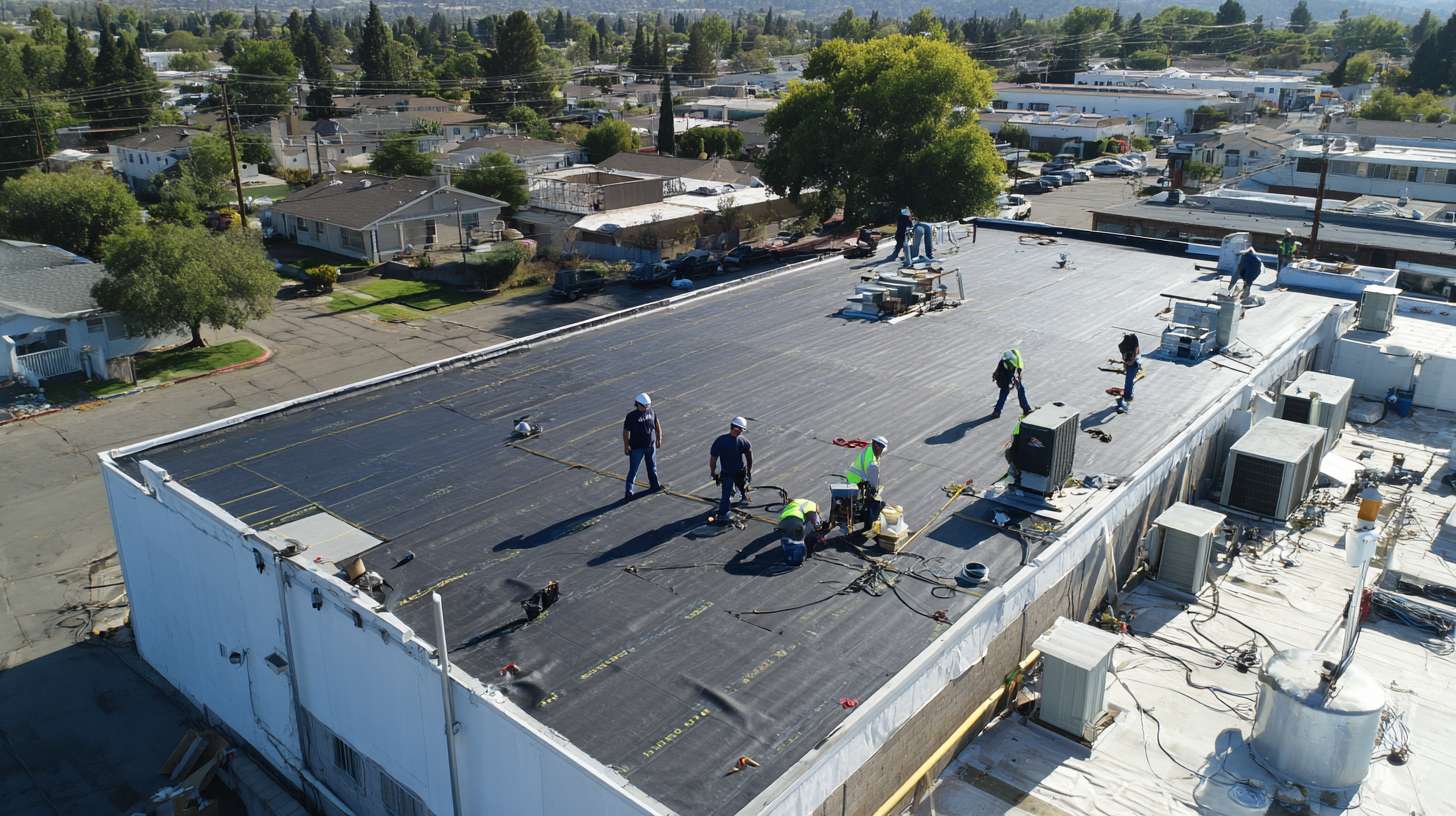
Expert Guide to Installing Rooflights on Flat Roofs in Nassau County
Can you cut a big glass rooflight into your flat roof in Nassau County and still trust it not to leak in the next Nor’easter? Yes-if it’s designed as a roof detail first and a piece of glass second. Most flat roof rooflight failures don’t start with the glass or the hardware; they start with treating these units like oversized windows instead of penetrations in a carefully engineered waterproof system.
Installing rooflights for flat roofs in Nassau County runs $2,800-$6,500 for residential applications, including the unit, structural modifications, flashing, and membrane integration. Fixed flat roof glass rooflights typically cost $2,800-$4,200 for a 3×5-foot installation, while opening roof lights for flat roofs with electric venting run $4,200-$6,500. The price spread isn’t just about the hardware-it’s about how much you need to modify the roof structure underneath and how complex the waterproofing becomes around the curb.
Here’s what actually keeps a flat roof with rooflights dry, bright, and efficient through Long Island winters and summers.
The Core Problem Nobody Talks About Until It Leaks
On a Rockville Centre kitchen extension three years ago, the homeowner called me six months after another contractor installed two beautiful flat glazed roof lights into a new EPDM roof. The lights themselves were high-quality German units with triple glazing and thermally broken aluminum frames. The problem? The installer set them on 4-inch curbs made from 2×4 lumber, flashed them like chimney caps, and called it done. First winter, ice dams formed around the curbs because the framing created thermal bridges straight through the insulation. By spring, we had water tracking down the interior of both curbs during heavy rain.
The issue wasn’t the rooflight-it was that nobody designed the penetration as part of the roof assembly. That kitchen now has properly insulated curbs, continuous air sealing, sloped drainage paths, and those same German lights have been bone dry for thirty-two months through some nasty weather.
Most rooflights specifically for flat roofs fail because of three design gaps:
- Inadequate curb height – Anything under 8 inches on a dead-flat roof will pool water during heavy rain, especially if your drain system can’t keep up
- Broken thermal envelope – The curb becomes a heat-loss chimney if it’s not insulated to match your roof assembly
- Membrane incompatibility – EPDM, TPO, and modified bitumen all require different flashing approaches; using the wrong method creates the slow leak that shows up two years later
Get these three elements right, and the rooflight itself will perform exactly as the manufacturer promises. Get them wrong, and even a $4,000 unit will let water in.
Fixed vs. Opening Roof Lights: What Actually Matters in Nassau County
You’ll see marketing materials making opening rooflights sound essential for ventilation. Here’s the reality: in Nassau County’s humid climate, opening rooflights serve two specific purposes well-releasing cooking heat from kitchens and allowing emergency egress smoke ventilation. For general light quality and room feel, fixed units perform identically and eliminate two potential failure points: the motorized opener and the weather seal around the opening mechanism.
Opening roof lights for flat roof installations make sense when:
- The rooflight sits above a kitchen island or range area where heat accumulates
- You’re lighting a bedroom and want to meet emergency egress requirements without a full dormer
- The space has poor cross-ventilation and genuinely needs a high-level exhaust path
I installed electric-opening units on a Garden City home office last year specifically because the owner runs 3D rendering computers that generate serious heat. On a July afternoon, those two 3×3-foot rooflights evacuate hot air faster than his mini-split can remove it. That’s a perfect use case.
Fixed flat roof glass rooflights, on the other hand, cost 30-35% less, have one fewer weather seal to maintain, and deliver the same daylight. For most living rooms, dining areas, and hallways, they’re the smarter choice. You control heat gain with low-E coatings and interior shades, not by opening the glass on ninety-degree days and letting humidity pour in.
Confirming Your Roof Can Support a Rooflight
Before you pick out glass, someone needs to look at your roof framing. Flat roofs in Nassau County are built three ways: closely spaced joists (typically 16 inches on center), engineered I-joists, or open-web trusses. The framing type determines how much structural modification you’ll need.
For a 3×5-foot rooflight, you’re removing 15 square feet of roof structure. That opening needs to be framed with doubled headers and trimmers, just like a window rough opening, but with the added complication that the framing has to support both snow load from above (30-35 pounds per square foot in our zone) and the weight of the rooflight unit itself.
Most residential rooflights for a flat roof weigh 65-120 pounds depending on glazing. Add the insulated curb, flashing components, and you’re at 180-200 pounds total. That load transfers to the surrounding roof joists through the header framing, which is why you can’t just cut a hole and drop the unit in.
| Roof Framing Type | Typical Modification Required | Structural Cost Impact |
|---|---|---|
| Standard 2×10 or 2×12 joists @ 16″ o.c. | Double headers, add joist hangers, sister adjacent joists | $420-$680 in framing labor |
| Engineered I-joists | May require engineered rim board headers and blocking panels | $580-$920 including materials |
| Open-web trusses | Often requires engineer-stamped modification plan; may need supplemental steel | $850-$1,400 plus engineering fee |
| Flat roof over conditioned space with cathedral ceiling | Exposed rafter tails; structural visible from below; more complex | $720-$1,200 for structural + finish work |
On a Merrick ranch conversion two years ago, we discovered the existing flat roof over the addition was built with 2×8 joists at 24 inches on center-barely code minimum. Installing two 4×4-foot rooflights meant not only framing the openings but also reinforcing the entire roof deck with additional joists between the existing ones. What the homeowner budgeted as a $7,000 rooflight project became $11,200 once we addressed the underlying structure properly. The alternative was leaving the roof undersized and waiting for deflection problems or, worse, a localized failure under snow load.
Building the Curb: Height, Insulation, and Slope
The curb is where most DIY attempts and even some professional installations fall apart. A proper curb for flat roof rooflights needs to accomplish four things simultaneously: raise the glass above standing water, maintain the thermal envelope, provide solid attachment for both the rooflight unit and the roof membrane, and create positive drainage away from the frame on all four sides.
Minimum curb height on a flat roof should be 8 inches, measured from the finished roof membrane surface to the bottom of the rooflight frame. Nassau County experiences 2-3-inch-per-hour rainfall rates during severe thunderstorms, and if your roof drains are even partially blocked by leaves or debris, water will pond. I’ve seen standing water 4-5 inches deep on “flat” roofs with inadequate drainage during sustained rain events. An 8-inch curb keeps the vulnerable glass-to-frame weather seal well above that risk zone.
Many manufacturers sell rooflights with pre-fabricated curbs, but these are almost always uninsulated or minimally insulated. If your flat roof has R-30 or R-38 insulation-which is standard for new construction and should be the target for any gut renovation-an uninsulated aluminum curb creates a massive thermal bridge. You’re essentially building a 12-16-inch-tall metal chimney that bleeds heat in winter and radiates heat into the space in summer.
Here’s how I build curbs that don’t compromise the roof’s thermal performance:
- Frame the curb with 2×10 lumber to create 9.25 inches of actual height, giving you room for 8 inches of rigid foam insulation plus blocking
- Sheath the exterior with 1/2-inch plywood or OSB to provide a solid nailing base for membrane flashing
- Apply 4 inches of polyiso rigid foam continuously around all four sides of the curb exterior, taping seams with foil tape
- Add another 4 inches of rigid foam on the interior side of the curb framing, creating a continuous thermal break
- Slope the top of the curb outward at 1/8 inch per foot minimum using tapered blocking, so water that reaches the frame perimeter drains away rather than sitting against the seal
That curb assembly will have an effective R-value of R-26 to R-28, which keeps it close to the performance of the surrounding roof. The cost difference between an uninsulated curb and a properly insulated one is maybe $140 in materials and ninety minutes of labor-nothing compared to the energy loss and condensation problems you avoid.
Membrane Integration: EPDM, TPO, and Modified Bitumen
How you flash the rooflight curb into your flat roof membrane determines whether it stays dry for two years or twenty. Nassau County flat roofs are predominantly three systems: EPDM rubber (black membrane), TPO (white heat-welded membrane), and modified bitumen (torch-down or cold-applied). Each requires a different flashing approach, and using TPO flashing methods on an EPDM roof-or vice versa-will fail.
EPDM rubber roofs require uncured flashing tape or liquid adhesive to bond the membrane up and over the curb. The key detail is the inside and outside corners-you need to cut relief cuts, fold the material carefully, and apply multiple layers of uncured flashing tape at each corner to create a watertight fold. EPDM doesn’t heat-weld; it relies on contact adhesive bond, which means surface preparation (cleaning with heptane or approved primer) is critical. On a Westbury home last fall, the previous installer skipped primer on the curb sheathing and the EPDM flashing peeled away from the wood in less than a year. We stripped it back, primed properly, and applied new flashing with Peel & Stick overlapping the base membrane by 6 inches on all sides.
TPO membrane systems use heat welding to create a monolithic seal. Flashing a curb into TPO means using TPO-compatible detail strips, heating them with a hot-air gun, and rolling the seams to create a molecular bond. The advantage is a stronger, more reliable seal at penetrations. The disadvantage is you can’t fix mistakes easily-once TPO is welded, you’re cutting it out to redo it. For opening roof lights for flat roofs where you have motorized frames and slightly more complex geometry, TPO’s weld-ability actually makes the flashing more secure because you’re not relying on adhesive staying stuck through thermal cycling.
Modified bitumen can be torched or cold-applied, and curb flashing uses the same method as the field membrane. Torch-down details around rooflights require careful flame control-too much heat near the rooflight frame and you risk damaging gaskets or warping plastic components. I always mask the rooflight frame with sheet metal when torching the final flashing layer. Cold-applied modified systems are safer around glazing but require meticulous trowel work to ensure full adhesion at the curb-to-membrane transition.
Regardless of membrane type, the flashing detail follows the same sequence: base layer up the curb at least 8 inches, field membrane lapping over the base, and a final counter-flashing or cap strip that sheds water away from the curb edge. Flat roof with rooflights that leak almost always fail because someone skipped the counter-flashing or didn’t overlap layers in the right sequence.
Condensation Control and Interior Finish
Even a perfectly waterproof rooflight can appear to leak if condensation runs down the interior of the curb. In Nassau County’s heating season, you’re running 68-72°F indoors while it’s 28°F outside. That temperature difference, combined with kitchen or bathroom humidity, will create condensation on any cold surface-including an uninsulated or poorly detailed curb interior.
Condensation control starts with the continuous insulation I described earlier, but it also requires an air seal. Before you install drywall or another interior finish on the curb, apply a continuous bead of acoustical sealant where the curb framing meets the ceiling drywall. This prevents warm, moist interior air from infiltrating into the curb cavity where it will condense on cold sheathing.
For flat glazed roof lights installed in kitchens or bathrooms, I also recommend a small continuous bead of clear silicone where the interior drywall return meets the rooflight frame. This isn’t structural-it’s a secondary air seal that stops moisture-laden air from migrating up into the frame perimeter.
I’ve been called to diagnose “leaking” rooflights that were actually condensation drips three times in the last eighteen months. In every case, the installer had left gaps between the curb interior finish and the frame, allowing humid air to contact cold metal. A $9 tube of silicone and fifteen minutes of careful beading solved what the homeowner thought was a $3,000 reflashing project.
Selecting Glass and Frame Specifications
Glass choice for roof lights for flat roofs comes down to three factors: safety, thermal performance, and light transmission. Nassau County follows New York State building code, which requires laminated safety glass in overhead glazing. That means either laminated tempered glass or an insulated unit with at least one laminated lite.
Most quality manufacturers supply triple-glazed units with two low-E coatings, argon gas fill, and an exterior laminated lite as standard. Those specs deliver U-factors around 0.28-0.32 (good winter insulation) and Solar Heat Gain Coefficients around 0.35-0.42 (moderate summer heat control). For south-facing rooflights, I often specify a lower SHGC-around 0.28-0.32-to reduce cooling loads. For north-facing units where heat gain isn’t an issue, you can go with higher SHGC and get more visible light transmission.
Frame materials are aluminum (most common), PVC, or thermally broken aluminum. Straight aluminum frames are fine for small fixed units in unconditioned spaces, but for residential installations where the rooflight is over living space, you want thermally broken aluminum at minimum. The thermal break-a plastic separator inside the aluminum extrusion-prevents the frame from conducting cold inward and creating condensation streaks down the curb.
On a Long Beach home last spring, we installed four 3×3-foot opening roof lights for flat roof applications over a new great room. The owner wanted maximum light, so we spec’d high-SHGC glass and added remote-controlled exterior shades. In July and August, those shades stay closed from 10 a.m. to 5 p.m., keeping solar gain manageable. In winter, the shades stay open and the rooflights act like passive solar collectors, contributing a noticeable amount of free heat on sunny days. That’s the kind of performance you get when you match the glass specs to the building’s orientation and use patterns.
Drainage Around the Rooflight
Flat roofs aren’t truly flat-they’re low-slope roofs with 1/4 inch per foot minimum pitch toward drains or scuppers. When you add a rooflight, you’re creating a raised island in that drainage path. Water needs a clear route around the curb without ponding against the flashing.
The best practice is to slope the roof membrane away from all four sides of the curb using tapered insulation or crickets. For small rooflights (under 4×4 feet), you can usually achieve this with tapered edge strips along the upslope side. For larger units or roofs with minimal existing slope, you may need to build full tapered insulation layouts that create positive drainage on all sides.
I’ve seen roofs where the installer didn’t address drainage and water ponds 2-3 inches deep on the upslope side of the curb during heavy rain. Even with 8-inch curbs and perfect flashing, that standing water accelerates UV degradation of the membrane and creates a permanent stress point. On a roof that should last 20-25 years, that ponding will cause localized failures in 10-12.
The fix is straightforward: add tapered insulation along the high side of the curb to create a gentle slope (1/2 inch over 12 inches is plenty) that sheds water around the curb rather than letting it accumulate. Cost for tapered edge strips and the extra membrane work is $180-$280 per rooflight-cheap insurance for long-term performance.
When to Call a Professional vs. DIY
Installing rooflights for a flat roof is not a beginner DIY project. It’s a job that sits at the intersection of carpentry, roofing, and glazing-three separate trades. That said, a very experienced DIYer with professional-quality tools can install a small fixed rooflight on a simple flat roof if the stars align: single-layer EPDM membrane, straightforward joist framing, and access to the roof deck from below for structural work.
You should absolutely hire a professional if:
- Your roof is TPO or modified bitumen (both require specialized tools and techniques)
- You’re installing opening rooflights with electric operators
- The roof structure is engineered trusses or I-joists
- The existing roof has any history of leaks or structural issues
- You’re cutting openings larger than 4×6 feet
For context, Platinum Flat Roofing has installed 90+ rooflights on Nassau County flat roofs over the last eight years, and I’ve repaired or replaced probably thirty more that were installed by general contractors or homeowners who didn’t understand membrane compatibility or thermal bridge issues. The cost to fix a failed rooflight installation-tearing out the curb, reframing, building a new insulated curb, and reflashing-often exceeds the cost of doing it right the first time.
Realistic Project Timelines and Costs
A straightforward single-rooflight installation on an accessible flat roof takes two to three days: one day for structural framing and curb construction, half a day for rooflight setting and mechanical (if it’s an opening unit), and one to one-and-a-half days for membrane flashing and interior finish.
Here’s what you’re actually paying for in that $2,800-$6,500 range I mentioned at the start:
- Rooflight unit: $1,200-$3,800 depending on size, glazing spec, and whether it’s fixed or opening
- Structural modifications: $420-$1,400 (framing, headers, blocking, joist reinforcement)
- Insulated curb construction: $380-$680 (lumber, rigid foam, fasteners, labor)
- Membrane flashing and waterproofing: $520-$880 (materials and labor for EPDM, TPO, or mod-bit integration)
- Interior finish: $180-$420 (drywall, trim, paint)
- Electrical (for opening units): $240-$520 (wiring, switch or remote, operator connection)
A typical project for a 3×5-foot fixed rooflight on a residential flat roof in Nassau County runs $3,400-$4,200 all-in. For a pair of 4×4-foot electric-opening units, expect $8,200-$11,500 depending on structural complexity and finish level.
Permits in Nassau County towns typically run $150-$320 for rooflight work, and most building departments want to see framing inspection before the membrane goes down and a final inspection once the unit is flashed and operational.
What Makes a Long-Term Successful Installation
Five years from now, a well-installed rooflight should look and perform exactly like it did on day one: clean glass, no water stains on the curb interior, no condensation tracking, and smooth operation if it’s an opening unit. That longevity comes from three things: proper initial design (curb, structure, drainage), high-quality components (glass, frame, membrane flashing), and correct installation sequencing.
The single most important detail is the one nobody sees: that continuous thermal envelope through the curb and air seal at the ceiling line. Get that right, and the rooflight becomes a seamless part of your roof assembly. Miss it, and you’ve created a weak point that will cost energy and potentially water damage down the road.
If you’re planning to add flat roof rooflights to a Nassau County home or commercial space, start by confirming your roof structure can handle the opening and your membrane type is compatible with the flashing approach. Choose fixed units unless you have a specific functional reason for opening, and invest in properly insulated curbs and tapered drainage. Do those things, and you’ll have bright, leak-free overhead glazing that makes the space feel twice as large and performs reliably through every nor’easter and heat wave Long Island throws at it.