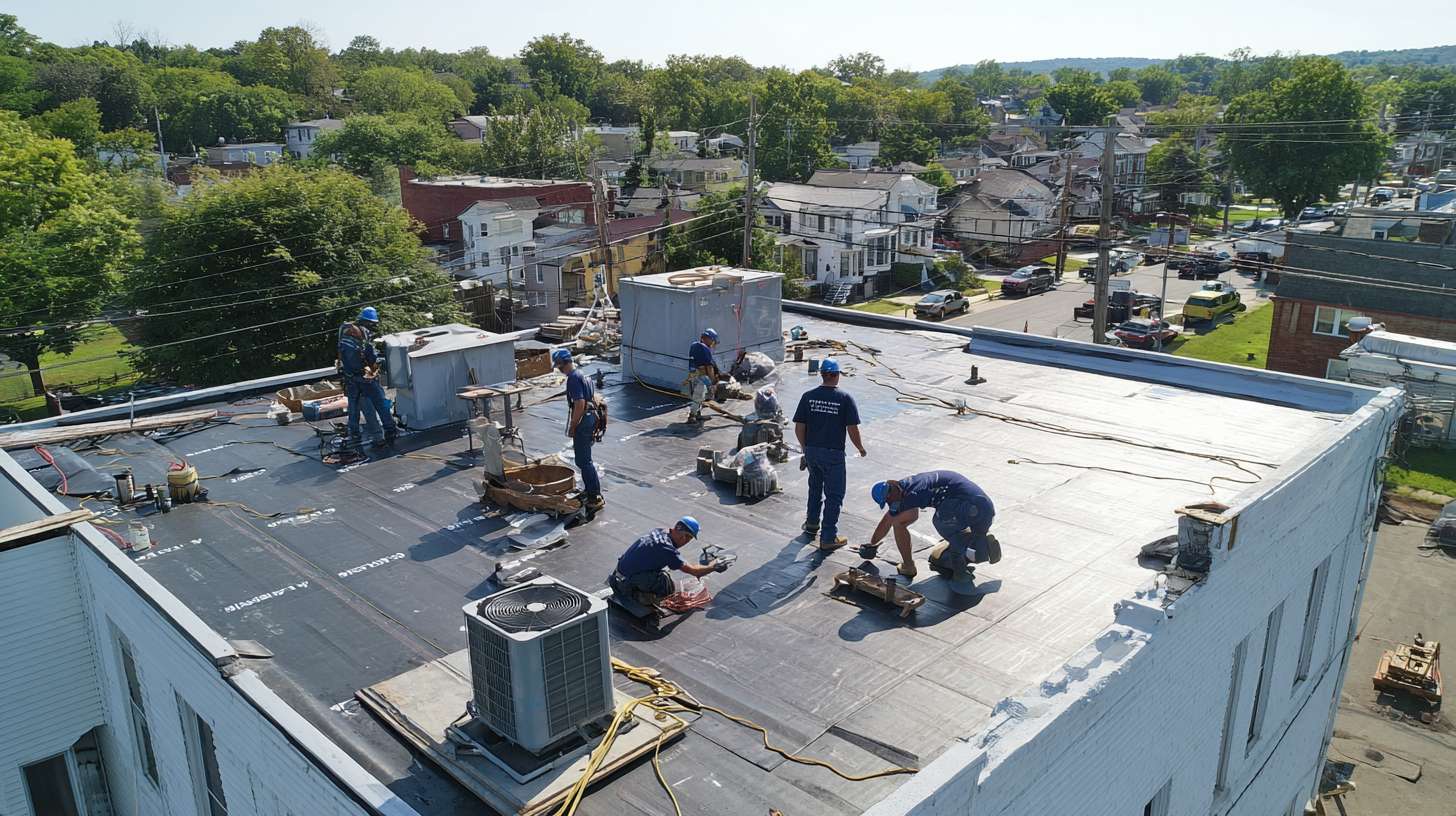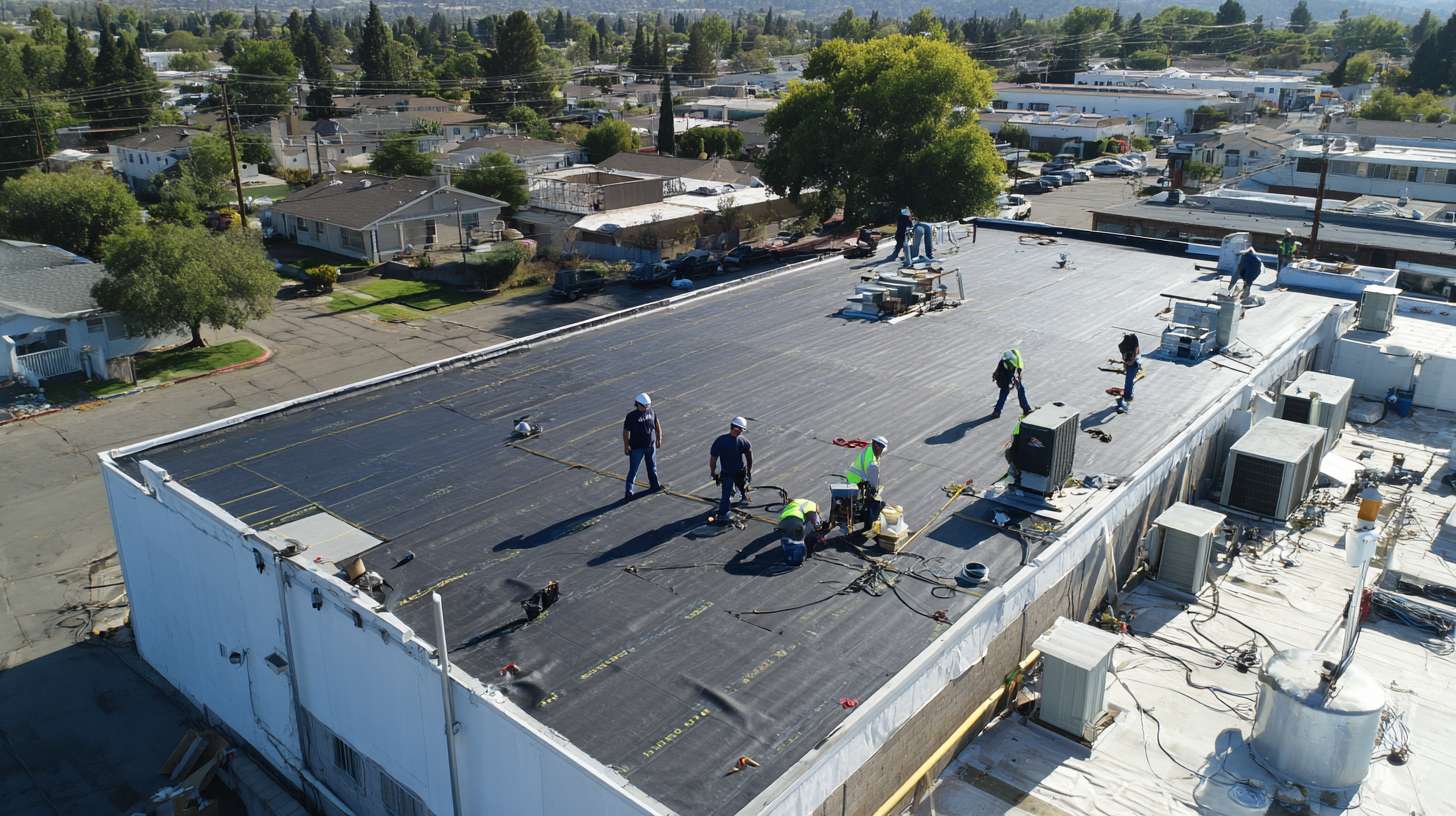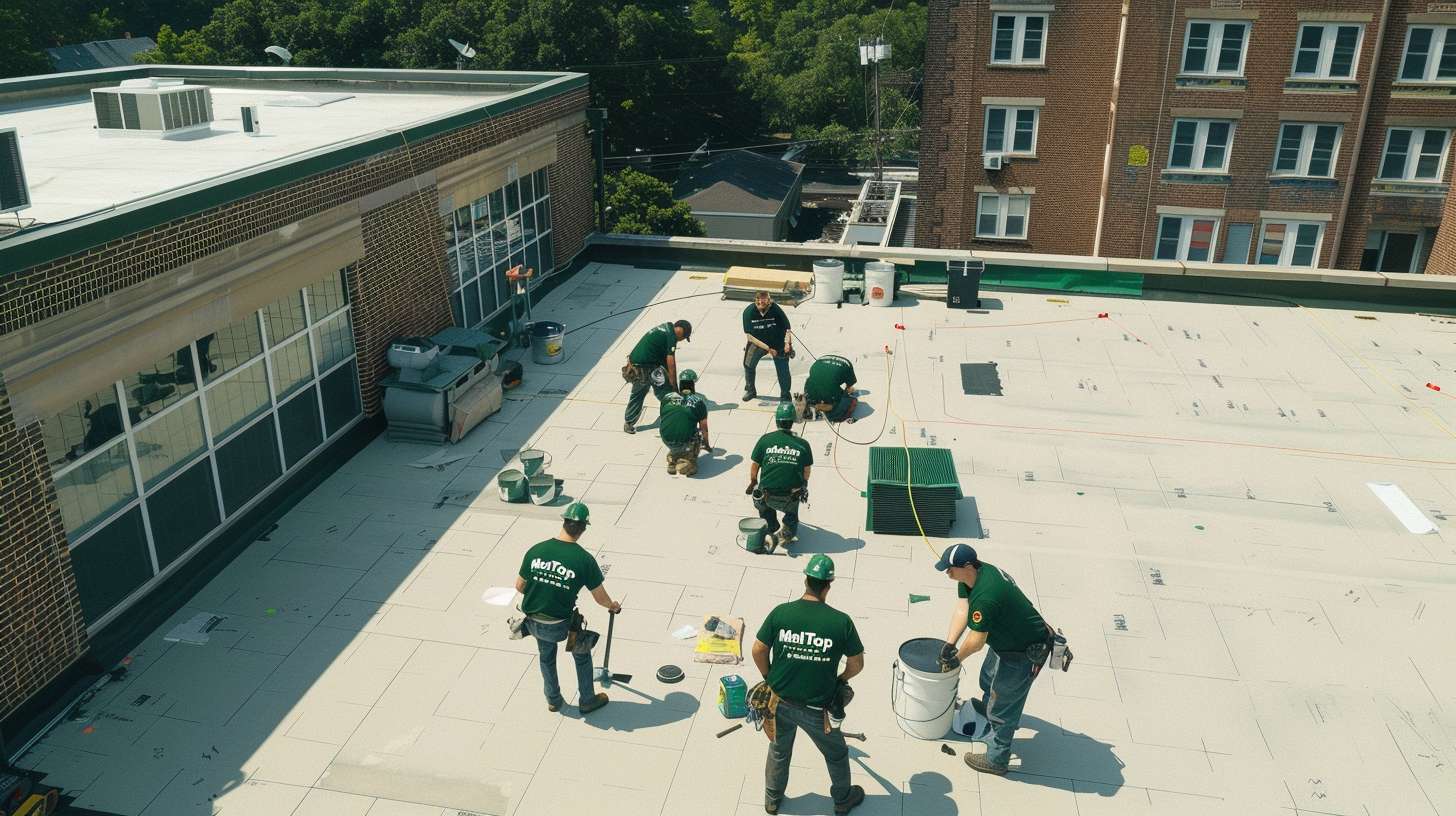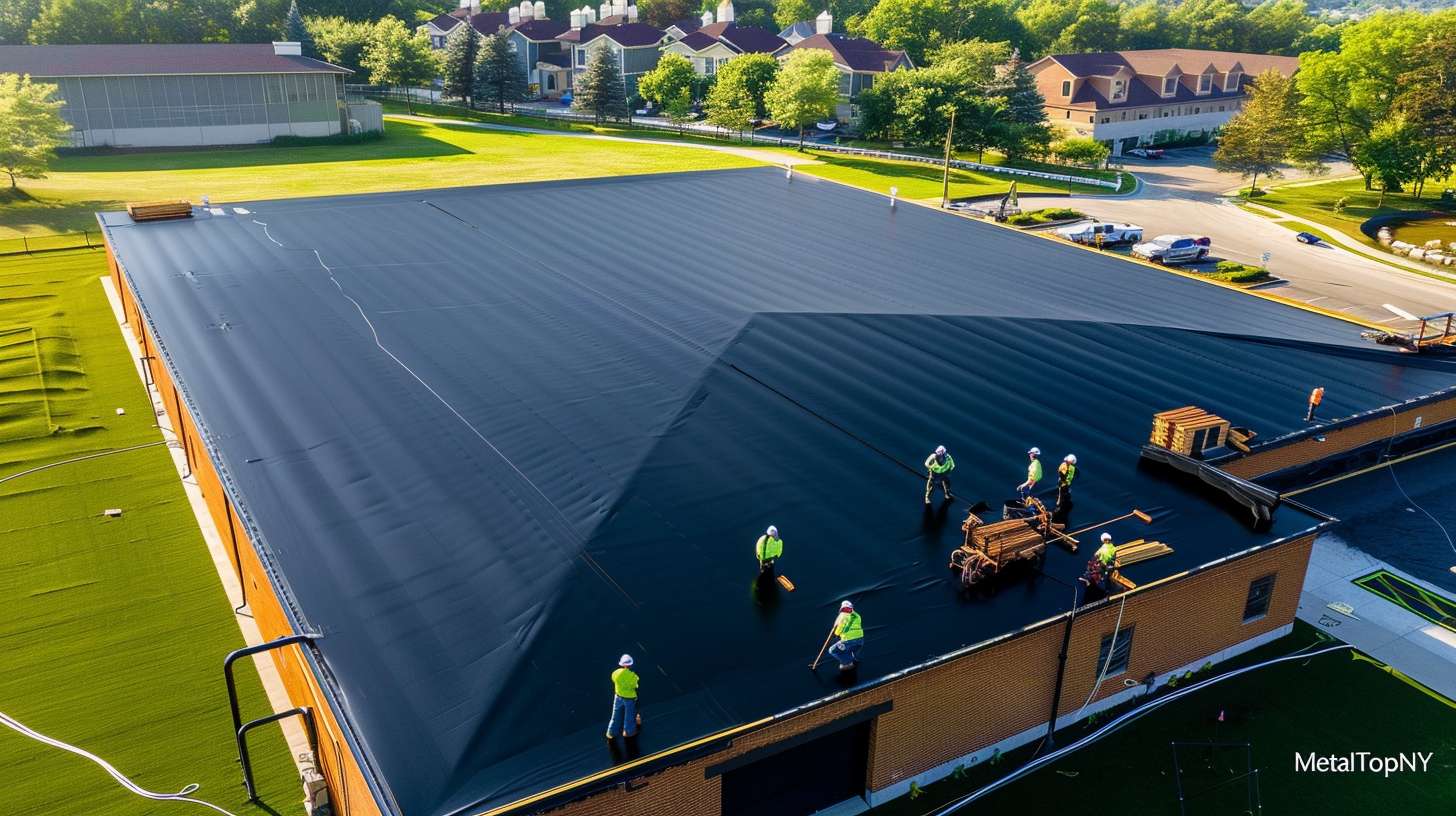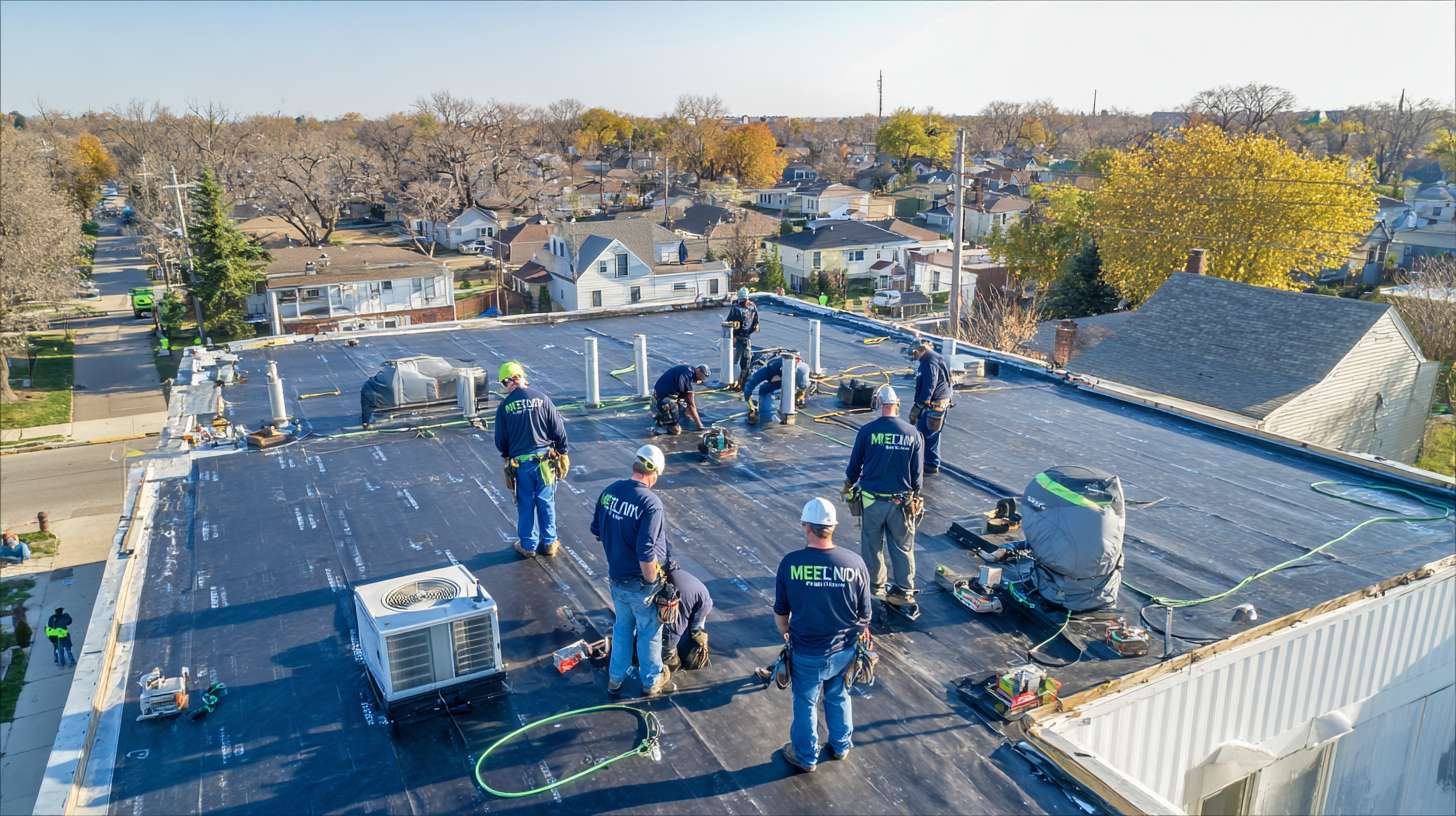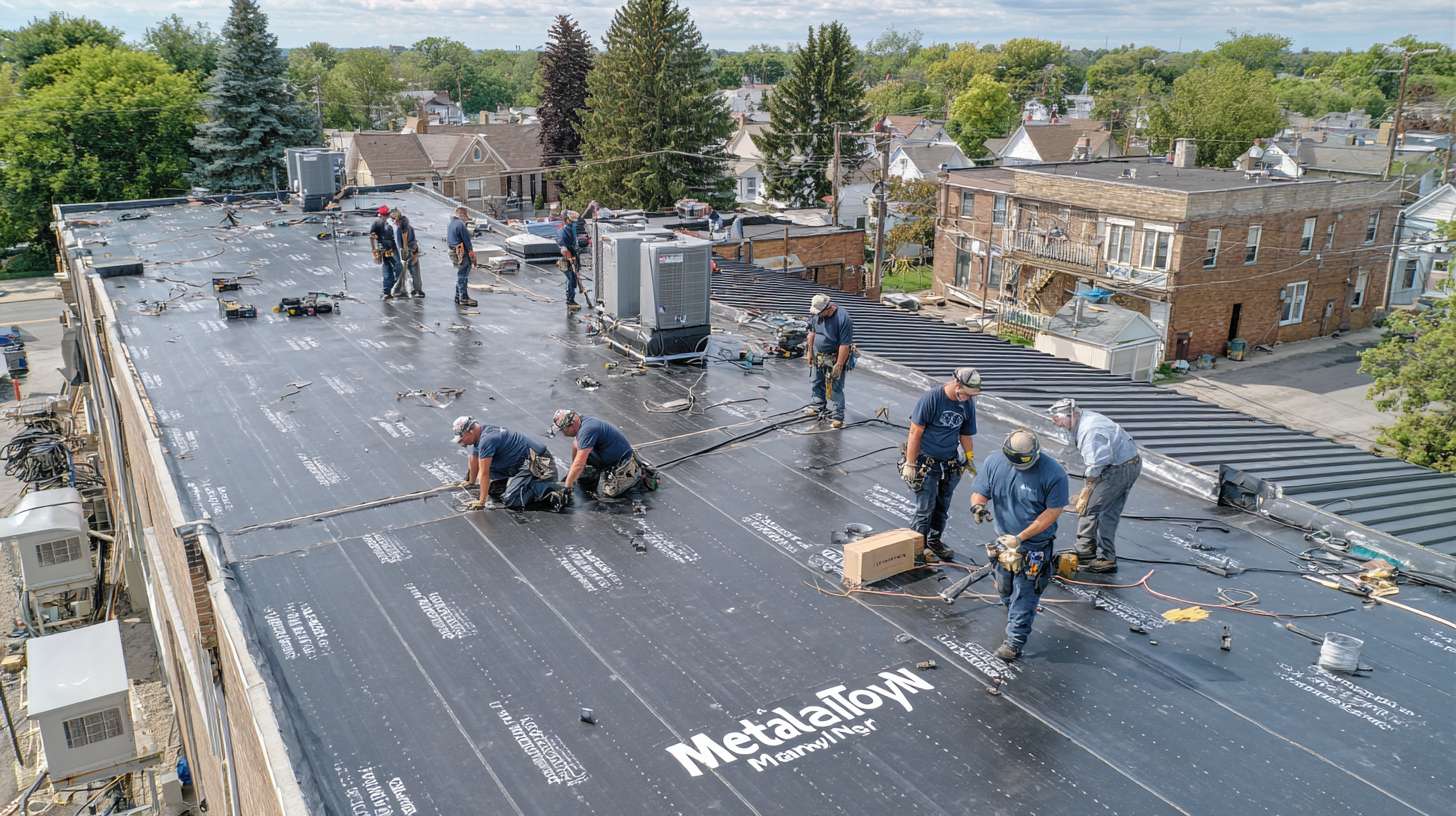
Professional Installing Vapour Barrier on Flat Roofs in Nassau County
Here’s something most Nassau County property owners don’t realize: that “leak” you see as ceiling stains in your bathroom or kitchen below a flat roof? There’s a good chance it’s not a leak at all. It’s condensation-moisture from inside your home that’s traveling up through your ceiling, hitting the cold underside of your roof deck in winter, and dripping right back down. I’ve pulled back dozens of flat roof assemblies over the past two decades that owners swore were leaking from outside, only to find bone-dry top membranes and soaking-wet insulation underneath. The culprit? A missing, damaged, or completely misplaced vapour barrier during the original flat roof build.
Professional flat roof vapour barrier installation costs between $1.85 and $3.20 per square foot in Nassau County when done as part of a new roof assembly or reroof project. That typically adds $925 to $1,600 to a standard 500-square-foot flat roof replacement. It’s a hidden layer-one you’ll never see once the insulation and membrane go over it-but it’s the single most important defense against moisture damage, mold growth, and premature roof failure in our climate.
What a Vapour Barrier Actually Does on a Flat Roof
A vapour barrier (also called a vapour retarder or air/vapour barrier in building science) is a continuous sheet of very low-permeability material installed on the warm side of the insulation in a flat roof assembly. Its job is to stop water vapour-invisible moisture gas from cooking, showers, breathing, and humidity inside your home-from traveling up into the cold roof assembly where it can condense into liquid water.
Think of your flat roof as a layered sandwich. From bottom to top over a heated space, the ideal sequence is: interior ceiling → vapour barrier → rigid insulation boards → roof deck → waterproof membrane. The vapour barrier sits right above the ceiling, blocking moisture before it ever reaches the insulation. If moisture gets into fiberglass-faced polyiso or EPS insulation and then hits freezing temperatures at the deck in January, it condenses. That water wets the insulation (destroying its R-value), rots wood decks, rusts steel, promotes mold on the ceiling below, and eventually causes real leaks as fasteners corrode and seams open.
This is what building scientists call “interstitial condensation”-hidden moisture damage happening between layers. I’ve seen it destroy $18,000 flat roofs in under seven years in homes near Garden City and Levittown where the original contractor skipped the vapour barrier entirely or used standard roofing felt (which has almost no vapour resistance) thinking it would work.
When You Need a Vapour Barrier: Warm Roofs vs. Cold Roofs
Not every flat roof needs a vapour barrier, but nearly all flat roofs over conditioned living space in Nassau County do. The technical term is a “warm roof” or “unvented insulated assembly”-insulation is installed directly against the underside of the roof deck (or on top of it), the space below is heated and cooled, and there’s no ventilation gap.
Typical Nassau County applications that require proper flat roof vapour barrier installation:
- Flat roofs over finished bedrooms, bathrooms, and kitchens in ranch-style homes
- Low-slope roofs over additions with cathedral ceilings
- Roofs over converted garages now used as living space
- Commercial flat roofs over offices, retail, or warehouse space with climate control
- Townhouse and condo flat roof sections over top-floor units
You generally don’t need a dedicated vapour barrier on a “cold roof”-an unheated garage, open porch overhang, or vented attic space-because there’s little temperature difference driving moisture movement and codes allow ventilation to remove any moisture that does enter. But the moment you insulate a flat roof over a heated space and eliminate ventilation, NYS building code and manufacturer warranties require vapour control on the warm side.
Where the Vapour Barrier Goes in the Assembly
Placement is everything. The vapour barrier must be installed on the warm-in-winter side of the insulation, which in our heating-dominated Nassau County climate means as close to the interior ceiling as possible. Here’s the most common correct sequence I install:
From interior to exterior: Drywall ceiling → 6-mil polyethylene vapour barrier (or peel-and-stick membrane) → taped/sealed joints → 2-4 inches of rigid polyiso insulation boards → structural roof deck (plywood, OSB, concrete, or steel) → fully adhered EPDM, TPO, or modified bitumen waterproof membrane.
The insulation goes above the vapour barrier. That keeps the barrier warm all winter-above the dew point-so moisture can’t condense on it. If you flip the assembly and put the vapour barrier on top of the insulation (I’ve seen this done by crews who don’t understand building science), the barrier itself becomes a condensing surface and you get water pooling on the wrong side of your roof deck.
In retrofit situations where we’re re-roofing an existing flat roof, we sometimes encounter older assemblies with no vapour barrier at all, or-worse-vapour-impermeable facers on both sides of the insulation creating a “vapour sandwich” that traps moisture with no escape path. Those require careful assessment. Sometimes we can add a new vapour barrier from below (accessing the ceiling). Sometimes we use a “hybrid” approach with vapour-permeable insulation on the bottom and vapour-impermeable rigid foam on top to shift the dew point safely outward. Every project is different, but the physics don’t change.
Materials We Use for Flat Roof Vapour Barrier Installation
The most common vapour barrier materials I install in Nassau County are:
6-mil polyethylene sheeting: Clear or black plastic film, the workhorse of residential vapour barriers. Permeance rating around 0.06 perms (Class I vapour retarder per code). Inexpensive at $0.12-$0.18 per square foot material cost, lightweight, and effective when joints are properly lapped and taped. It tears easily during install, so we’re careful around roof drains, penetrations, and parapets.
Self-adhered rubberized asphalt membranes: Peel-and-stick sheets like Grace Ice & Water Shield or similar products, typically 40-60 mils thick with permeance under 0.05 perms. These cost $0.85-$1.40 per square foot but offer much better durability, self-sealing around fasteners, and instant adhesion to roof decks or existing substrates. I use these on commercial projects and high-end residential jobs where we need bulletproof air and vapour sealing in one step.
Vapour-retarder primers and liquid membranes: Spray- or roll-applied coatings that cure into a seamless vapour barrier. Excellent for complex geometries, but require dry substrates and careful mil-thickness control. Cost runs $0.95-$1.60 per square foot installed.
Foil-faced rigid insulation boards: Some polyiso and XPS boards come with factory-applied aluminum foil facers rated as vapour barriers (0.02-0.05 perms). When joints are taped with foil tape, the insulation itself becomes the vapour control layer. This simplifies the assembly but requires meticulous taping-every single seam-and can’t be used as the sole barrier if you’re installing multiple insulation layers with staggered joints.
For most Nassau County residential flat roof vapour barrier installation projects, I default to 6-mil poly or self-adhered membrane. They’re code-compliant, cost-effective, and I can visually verify 100% coverage before the insulation goes down.
How We Actually Install and Seal the Vapour Barrier
Installation seems simple-roll out plastic, tape the seams, done-but the details make or break the system. A vapour barrier with gaps, tears, or unsealed penetrations doesn’t work. Moisture will find every hole, and once it’s in the assembly, it’s trapped.
Step one: Surface prep. The substrate-usually the top of drywall ceiling, existing roof deck, or structural concrete-must be clean, dry, and smooth. We sweep off dust, remove any protruding fasteners, and patch holes. If we’re working over an existing ceiling we can’t access, we verify there are no concealed leaks or moisture issues first using a moisture meter.
Step two: Roll and lap. We roll the vapour barrier sheets perpendicular to roof slope (if any) or in the most efficient layout to minimize seams. Each sheet overlaps the previous one by at least 6 inches-I actually prefer 8-10 inches for a more forgiving tape joint. At parapet walls and roof edges, we run the barrier up the wall face at least 8 inches and mechanically fasten the top edge.
Step three: Seal every seam. This is where most failures happen. Every overlap gets sealed with contractor-grade vapour barrier tape (not regular duct tape or painter’s tape-those fail in months). We use 3- to 4-inch-wide acrylic or butyl-based tapes rated for below-grade and air/vapour barrier use. Press firmly, roll with a hand roller, no wrinkles. Seams at walls, curbs, and parapets get caulked with vapour-barrier-compatible sealant before taping.
Step four: Penetration sealing. Roof drains, vent pipes, HVAC penetrations, and skylights are the hardest details. We cut the poly tight around each penetration, then seal with acoustical sealant or backer rod and sealant, followed by a “boot” of self-adhered membrane or prefab flashing collar that ties into the main vapour barrier. Every penetration gets individual attention-no shortcuts.
Step five: Protection and insulation. Once the vapour barrier is fully sealed and inspected (I walk the entire roof looking for holidays, gaps, or damage), we immediately cover it with rigid insulation boards. Poly left exposed will UV-degrade in days if sunlight hits it, and foot traffic will tear it. Insulation boards are laid tight, joints staggered, and mechanically fastened or adhered per the roof membrane manufacturer’s specs.
The whole process adds about half a day to a typical 500-square-foot flat roof job, but it’s the difference between a 25-year roof and a 10-year disaster.
Code Requirements and Climate Considerations in Nassau County
New York State building code (based on the International Residential Code and International Building Code) requires vapour retarders in Climate Zone 4A-which includes all of Nassau County-whenever you install insulation in an unvented roof assembly. Specifically, you need a Class I (≤0.1 perm) or Class II (>0.1 and ≤1.0 perm) vapour retarder on the interior side of the insulation if the roof is over conditioned space.
There are exceptions: if you use enough continuous rigid foam insulation above the roof deck (exterior insulation) to keep the deck above the dew point all winter, you can sometimes omit or downgrade the interior vapour barrier. The code tables specify minimum R-values for that exterior insulation based on climate zone-in Zone 4A, you’d need roughly R-15 of continuous exterior insulation if the cavity below has R-30, for example. But most residential flat roofs in Nassau County use interior or split insulation (some below the deck, some above), so a full vapour barrier is required.
Our climate drives this. January average temperatures in Nassau County hover around 32°F, and indoor winter humidity from cooking and bathing keeps interior dew points in the 40-50°F range. That means the underside of an uninsulated or poorly detailed flat roof deck will be well below the dew point for months-perfect conditions for continuous condensation if warm, moist indoor air can reach it. Coastal proximity adds another wrinkle: summer humidity here can reverse vapour drive (outside wet, inside dry from AC), though winter drive is still dominant and requires the barrier on the interior.
Common Mistakes and How to Avoid Them
After 21 years installing and troubleshooting flat roof systems, I can spot a bad vapour barrier job before I even pull back the membrane. Here are the most common mistakes I see in Nassau County:
Torn or punctured poly during install. Polyethylene tears easily around fasteners, drains, and rough deck edges. Contractors in a hurry skip repairs, thinking “close enough.” Every tear is a moisture highway. We carry rolls of vapour barrier tape on every job and patch as we go-no exceptions.
Unsealed laps and wall terminations. I’ve seen poly sheets just overlapped with no tape, or taped with hardware-store masking tape that peels off in weeks. At parapet walls, the poly often stops short or isn’t sealed to the wall-moisture bypasses the entire system. Proper wall termination requires running the barrier up the wall, sealing with compatible sealant, and mechanically fastening with a termination bar or embedding in roofing mastic.
Vapour barrier installed in the wrong location. Occasionally I’ll find a crew that installed poly or a vapour-impermeable membrane above the insulation, right under the roof deck. That’s backwards. It traps moisture in the insulation and creates a condensing surface on the cold side. The fix is expensive: remove the membrane, dry out the insulation (or replace it if soaked), and install a proper vapour barrier on the warm side.
No transition details at roof edges and penetrations. The vapour barrier has to be continuous with the building’s air barrier system-typically at the top of the wall where the roof meets. If there’s no transition detail, you get a big gap where interior air (and moisture) leaks into the roof assembly around the perimeter. Same with skylights, chimneys, and mechanical curbs: each needs a sealed transition.
Using the wrong material for the application. Standard roofing felt (15 or 30 ) is not a vapour barrier-it has a permeance around 5-6 perms, which is semi-permeable. I’ve seen it specified and installed as a “vapour barrier” by contractors who don’t know the difference. Kraft paper, housewrap, and standard building paper are also not vapour barriers. You need material rated under 1.0 perm (preferably under 0.1 perm) and labeled as a vapour retarder or air/vapour barrier.
Why Proper Installation Protects Your Investment
A correctly installed vapour barrier adds maybe $1,200 to a $12,000 flat roof replacement in Nassau County-about 10% of the project cost-but it can double or triple the service life of the entire assembly. Here’s the return:
Insulation performance: Wet insulation loses R-value fast. Fiberglass-faced polyiso that gets moisture-saturated can lose 40-60% of its insulating ability. Your heating bills go up, comfort goes down, and the roof deck stays colder (more condensation risk). A vapour barrier keeps the insulation dry and working at its rated R-value for decades.
Deck and structural protection: Wood roof decks (plywood or OSB) that cycle wet and dry will rot, delaminate, and lose fastener-holding capacity. Steel decks rust. Concrete decks spall and crack. I pulled a ten-year-old TPO roof off a Westbury home last year where the OSB deck was black with mold and structurally compromised-$8,500 in deck replacement that could have been avoided with a $950 vapour barrier during the original install.
Interior ceiling and air quality: Condensation that drips back into the ceiling cavity promotes mold growth on drywall, framing, and insulation. Occupants see stains, smell musty odors, and sometimes develop respiratory issues. Mold remediation and ceiling repair can run $3,000-$7,000 in a typical flat-roof bedroom or kitchen, and it’ll just come back if you don’t fix the vapour barrier.
Roof membrane longevity: Moisture trapped under a roof membrane-between the membrane and wet insulation or deck-can cause blistering, delamination, and accelerated aging of EPDM, TPO, and modified bitumen systems. Manufacturers’ warranties often exclude moisture-related failures and require proper vapour barriers as a condition of coverage.
Flat Roof Vapour Barrier Installation Cost Breakdown for Nassau County
Here’s what you can expect to pay for professional flat roof vapour barrier installation as part of a reroof or new roof project in Nassau County:
| Component | Material Cost per SF | Labor Cost per SF | Total per SF |
|---|---|---|---|
| 6-mil polyethylene sheet + tape | $0.15 – $0.25 | $0.65 – $0.95 | $0.80 – $1.20 |
| Self-adhered membrane (peel-and-stick) | $0.95 – $1.50 | $0.75 – $1.15 | $1.70 – $2.65 |
| Liquid-applied vapour barrier | $0.60 – $1.00 | $1.10 – $1.80 | $1.70 – $2.80 |
| Foil-faced insulation (material upgrade) | $0.45 – $0.80 | $0.35 – $0.60 (taping) | $0.80 – $1.40 |
| Penetration sealing (per penetration) | $8 – $18 | $25 – $55 | $33 – $73 |
For a typical 500-square-foot flat roof over a ranch-style home addition with 2-3 penetrations (vent stack, HVAC curb), expect to add $925 to $1,600 to the base roofing cost for a full vapour barrier system using 6-mil poly or self-adhered membrane. Larger commercial projects (2,000+ SF) see economies of scale and may come in around $1.50-$2.20 per square foot installed.
Retrofit vapour barrier installation-adding a barrier to an existing roof from below by accessing the ceiling-costs more due to interior demolition, drywall patching, and limited access. Budget $2,800-$5,200 for a 500-SF retrofit depending on ceiling complexity and finish level required afterward.
Working with Platinum Flat Roofing on Your Vapour Barrier Project
At Platinum Flat Roofing, flat roof vapour barrier installation isn’t an afterthought or an upsell-it’s an integral part of every warm-roof assembly we design and build in Nassau County. Before we roll out a single sheet of poly or peel-and-stick, we assess your specific building: what’s the interior use and humidity load? What’s the existing roof assembly? Where’s the dew point going to be in January? How do we detail the transitions at parapets, penetrations, and roof edges?
We use moisture meters and infrared cameras to diagnose existing flat roofs with suspected vapour barrier failures, so you know exactly what you’re dealing with before we quote a repair or replacement. If your roof can be saved with targeted vapour barrier upgrades and improved ventilation or dehumidification, we’ll tell you. If the assembly is too far gone and needs a full tear-off and rebuild with proper vapour control, we’ll show you why and walk you through the correct layering sequence for your home or building.
Every vapour barrier we install gets a pre-insulation inspection-we photograph the sealed seams, penetration details, and wall terminations so you (and your building inspector, if required) can verify 100% coverage. We don’t bury problems under insulation and hope they don’t come back. And we’ll coordinate with your HVAC contractor, electrician, or plumber if mechanical work is happening simultaneously, because a vapour barrier installed before pipes and ducts are run is a vapour barrier that’s going to get torn up and compromised.
If you’re in Nassau County and you’re planning a flat roof replacement, addition, or dealing with mystery ceiling stains and “leaks” that only happen in winter, the first conversation should be about vapour barriers-not just membranes and coatings. Call us for a building-science assessment of your flat roof assembly. We’ll tell you where the vapour barrier should go, what material makes sense for your project and budget, and exactly how we’ll seal every seam and penetration so your roof performs for 25-30 years instead of failing in seven. That’s the difference between roofing and roofing done right.