Expert Leaking Flat Roof Repair Services in Nassau County
Flat roof leak repair in Nassau County typically costs $475-$1,850, depending on the size of the leak, membrane type, and whether you’re dealing with a failed seam, punctured surface, or compromised flashing. That’s what I tell homeowners when they call after finding buckets in the bedroom following a March nor’easter-the same wind-driven rain that pushed through a 14-year-old EPDM seam on a Baldwin ranch last spring, dripping straight onto a dresser while the owner slept.
Most flat roof leaks don’t announce themselves during the storm. They show up hours later-sometimes days-after water pools in a low spot, migrates under the membrane, and follows a beam or soffit edge until gravity pulls it through your ceiling in a spot that’s nowhere near the actual breach. That’s the frustrating part of leaking flat roof repair: the wet spot inside rarely lines up with the problem outside, especially on older homes where three or four patch jobs have already created a maze of seams, tar, and caulk.
Over twelve years of service calls across Nassau County, I’ve learned that homeowners aren’t asking “how to repair flat roof leak” because they want to DIY it on a Saturday. They’re asking because they need to understand whether this is a $600 fix or a $12,000 replacement conversation, and whether the roofer who shows up is going to give them a straight answer or a scary sales pitch.
Understanding Why Your Flat Roof Is Leaking
On a Merrick ranch last fall, a homeowner called three days after heavy rain. The leak appeared in the hallway ceiling, twelve feet from the exterior wall. We found the actual breach near the parapet flashing-a ten-inch split where the modified bitumen had pulled away during a temperature swing. Water had traveled along the decking slope, soaked into the insulation board, and finally dripped through at the weakest ceiling point.
That’s typical. Flat roofs aren’t actually flat-they slope at 1/4 to 1/2 inch per foot-so water moves. And when a membrane fails, water takes the path of least resistance: under seams, around fasteners, along flashing edges. By the time you see interior damage, the leak has often been active for weeks.
The most common failure points I see in Nassau County:
- Seam separation: EPDM and TPO roofs are assembled from rolls bonded with tape or adhesive. After 10-15 years of freeze-thaw cycles and UV exposure, those seams lift. Water seeps underneath.
- Flashing breakdown: Where the flat roof meets a wall, parapet, or penetration (vent, skylight, HVAC unit), metal or membrane flashing creates the seal. Caulk dries out. Metal corrodes. Membrane pulls away. These transitions fail first.
- Punctures and blisters: Foot traffic, fallen branches, or trapped moisture under the membrane create weak spots. A small puncture becomes a leak during the next heavy rain.
- Ponding water damage: Low spots that hold water for 48+ hours after rain slowly degrade the membrane. Even “waterproof” materials break down when constantly submerged.
- Fastener back-out: On mechanically attached systems, screws and plates can loosen over time, lifting the membrane and creating entry points.
I walk every roof before I diagnose. I’m looking for surface cracks, lifted seams, rust stains from failed fasteners, and-most importantly-water stains on the membrane itself that show historical ponding patterns. That last one tells me where water wants to go, which helps predict future problems even after we repair the current leak.
How We Actually Repair a Flat Roof Leak
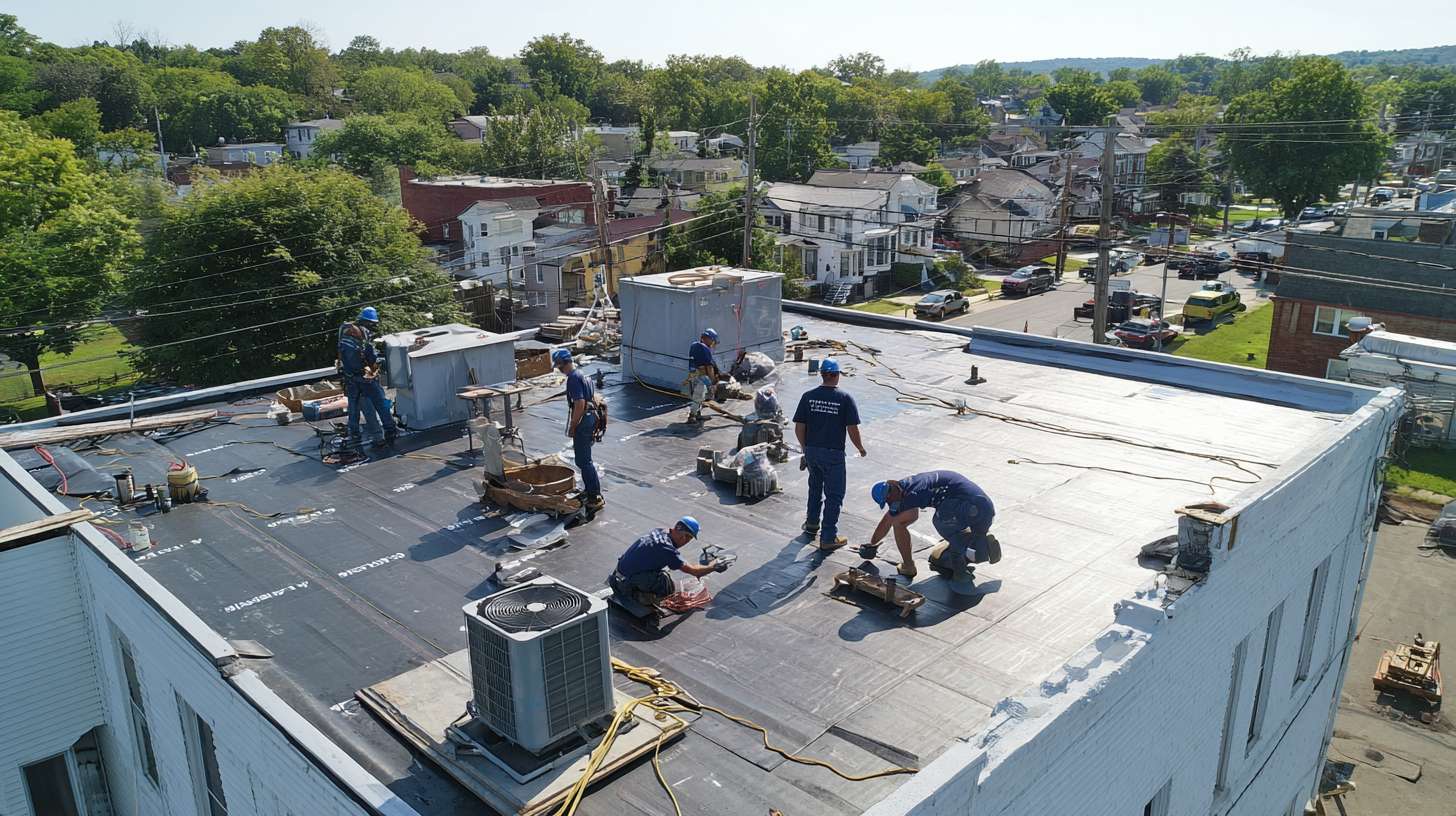
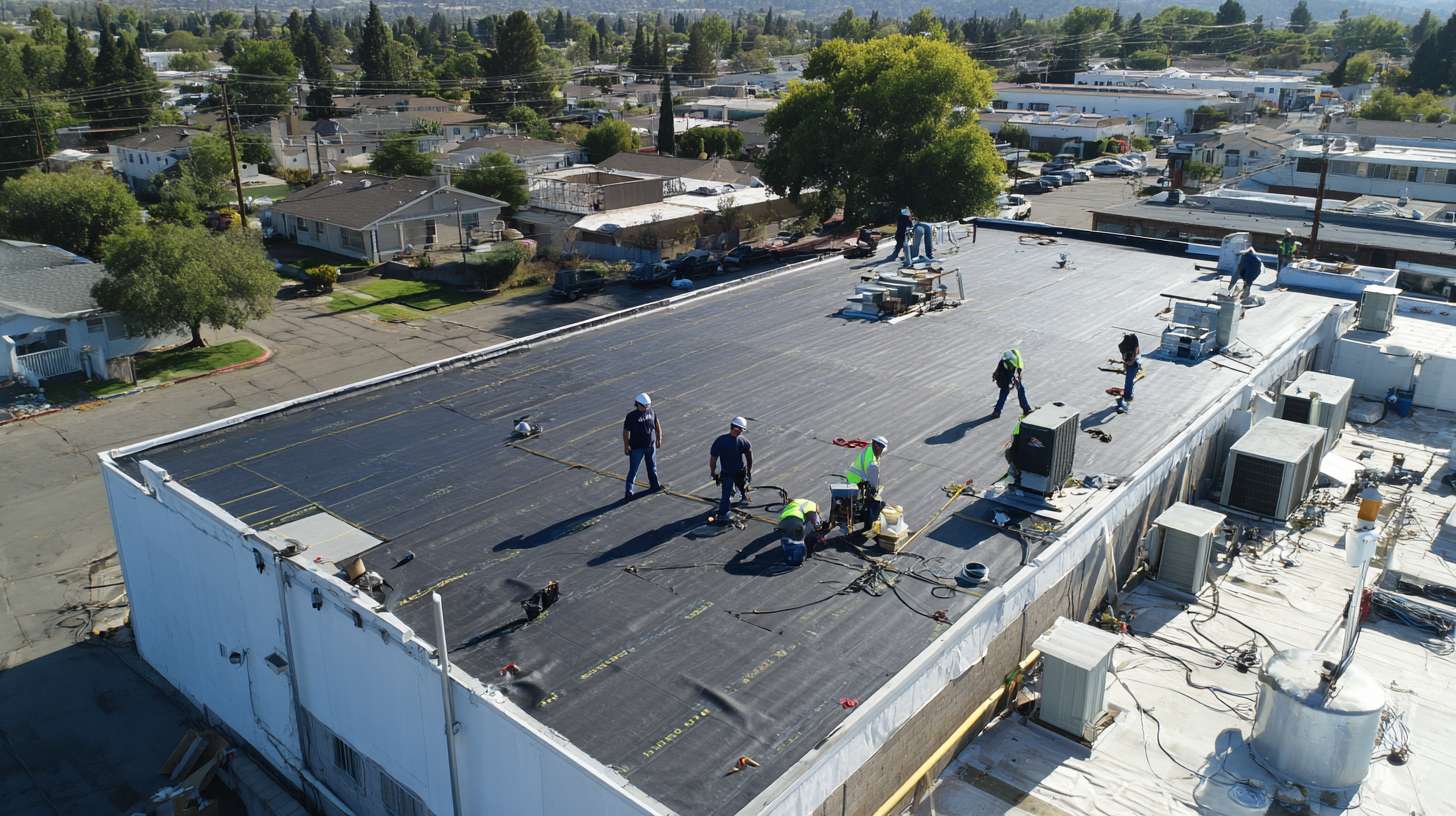
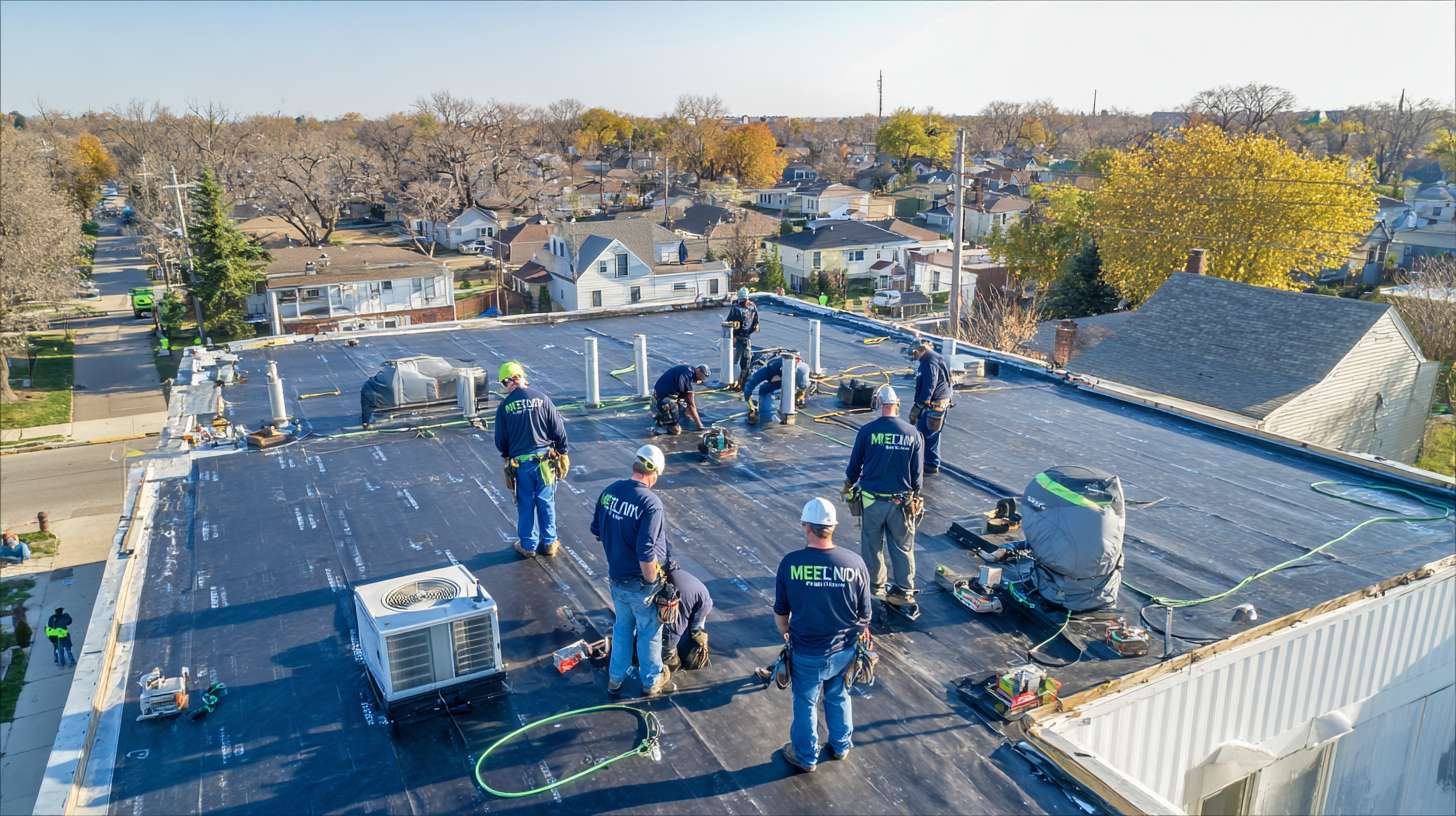
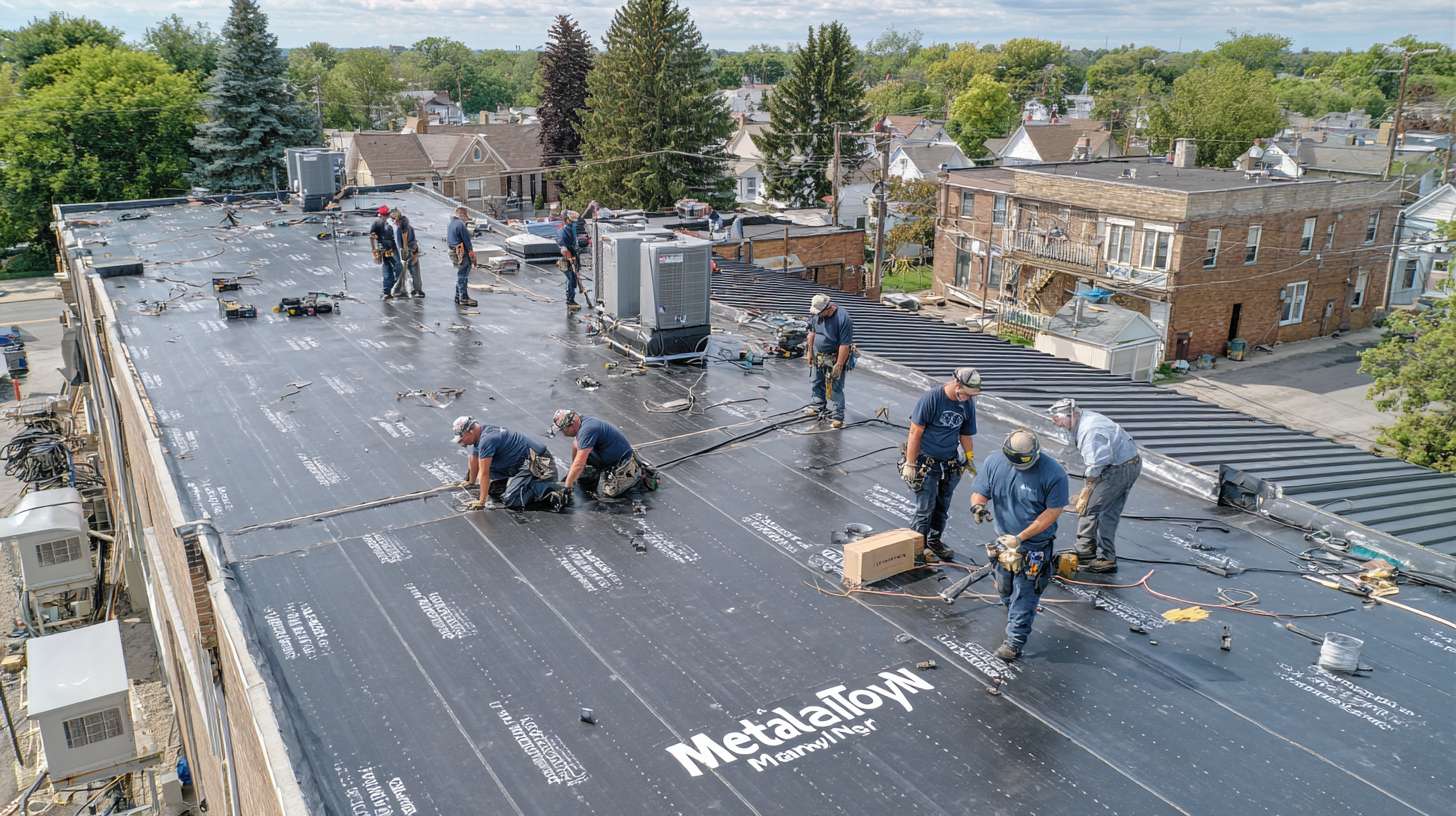
Repairing a leaking flat roof is not about slapping tar over a crack. It’s about understanding the membrane type, the failure mode, and the remaining service life of the surrounding material. A proper repair integrates with the existing system and performs as long as-or longer than-the original installation in that area.
Here’s how I approach repair work, broken into the three scenarios I see most often:
Small Punctures and Surface Damage (EPDM, TPO, Modified Bitumen)
For a discrete puncture under six inches-from a fallen branch, hail strike, or equipment drop-we clean and prep the damaged area, then apply a compatible patch. On EPDM, that’s a primer followed by a rubber patch bonded with contact adhesive and rolled to eliminate air pockets. On TPO, we heat-weld a patch over the cleaned surface. Modified bitumen gets a torch-applied patch or cold-adhesive cap sheet, depending on the base layer.
The key is prep. I’ve seen dozens of failed DIY repairs where someone bought a patch kit at a big-box store and stuck it over dirty, wet, or oil-contaminated membrane. It held for three weeks, then lifted. Proper adhesion requires a clean, dry, abraded surface and the right bonding method for that specific material. Cost for this type of repair: $475-$850, depending on access and roof height.
Seam Failures and Edge Lifting
This is the most common leak I repair. On a Freeport flat roof last winter, the homeowner had water coming through the bedroom after every hard rain. We found a four-foot seam separation where two EPDM sheets met near the center of the roof. Previous roofers had caulked it twice. The caulk had failed both times because caulk doesn’t bond to dirty EPDM and can’t flex with temperature swings.
To repair flat roof leaks at seams properly, we open the failed area, remove all old adhesive and contaminants, re-prime both surfaces, and install a new seam tape or liquid adhesive bond. On EPDM, we use 6-inch seam tape rolled with 150+ pounds of pressure. On TPO, we heat-weld the seam with a hot-air gun, creating a molecular bond. Then we test it-physically pulling on the repair while it’s still warm to confirm adhesion.
For edge lifting along parapets or roof edges, we often rebuild the flashing detail entirely. Metal counter-flashing gets removed, the membrane edge gets re-adhered or heat-welded, and new metal gets installed with proper lap and fastening. This isn’t optional-half-fixed flashing fails within a year.
Seam and edge repairs run $750-$1,850 depending on linear footage and whether we’re rebuilding flashing. Most repairs I do fall in the $1,100-$1,400 range for 10-20 feet of seam work including flashing detail.
Ponding Areas and Structural Low Spots
When a flat roof has a depression that holds water for days after rain, you have two choices: repair the membrane damage caused by ponding, or fix the structural low spot and then repair the membrane. The first option is cheaper but temporary-ponding will continue and the repair will fail within 2-4 years. The second option costs more but actually solves the problem.
On a Rockville Centre mixed-use building last summer, we dealt with a 3×4-foot low spot that had been “repaired” four times in six years. Each time, a roofer patched the membrane damage without addressing the sag in the decking. We installed tapered insulation to eliminate the low spot, then rebuilt the membrane layer in that section with torch-applied modified bitumen. The leak stopped. More importantly, water stopped pooling, so the repair will last as long as the rest of the roof.
Ponding repairs with structural correction cost $1,400-$3,800 depending on the area size and whether you’re adding insulation, replacing decking, or both. Membrane-only patches in ponding areas cost $650-$1,200 but come with a realistic expectation that you’ll see the leak again in a few years.
Emergency vs. Permanent Flat Roof Leak Repair
I get calls at 7 p.m. on a Tuesday because water is actively dripping into a living room. The roof is too wet to properly repair. Wind is forecast. The homeowner needs the leak stopped now, but proper repair will have to wait.
That’s when we do a temporary stop. For modified bitumen or built-up roofs, we apply a trowel-grade mastic or rubberized coating over the suspected leak area-thick enough to bridge small gaps and flexible enough to handle overnight temperature swings. For EPDM or TPO, we clean and dry the area as much as possible, then apply a pressure-sensitive patch that will hold for days or weeks until conditions allow permanent work. We charge $285-$425 for emergency temporary stops, with the understanding that permanent repair is scheduled as soon as weather permits.
The temporary stop is not a repair. It’s a band-aid that buys you time. But it’s the right choice when the alternative is ongoing interior damage while you wait for a three-day dry stretch.
Permanent repairs require proper surface prep, correct adhesives or welding, and time for curing. I won’t do a heat-weld repair on TPO when rain is forecast in eight hours because the seam needs time to cool and set. I won’t apply contact adhesive to EPDM when temperatures are below 40°F because it won’t bond. Rushing a repair to meet a homeowner’s schedule just means I’ll be back in three months doing it again-and that’s not fair to anyone.
What Makes a Flat Roof Leak Repair Last in Nassau County
Nassau County weather is hard on flat roofs. We get freeze-thaw cycles from November through March-water gets into small breaches, freezes, expands, and turns a hairline crack into a serious leak. We get coastal wind during nor’easters that drives rain horizontally under poorly sealed flashing. And we get summer UV that breaks down exposed membrane, especially on roofs with poor drainage where water magnifies sun exposure.
Repairs that last share three characteristics:
Material compatibility: You can’t repair an EPDM roof with a TPO patch, or fix modified bitumen with generic roof tar. Every membrane chemistry requires specific primers, adhesives, and patching materials. I carry separate kits for EPDM, TPO, PVC, and modified bitumen because mixing systems creates weak repairs that fail within months.
Proper surface prep and drying: Adhesives and heat welds only work on clean, dry surfaces. If there’s morning dew, recent rain, or dirt on the membrane, the repair won’t bond. I’ve rescheduled jobs because the roof looked dry but wasn’t-pushing ahead would have wasted time and money.
Addressing the root cause: If flashing is leaking because the metal is corroded, coating over it doesn’t help-you need new flashing. If a seam is failing because foot traffic has stressed it for years, patching it won’t stop the problem-you need to reinforce the area or redirect traffic. Repairs fail when roofers treat symptoms instead of causes.
I also make a point of explaining what the repair doesn’t cover. If you have a 22-year-old roof and we’re repairing a seam failure, that repair will outlast the surrounding membrane by 4-6 years. You’ll likely need roof replacement before the repair fails-but that’s different from saying “the repair will fail.” It won’t. The rest of the roof will age out first. That distinction matters when homeowners are deciding whether to invest in repair or move straight to replacement.
Cost Breakdown: What You’re Actually Paying For
Homeowners always ask why flat roof leak repair costs vary so much. Here’s what drives pricing on the repairs I do across Nassau County:
| Repair Type | Cost Range | What’s Included | Duration |
|---|---|---|---|
| Small puncture patch | $475-$650 | Clean, prep, patch, seal (under 1 sq ft) | 2-5 years typical lifespan |
| Seam repair (linear) | $65-$95 per linear foot | Open seam, clean, re-bond or weld, test | 8-12 years when done correctly |
| Flashing rebuild | $850-$1,600 | Remove old, re-adhere membrane, install new metal | 15-20 years with proper maintenance |
| Ponding repair with structure fix | $1,400-$3,800 | Tapered insulation, decking repair, membrane rebuild | Life of roof (eliminates recurring issue) |
| Emergency temporary stop | $285-$425 | Immediate water stop, follow-up required | Days to weeks (not permanent) |
Travel and equipment are included. Costs increase if the roof requires special access (steep pitch, no ladder access, high building), if we’re working around occupied spaces that need protection, or if the existing roof has multiple layers that complicate repair. I give fixed-price quotes after inspection because guessing from a phone description leads to surprises neither of us wants.
When Repair Isn’t the Right Answer
On a Long Beach building two winters ago, a property manager called for what he described as “a small leak near the HVAC unit.” We found seven active leaks, widespread seam separation, and a membrane so brittle it cracked when we walked on it. The roof was 26 years old-well past its service life. We could have repaired those seven leaks for $3,200, but I told him the truth: we’d be back within a year repairing new leaks as other areas failed. He spent $14,500 on a full re-cover instead, and he’s had zero leaks in the two years since.
I recommend replacement over repair when:
- The roof is beyond 80% of its expected lifespan and showing multiple failure points
- Repair costs exceed 30-35% of replacement cost
- The membrane is so degraded that new leaks are appearing faster than we can repair old ones
- There’s underlying structural damage-rotted decking, failed insulation, compromised framing
- You’re planning to sell within 2-3 years and need a roof that won’t scare buyers or fail inspections
The hardest conversations I have are with homeowners who’ve already spent $2,800 on repairs over three years and are facing another $1,400 leak. At that point, they’ve invested $4,200 into a roof that’s going to need replacement soon anyway. If they’d replaced it after the first or second repair, they’d have a new roof with a 15-20 year service life and a warranty. Instead, they have an old roof with expensive patches.
I’m not trying to upsell replacements. I’m trying to give honest guidance so people don’t throw money at a roof that’s past saving. About 70% of the leak calls I run result in repair recommendations. The other 30% need bigger conversations, and I’d rather have those up front than after you’ve spent thousands on repairs that buy you 18 months.
How to Know If Your Flat Roof Leak Repair Will Hold
After we finish a repair, I do two things: I test it, and I explain what to watch for. The test depends on the repair type. For seam work, I physically pull on the repaired area to confirm bond strength. For flashing, I run water from a hose along the new detail and watch for any migration underneath. For patches, I check edge adhesion all the way around the perimeter-if I can lift any part of the patch edge with my finger, it’s not ready.
Then I tell you what to monitor. Most repaired leaks show warning signs before they fail completely. You might see:
- Water staining on the ceiling near (not at) the old leak location
- Musty odors in that room, especially after rain
- Bubbling or peeling paint even without visible drips
- Visible membrane lifting or edge curling at the repair site when you check from outside
If you see any of those within the first year after repair, call immediately. Good roofers stand behind their work-we do-and early intervention prevents minor issues from becoming expensive problems. If you wait until water is actively dripping again, you’ve often got secondary damage that wasn’t there before.
I also give maintenance guidance specific to the repair. If we’ve fixed a seam near a dryer vent, I’ll mention that lint buildup around the vent can trap moisture and stress the repair-clean it twice a year. If we’ve patched an area with foot traffic, I’ll suggest keeping a walkway pad in place to distribute weight. These aren’t complicated steps, but they extend repair life significantly.
Finding the Right Contractor for Flat Roof Leak Repair
Not all roofers do quality leak repair. Some companies focus on new construction or full replacements and treat service calls as filler work. Others are one-person operations that do good work but lack the material inventory to handle EPDM, TPO, and modified bitumen repairs correctly.
When you’re choosing a contractor to repair a leaking flat roof, ask:
- “Do you carry material-specific repair kits for my roof type?” If they say “we use a universal patch,” that’s a red flag. There’s no such thing as universal when it comes to membrane chemistry.
- “Will you identify the leak source before quoting?” Quotes given over the phone based on “it’s leaking near the back corner” are guesses. Proper quotes require roof inspection.
- “What’s the expected lifespan of this repair?” Honest roofers give realistic timelines. If someone guarantees a patch will last 20 years on a 15-year-old roof, they’re overselling.
- “Do you provide a written warranty on leak repair work?” Reputable companies warranty their repairs-typically 1-3 years depending on scope. No warranty means no accountability.
For Nassau County specifically, look for roofers with experience in coastal conditions. Wind-driven rain behaves differently than vertical rain, and flashing details that work fine in inland areas often fail near the water. A roofer who’s worked in Freeport, Long Beach, or Island Park understands how to seal against horizontal water intrusion-that’s not something you learn from a manual.
What Happens After the Repair
A properly repaired flat roof leak should give you years of dry ceilings and peace of mind. But flat roofs still need attention. I recommend:
Annual inspections: Walk the roof every spring and fall. Look for new cracks, lifted seams, or areas where debris has accumulated and trapped moisture. Fifteen minutes twice a year catches most problems before they become leaks.
Clear drains and gutters: Flat roofs rely on scuppers, drains, or edge gutters to move water off the surface. When these clog, water backs up and finds ways through even a good membrane. Clean them out after fall leaf drop and again in spring.
Limit foot traffic: Every step on a flat roof stresses the membrane. If you need roof access for HVAC service or satellite work, use walkway pads to distribute weight. Don’t let contractors drag equipment across the roof-that’s how punctures happen.
Address ponding early: If you notice a new low spot where water sits for days, don’t wait for it to leak. Add tapered insulation or adjust the drainage before the membrane degrades.
Flat roof systems last 15-30 years depending on material and maintenance. Repairs done correctly can last nearly as long as the original installation in that area-but only if the rest of the roof gets basic care. The best repair in Nassau County will eventually fail if you ignore the roof around it.
When homeowners call about a leaking flat roof, they’re usually stressed, sometimes dealing with interior damage, and almost always uncertain whether they’re facing a $500 fix or a $15,000 replacement. My job is to show up, find the actual problem, explain what’s happening in terms that make sense, and give them real options with honest costs and realistic timelines. Most leaks can be repaired properly. Some roofs need replacement. And every situation deserves straight answers from someone who’s done this work long enough to know the difference.