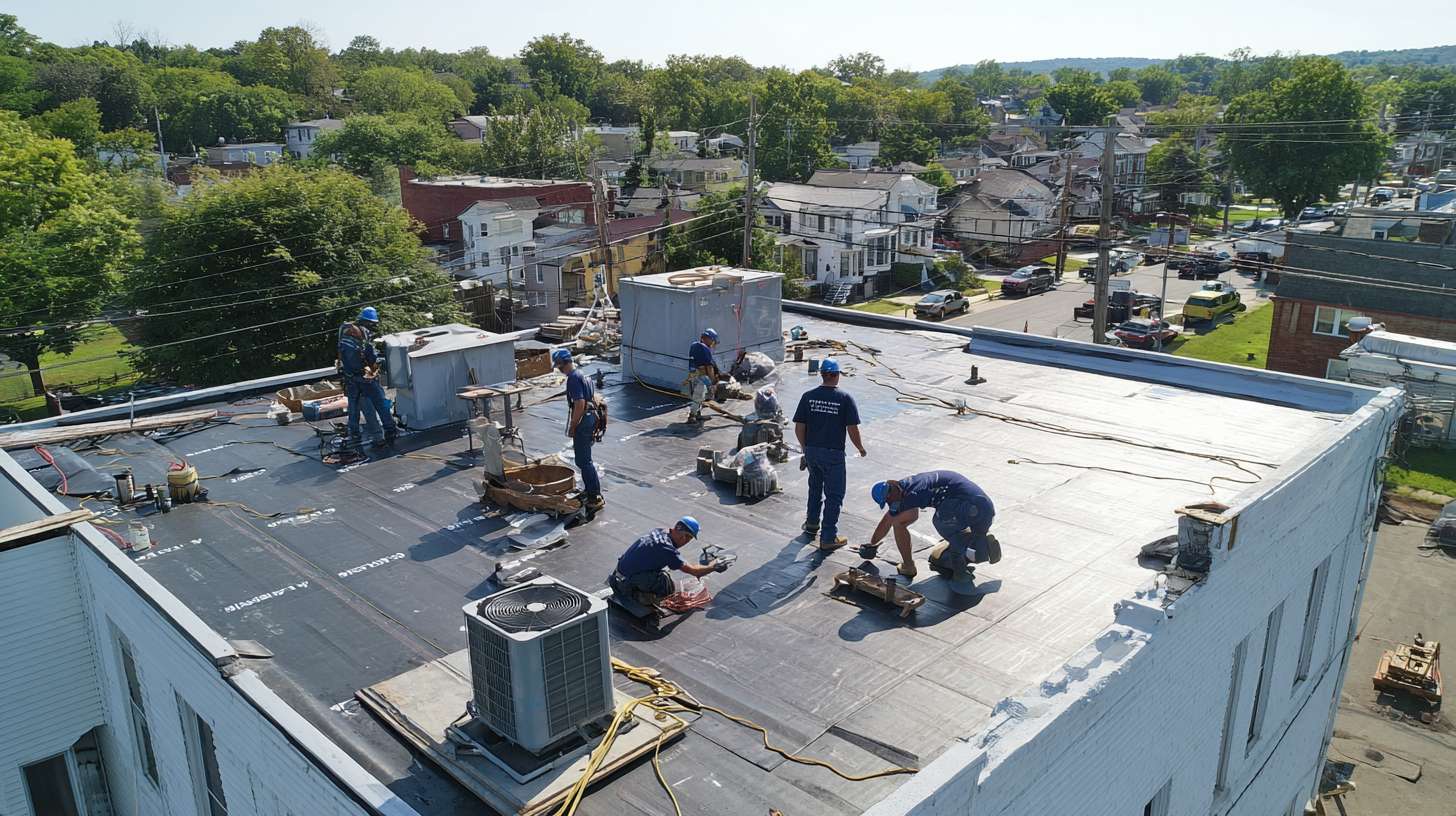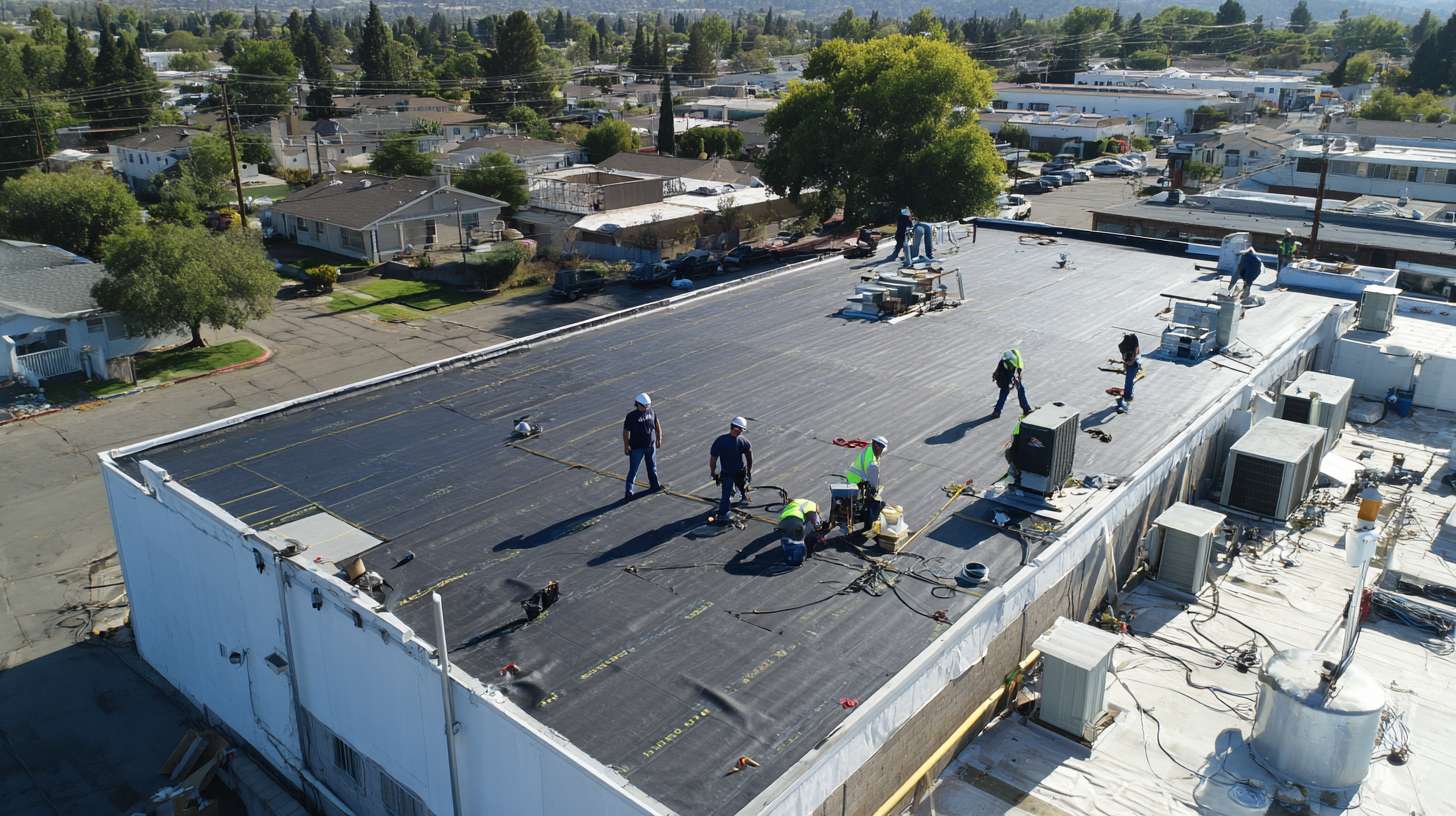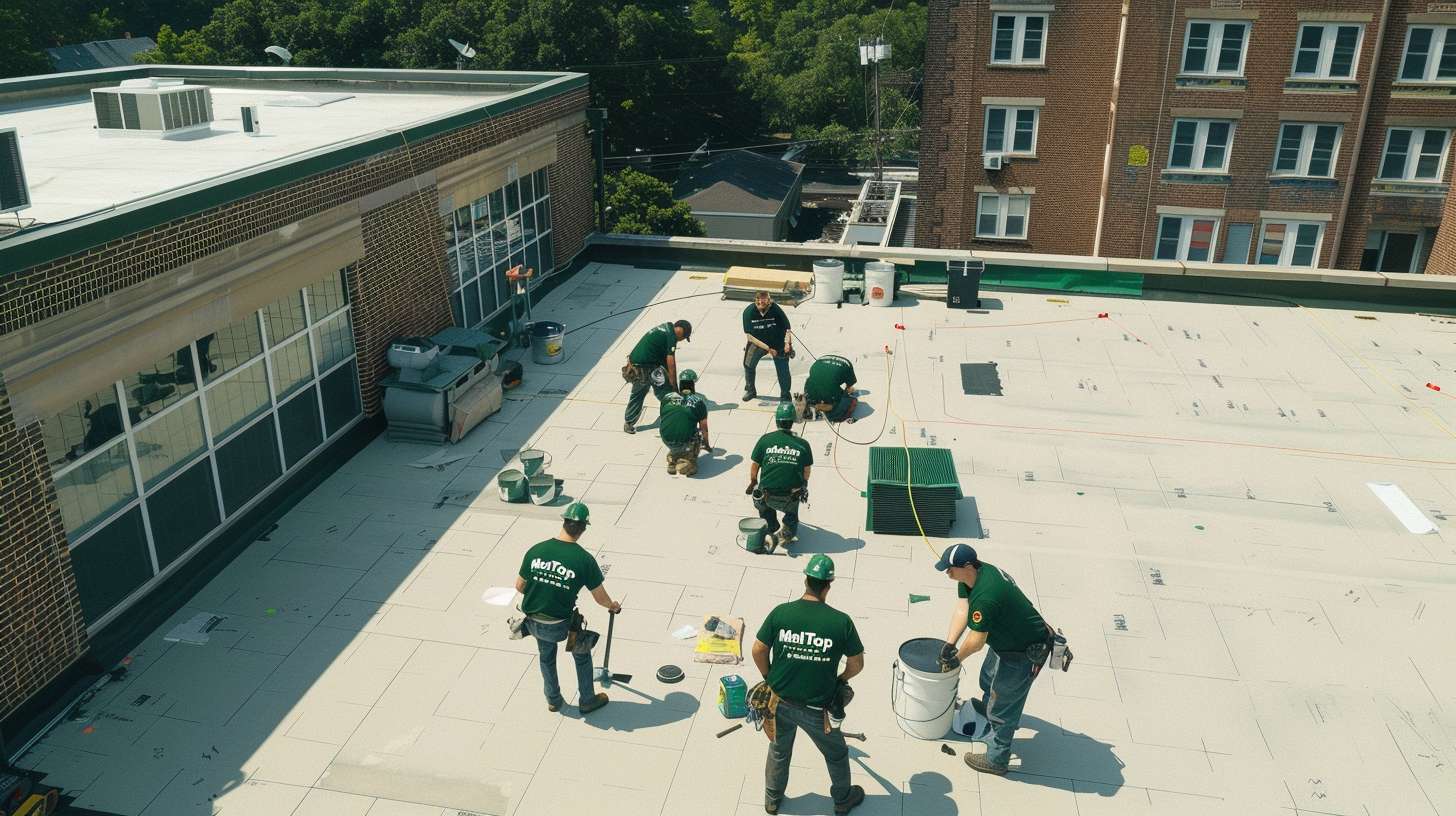
Understanding Minimum Flat Roof Slope for Nassau County Homes
Here’s something that surprises most Nassau County homeowners: building codes don’t actually allow flat roofs to be completely flat. The minimum slope for a flat roof in most installations is ¼-inch per foot, which translates to a 1-in-48 pitch-or about 5 inches of vertical drop over a typical 20-foot roof span. That seemingly small slope makes the difference between a roof that sheds water properly and one that develops ponding, leaks, and premature membrane failure. If you’re planning a new flat roof, reroofing, or fixing drainage issues on your Nassau County property, understanding minimum slope requirements isn’t just about passing inspection-it’s about building a roof that survives our intense summer downpours and winter freeze-thaw cycles.
What Is the Minimum Slope for a Flat Roof?
The International Building Code (IBC) and most roofing membrane manufacturers specify a minimum slope of ¼-inch per foot for flat roofs, though some systems allow as little as ⅛-inch per foot under specific conditions. In practical terms, ¼-inch per foot means that for every 12 inches of horizontal distance, the roof surface drops ¼ inch vertically. On a 16-foot wide roof section, that’s 4 inches of total fall from the high point to the drain or edge.
Nassau County follows New York State Building Code, which adopts the IBC standards with local amendments. When you pull a permit for flat roof work in Garden City, Hempstead, or Long Beach, the inspector will verify that your roof has adequate slope-but here’s what matters more than the inspection: your warranty depends on it. Every major manufacturer I work with-GAF, Carlisle, Firestone, Johns Manville-requires that minimum slope in their installation specifications. Install a membrane on a truly flat deck, and you’ve just voided your 15- or 20-year warranty before the first rainstorm.
Why Flat Roofs Aren’t Really Flat
The engineering reason for minimum slope goes back to water behavior. Water doesn’t naturally run off a perfectly level surface-it needs gravity. Even a tiny amount of standing water (what we call ponding) creates problems. First, ponding water adds weight: a one-inch-deep pool covering 100 square feet weighs about 520 pounds. Second, it accelerates membrane deterioration through UV exposure-water acts like a magnifying glass under summer sun. Third, and most critical for Nassau County, ponding water freezes. When that water expands, it stresses seams, penetrations, and the membrane itself. I’ve seen ten-year-old TPO roofs on Levittown two-families fail at only seven years because inadequate slope led to chronic ponding every winter.
Here’s what minimum slope actually does: it ensures that water begins moving toward drains or edges within 48 hours after rainfall stops. That’s the industry standard. A properly sloped flat roof might hold some shallow water immediately after a three-inch downpour, but within two days, all but trace moisture should be gone. If you can see water pooling on your flat roof 72 hours after rain, you have a slope problem-even if the roof was built “to code.”
How Different Roofing Materials Affect Minimum Slope Requirements
The ¼-inch-per-foot standard applies to most single-ply membranes (TPO, PVC, EPDM), but modified bitumen systems and built-up roofing can sometimes function at ⅛-inch per foot because of how they’re installed. Modified bitumen goes down in multiple plies with hot asphalt or torch application, creating a thicker, more redundant waterproofing layer. Built-up roofing (BUR)-the traditional tar-and-gravel system-also tolerates lower slopes because the multiple felt layers embedded in hot asphalt create excellent waterproofing even with minimal drainage.
That said, I rarely recommend designing to ⅛-inch per foot in Nassau County. Our weather patterns have changed. We’re seeing more frequent intense rainfall-two, three, even four inches in an afternoon-that overwhelms roofs designed with minimal slope. A roof built 15 years ago at ⅛-inch per foot might have worked fine then, but with today’s storm intensity, that same roof develops ponding issues. When I’m designing slope for a reroof or new construction, I target ⅜-inch to ½-inch per foot for critical areas near drains and at least ¼-inch per foot everywhere else. That extra margin handles our actual weather, not just the minimum code requirement.
| Roofing System | Minimum Slope | Recommended Slope (Nassau County) | Notes |
|---|---|---|---|
| TPO Single-Ply | ¼” per foot | ⅜” per foot | Most common on residential flat roofs; mechanically fastened or fully adhered |
| PVC Single-Ply | ¼” per foot | ⅜” per foot | More chemical-resistant than TPO; ideal near HVAC equipment |
| EPDM Rubber | ¼” per foot | ¼” per foot | Tolerates ponding better than thermoplastics but still needs proper drainage |
| Modified Bitumen | ⅛” per foot | ¼” per foot | Multi-ply system; heavier and more tolerant of low slope |
| Built-Up Roofing (BUR) | ⅛” per foot | ¼” per foot | Traditional tar-and-gravel; rarely installed on new residential projects |
| Spray Polyurethane Foam | ¼” per foot | ½” per foot | Foam can build custom slope; ideal for re-pitching problem roofs |
How to Create Proper Slope on an Existing Flat Roof
Most slope problems I encounter in Nassau County aren’t on new construction-they’re on existing roofs built 20, 30, 40 years ago when standards were looser and drainage design was more casual. If you’ve got ponding on your current flat roof, you have several options for correcting slope without tearing off the entire structure.
Tapered insulation systems are my go-to solution for most residential and small commercial projects. These are rigid insulation panels manufactured with factory-cut slopes-they come in thicknesses ranging from ½ inch up to 8 or 10 inches, creating precise drainage paths to your existing drains or new scuppers. A typical tapered insulation layout for a 20×30-foot flat roof on a Rockville Centre Cape Cod might use base insulation panels at 2 inches thick, then add tapered panels that create ¼-inch or ⅜-inch per foot slope toward a new corner drain. The entire assembly goes over your existing roof deck (after removing the old membrane), then you install a new single-ply membrane over the sloped insulation.
The cost runs $4.50 to $7.50 per square foot for materials and installation, depending on the insulation R-value and taper complexity. That’s significantly less than structural re-framing, and you gain energy efficiency in the process. I’ve corrected dozens of chronic ponding problems on Nassau County flat roofs this way-roofs that were leaking every winter suddenly become trouble-free because water finally has somewhere to go.
Spray polyurethane foam (SPF) offers another option, especially for roofs with complex shapes or multiple penetrations. SPF gets sprayed directly onto the existing roof membrane or deck in varying thicknesses to create custom slope. You can build up 3 inches of foam near the roof center and taper down to ½ inch at the drains, creating whatever slope pattern your roof needs. SPF also adds excellent insulation (R-6.5 per inch) and creates a seamless, monolithic surface. The tradeoff is cost-typically $8 to $12 per square foot installed-and the need for an experienced applicator. SPF installation is weather-sensitive and requires specific temperature and humidity conditions, which can be tricky during Nassau County’s humid summers.
For smaller problem areas-say a 6×8-foot section that ponds near an HVAC unit-sometimes the simplest fix is strategic crickets or saddles built from site-cut rigid insulation. I’ll cut and layer polyiso panels to redirect water around the low spot toward the nearest drain, then flash and membrane over the entire assembly. It’s a patch solution rather than a whole-roof fix, but for $300 to $600 in materials and labor, it often solves localized ponding that’s causing leak problems.
Common Flat Roof Slope Mistakes in Nassau County
The most frequent slope error I see is assuming the roof structure provides adequate drainage simply because it’s “not completely flat.” I’ve measured dozens of roofs in Oceanside, Freeport, and Baldwin where the framing has maybe ⅛-inch per foot of slope-enough that you can’t roll a marble across it, but nowhere near enough for reliable drainage. The original builder or roofer relied on that structural slope, then installed a flat membrane system without adding tapered insulation. Result: water sheds slowly, and any settling, deflection, or sagging in the structure creates instant ponding areas.
Another mistake: designing slope toward the wrong place. I worked on a Franklin Square two-family last year where someone had added tapered insulation that created beautiful ¼-inch-per-foot slope… toward the middle of the roof. There was no center drain. All that water ran to the middle, pooled, then slowly migrated sideways toward the scuppers. The roof developed chronic leaks at the midline seam where the tapered panels met. Proper slope design means understanding where your water can actually exit-at drains, scuppers, or edges-and creating paths that deliver water to those exit points.
A third issue specific to Nassau County: ignoring parapet walls. Many flat roofs here are surrounded by parapets-those short vertical walls that create a “bowl” effect. If you design slope correctly but don’t provide adequate drainage capacity through the parapet (via scuppers or through-wall drains), heavy rain simply fills the bowl faster than it can drain. Code requires one square inch of drain opening per 100 square feet of roof area as a baseline, but I design for at least 1.5 times that on roofs with parapets. During a 3-inch-per-hour downpour-which we absolutely get during summer thunderstorms-you need that extra drainage capacity or water backs up, no matter how good your slope is.
Measuring and Verifying Flat Roof Slope
You can check your roof slope with simple tools. A 4-foot level and a tape measure will tell you everything you need to know. Place the level on the roof surface with one end near the high point, level it (bubble centered), then measure the gap between the level’s low end and the roof surface. If that gap is 1 inch over 4 feet, you’ve got ¼-inch-per-foot slope. If it’s ½ inch, you’ve got ⅛-inch per foot. If the level sits flat on the roof with no gap, you have zero slope and a guaranteed ponding problem.
Professional verification uses laser levels or digital inclinometers, which are more accurate and faster for large roofs. When I’m designing a tapered insulation layout for a reroof, I shoot the entire roof with a rotary laser to create an elevation map-I find the true high and low points, measure deflection patterns, and identify where the structure has sagged. That data drives the insulation taper design. You can’t fix drainage problems you don’t understand, and you can’t understand drainage without accurate measurements.
After a new roof installation, the final verification is visual: look at the roof 48 hours after a rainstorm. Any standing water deeper than a dime (about 1/16 inch) indicates inadequate slope or a low spot that needs correction. Most warranties allow a brief curing period-new membrane might have slight ripples or wrinkles that relax over the first few months-but persistent ponding isn’t acceptable. Document it with photos and measurements, and get your roofer back to correct the slope before you sign off on final payment.
Flat Roof Slope Requirements for New Construction vs. Reroofing
New construction offers the easiest opportunity to get slope right. When you’re building a garage addition, a new single-story section, or a flat roof porch in Nassau County, you can design proper slope into the structure itself. The most common approach is to frame the roof deck with a slight pitch-usually ¼-inch per foot minimum-using progressively taller joists or a sloped top chord on roof trusses. The deck sheathing goes on that sloped structure, insulation goes over the sheathing (either flat or tapered), and the membrane goes on top. You’ve built drainage into the bones of the roof.
The structural approach costs very little extra-maybe $150 to $300 in additional lumber and labor on a typical 400-square-foot flat roof project-and creates permanent, reliable slope that can’t be compromised by insulation installation errors. If you’re planning new construction, push your architect or builder to design at least ¼-inch per foot of structural slope. Don’t rely entirely on tapered insulation unless the roof geometry makes structural slope impractical.
Reroofing projects are different. You’re stuck with whatever structure exists, which in Nassau County often means roof framing from the 1950s, ’60s, or ’70s that was built truly flat or with minimal slope. Your options are to overlay tapered insulation (most common), apply spray foam to create slope, or in extreme cases, add a new structural layer over the existing deck. I had a project in Merrick two years ago where the existing flat roof on a 1963 ranch had sagged so badly over 60 years that it actually sloped backward-water ran away from the drains. We ended up installing 2×4 sleepers on edge, running them perpendicular to the existing joists with progressively increasing height to create proper forward slope, then sheathing over the sleepers with new plywood before installing tapered insulation and TPO. That’s a $12 to $18 per square foot solution, but sometimes it’s the only way to correct severe structural problems.
Insurance and Warranty Implications of Improper Slope
This is where minimum slope moves from technical requirement to financial protection. Every manufacturer warranty I’ve read-and I review them constantly-includes language about proper drainage and slope. Typical wording states that ponding water (defined as water remaining more than 48 hours after rainfall) voids or reduces the warranty. What that means in practice: if your roof develops leaks and the manufacturer or insurance adjuster finds evidence of chronic ponding, you’re paying for repairs yourself, even if you have a “15-year material warranty.”
Insurance claims add another layer. If your flat roof leaks and causes interior damage, your homeowner’s insurance will cover sudden and accidental damage-but if the adjuster’s report shows the leak resulted from long-term ponding due to inadequate slope, they may deny the claim or reduce the payout. I’ve seen this happen three times in the past five years on Nassau County properties. The homeowner gets stuck with $8,000 to $15,000 in repair costs because their roof was built or reroofed without proper drainage design.
The lesson: treat minimum slope as non-negotiable. When you’re getting quotes for flat roof work, verify that the proposal includes specific slope design-either structural pitch, tapered insulation with a layout drawing, or spray foam application with thickness specifications. If a roofer tells you “we’ll make sure it drains” without showing you how, that’s a red flag. Get it in writing, with numbers. ¼-inch per foot minimum, ⅜-inch preferred, with specific drainage paths to identified exits.
Working with Platinum Flat Roofing on Slope Design
At Platinum Flat Roofing, slope design is part of every estimate we provide for Nassau County clients. We don’t just measure your roof’s square footage and multiply by a price-we shoot elevations with laser levels, identify existing drainage problems, and design tapered insulation layouts that correct ponding while meeting or exceeding code requirements. For reroofing projects, we provide a slope analysis that shows you exactly where water flows now, where it will flow after the new roof, and how we’re achieving that drainage.
Our typical approach uses polyisocyanurate tapered insulation systems with ¼-inch to ½-inch per foot slopes, depending on your roof’s size, shape, and structural condition. We work with major manufacturers-GAF, Carlisle, Johns Manville-to get factory-designed taper layouts that are engineered specifically for your roof, not generic patterns that might or might not work. That precision costs a bit more upfront but eliminates the trial-and-error that leads to callbacks, warranty issues, and premature failures.
If you’re dealing with ponding water, leaks after rainstorms, or visible low spots on your Nassau County flat roof, the root cause is usually inadequate slope. We can assess your current roof, measure actual drainage patterns, and design a correction that stops the ponding-whether that’s adding tapered insulation over your existing roof, applying spray foam to build custom slope, or in severe cases, structural modifications. The goal is the same: get water moving off your roof within 48 hours and keep it moving for the next 15 to 25 years. That’s what proper slope design delivers.