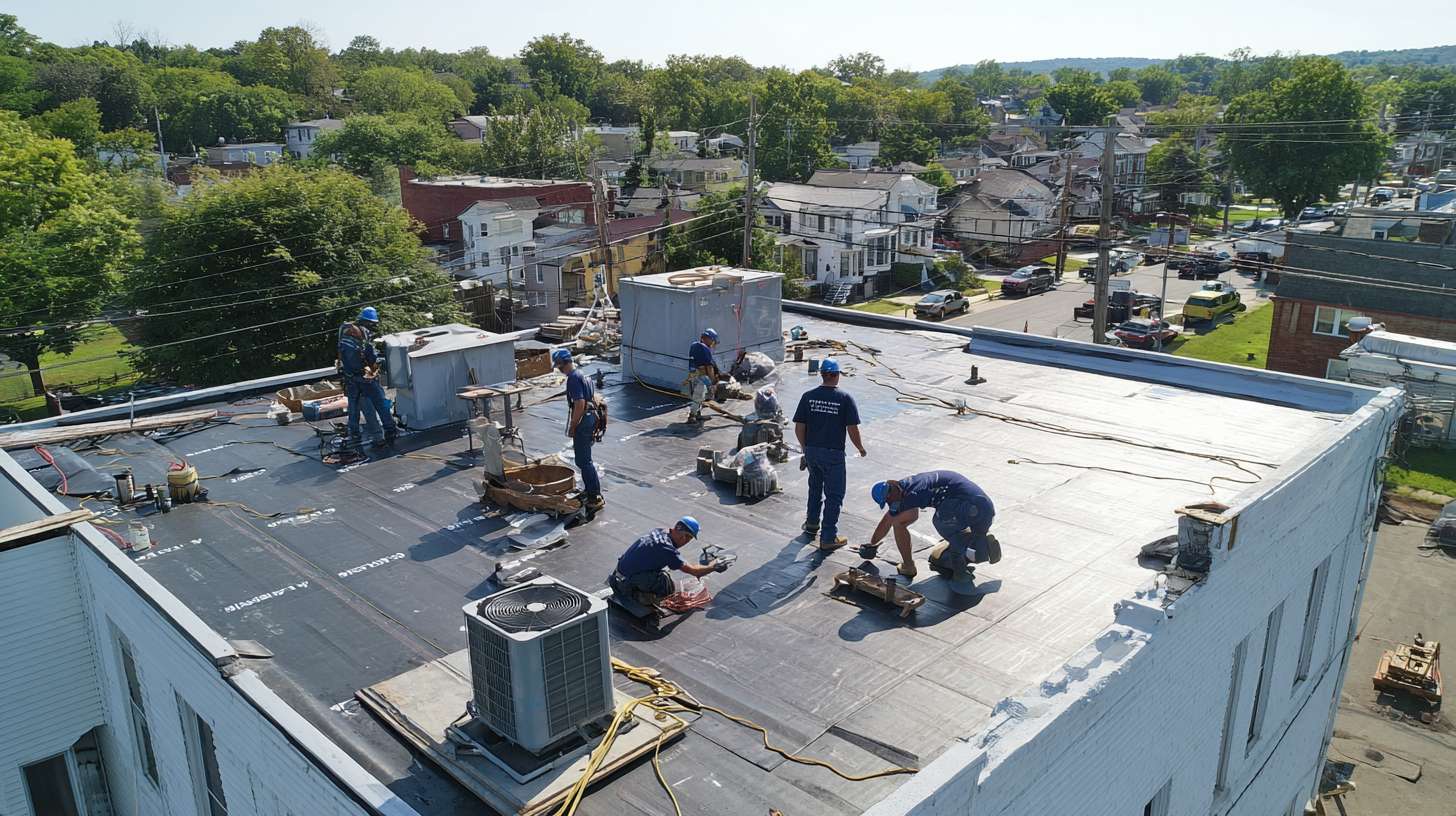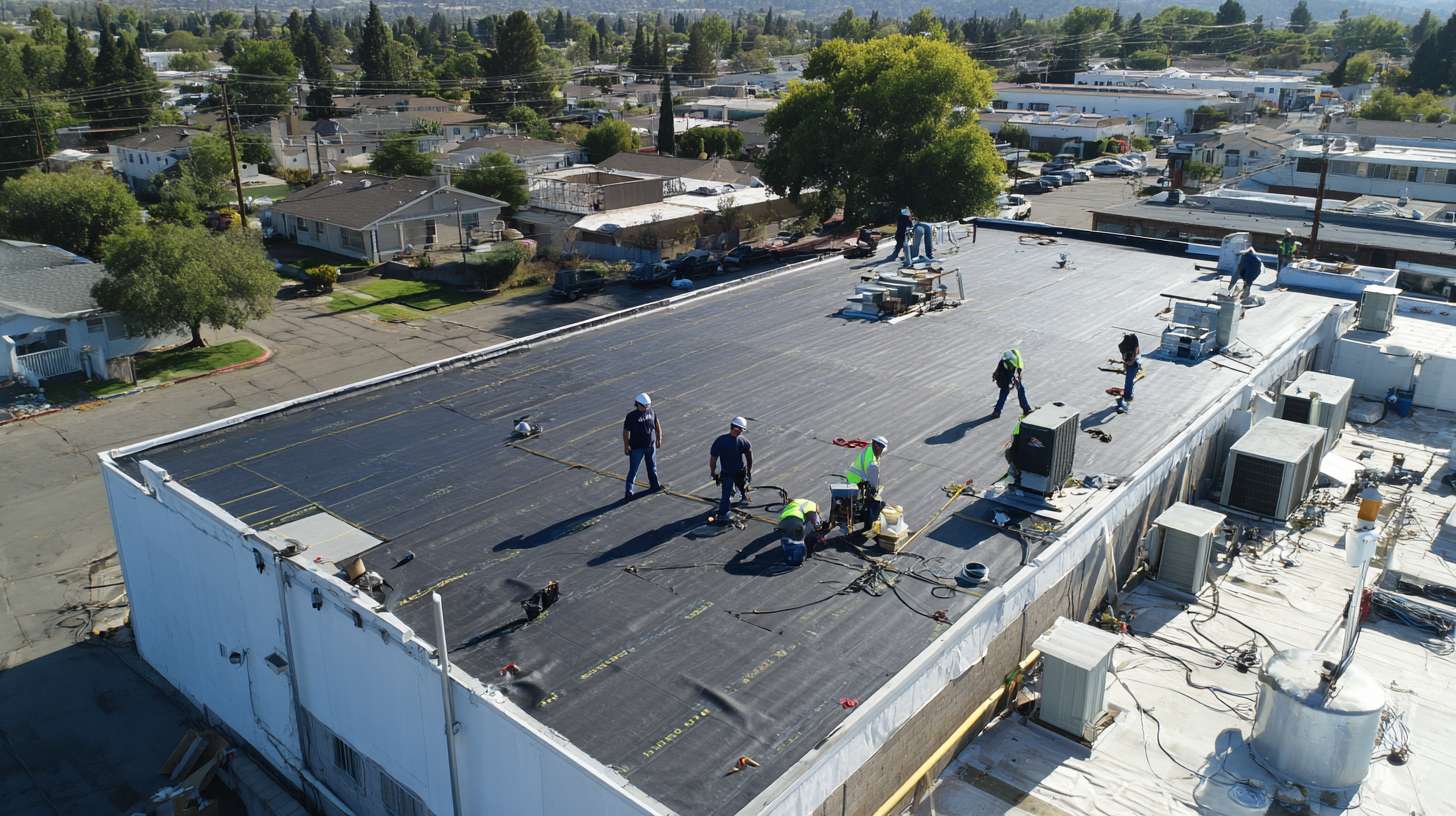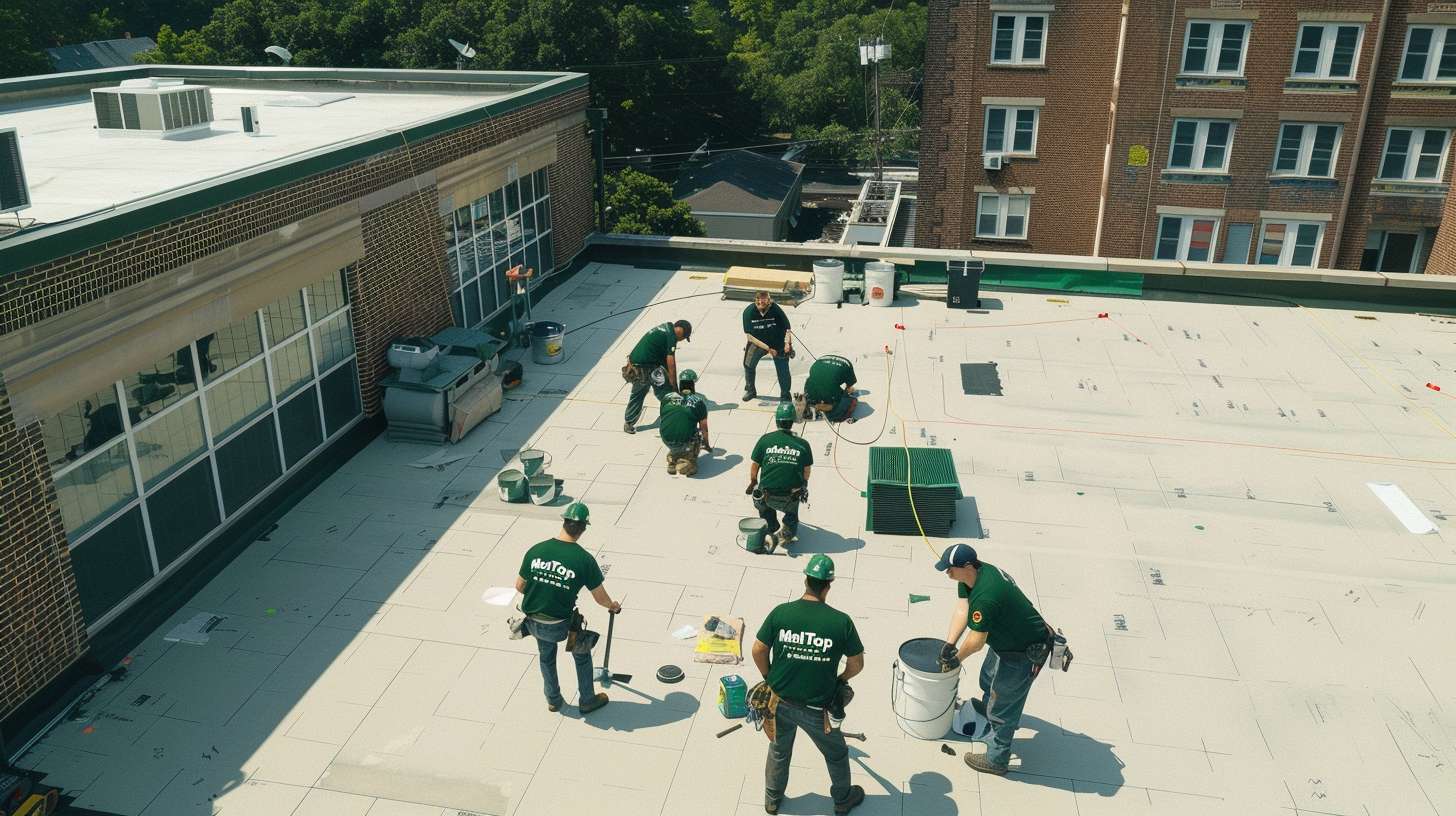
Need a Temporary Fix for Flat Roof Leak in Nassau County?
Rain is coming through your flat roof in Nassau County-what’s the safest, fastest way to stop it tonight, even if you can’t get a roofer there until next week? The answer depends on whether you can safely access your roof, what roofing material you have, and whether conditions allow you to work outside. A proper temporary flat roof leak fix should control water damage inside your home and stabilize the roof membrane without trapping moisture or creating a bigger problem for the permanent repair. The worst thing you can do is slap tar or silicone over wet roofing in the dark during a storm-you’ll seal water inside the membrane layers and turn a $800 patch into a $3,500 section replacement.
I’ve responded to hundreds of emergency leak calls across Nassau County over the past 13 years, from 2 a.m. storms in Long Beach to Sunday afternoon leaks in Levittown, and the homeowners who fare best are the ones who understand this hierarchy: safety first, interior damage control second, temporary rooftop stabilization third (only if conditions permit), and professional repair scheduled as soon as weather allows. Let me walk you through exactly what works, what makes things worse, and how long each temporary fix will actually hold up in our local weather patterns.
Immediate Safety and Interior Protection: Your First Priority
Before you even think about climbing onto your flat roof, you need to manage the water coming inside and assess whether roof access is safe. On a stormy night in Baldwin last March, I arrived at a leak call to find the homeowner already on his roof in 40 mph winds trying to spread a tarp-he’d slipped twice and the tarp was acting like a sail. We got him down, controlled the interior leak with buckets and plastic sheeting, and waited until morning when I could safely assess and patch the roof. He was frustrated by the delay, but he wasn’t in the hospital with a broken leg.
Here’s your interior protection sequence:
- Move furniture and electronics away from the leak immediately-water spreads along ceiling joists and can travel 10-15 feet from the visible drip point
- Contain the water with buckets, using the largest containers you have; a steady leak can fill a standard bucket in 2-3 hours during heavy rain
- Create a drainage point if water is pooling in your ceiling (the bulge is obvious)-carefully poke a small hole at the lowest point of the bulge with a screwdriver to release water into a bucket, preventing a larger ceiling collapse
- Spread plastic sheeting across floors and over any furniture you can’t move, extending at least 6 feet beyond the wet area
- Document everything with photos and video for insurance purposes before you do any cleanup
Never access your roof during active rain, at night, in high winds (over 20 mph), or when temperatures are below 40°F and ice may be present. Flat roofs are deceptively dangerous when wet-membrane surfaces become incredibly slippery, and you won’t see standing water until you step in it. If conditions aren’t safe, your temporary fix is interior containment only, and that’s perfectly acceptable until morning or until the storm passes.
Deciding Whether a Rooftop Temporary Repair Is Right for You
Once the immediate crisis is contained, you need to make a realistic assessment: should you attempt a temporary rooftop fix yourself, or is this a situation that requires professional emergency service? This decision isn’t about courage or capability-it’s about effectiveness and safety.
You can likely handle a temporary fix yourself if:
- The leak is clearly localized (single drip point inside, corresponding to an obvious problem area on the roof like a visible crack, blister, or flashing separation)
- You can safely access your roof via proper ladder and walkway
- Weather conditions are dry with forecast stability for at least 6-8 hours
- The damaged area is small (under 2 square feet) and away from roof edges
- Your roof membrane is in generally decent condition-no widespread deterioration
Call for professional emergency service if:
- You have multiple leak points or can’t identify where water is entering
- The leak is near roof edges, around HVAC equipment, or at complex flashing areas
- You see large blisters, significant membrane separation, or soft/spongy areas (indicating saturated insulation underneath)
- Standing water covers more than 20% of your roof surface
- The forecast shows more rain arriving within 24 hours
In Nassau County, we get very specific weather windows between storms-especially during fall Nor’easter season and spring frontal systems. If you’ve got clear weather for the next 36-48 hours, a quality temporary fix can hold for weeks or even months until you can schedule a proper repair. If rain is returning tomorrow, even the best patch you apply today won’t have time to cure properly, and you’re better off managing interior damage and calling a professional for emergency service between storms.
Temporary Repair Solutions by Flat Roof Type
The right temporary fix for leaking flat roof depends entirely on what kind of membrane you have. Using the wrong materials or methods can actually void warranties and make the permanent repair more difficult and expensive. Here’s what works for each common flat roofing system in Nassau County.
EPDM Rubber Membrane (Most Common on Long Island Homes)
EPDM is that black rubber material you see on most residential flat roofs-it’s durable but can develop punctures, seam separations, or weathering cracks over time. For a quick fix flat roof leak on EPDM:
Materials you need: EPDM primer, EPDM peel-and-stick patch (Peel & Seal brand or equivalent, available at most Nassau County hardware stores for $18-$28), utility knife, clean rags, and rubbing alcohol.
Process: Clean the area thoroughly-this is critical and where most DIY repairs fail. Use rubbing alcohol on a clean rag to remove all dirt, dust, and the chalky oxidation that forms on older EPDM. Let it dry completely (10-15 minutes in dry weather). Apply EPDM primer if you’re using a traditional patch (follow can directions exactly-it’s usually 5-10 minute dry time). Cut your patch to extend at least 3 inches beyond the damaged area in all directions. For peel-and-stick patches, carefully position and press firmly from center outward, eliminating all air bubbles. Roll with a hand roller if you have one.
On a leak call in Seaford last summer, I found a homeowner had applied three layers of “roof patch tar” over an EPDM seam separation-none of it stuck because he hadn’t cleaned or primed, and the tar actually prevented proper adhesion when we came to do the real repair. We had to remove all that tar, clean the membrane aggressively, and replace a larger section than originally needed. His $35 temporary fix cost him an extra $240 in permanent repair work.
Expected duration: A properly applied EPDM patch in summer conditions can last 4-8 months. In winter freeze-thaw cycles, figure 2-3 months maximum. If you’re patching in November, plan to schedule a permanent repair before March when ice dams and temperature swings will test that patch aggressively.
Modified Bitumen (Torch-Down or Peel-and-Stick Cap Sheet)
Modified bitumen looks like a granulated surface (similar to shingle texture) and is popular on Long Island commercial buildings and some residential applications. This is not a good candidate for homeowner temporary repairs if it requires torch work-open flame on a roof is a job for licensed professionals only.
Safe temporary option: If you have a small crack or puncture, you can use a cold-applied modified bitumen patch product like Henry 555 Roof Patch ($24-$32 for a gallon). Clean the area with mineral spirits, allow to dry, apply a generous layer of the patch compound extending 4-6 inches beyond the damage, and embed a piece of fiberglass mesh or polyester fabric into the wet compound. Apply a second coat over the fabric, feathering edges.
Expected duration: 3-6 months in moderate weather. These cold-applied patches don’t bond as permanently as torch-applied repairs, so treat this as a true temporary stabilization only.
Built-Up Roof (BUR) with Gravel
If your flat roof has a gravel or stone surface, you’ve got a built-up roof with multiple layers of tar and felt under that gravel. Finding leaks on BUR systems is challenging because water can travel horizontally between layers before dripping into your home-the roof leak might be 15 feet from where you see water inside.
Temporary approach: Brush aside gravel in the suspected area until you expose the underlying tar surface. Look for cracks, blisters, or soft spots. Clean thoroughly, let dry completely, then apply a quality roof cement (not cheap driveway sealer-get actual fibered roof cement for $18-$26 per gallon) over the damaged area. Smooth it reasonably flat and replace some gravel over the top to protect from UV.
I worked a leak in Massapequa where the homeowner identified three different blistered areas on his gravel roof-he patched all three with roof cement, but water was still coming in. When we did a thorough assessment, we found the actual entry point was at a poorly sealed roof drain 20 feet away. That’s the challenge with BUR systems: temporary flat roof leak fixes often address symptoms rather than sources. If your first temporary repair doesn’t stop the leak, call a professional for proper diagnostics.
Expected duration: 2-4 months. Roof cement shrinks and cracks with temperature cycling, so these patches need regular monitoring.
TPO or PVC Single-Ply Membrane
These white or light-colored membranes are increasingly common on newer Long Island commercial buildings and some residential applications. Do not attempt DIY repairs on TPO or PVC-these systems require heat-welded patches with specialized equipment. Using incompatible adhesives or patch materials can create chemical reactions that damage the membrane.
Your only safe temporary option: Clean and dry the area thoroughly, then cover with a properly secured tarp (see next section) until a professional can apply a heat-welded patch. Some TPO manufacturers sell peel-and-stick emergency patches, but even these require specific primers and proper surface preparation to be effective. For a roof with any remaining warranty value, don’t risk voiding coverage with an incompatible repair.
When Tarping Is Your Best Temporary Fix
Sometimes the most effective temporary repair for leaking flat roof isn’t a patch-it’s a properly secured tarp that keeps all water off the damaged area until conditions allow for proper repair. This is especially true when:
- You can’t identify the exact leak source
- The damaged area is too large for a simple patch (over 3-4 square feet)
- Weather won’t cooperate long enough for patch materials to cure
- You have TPO/PVC membrane that requires professional heat-welding
On a Sunday afternoon in Levittown last October, I arrived at a leak call during a break between rain bands-more rain was forecast in 4 hours. The homeowner had a 3-foot EPDM tear near a roof edge. Rather than rushing a patch that wouldn’t cure properly, we deployed a heavy tarp system that kept water off the roof for six days until the weather cleared and we could do a proper repair. That tarp cost $85 and saved what would have been a failed emergency patch and continued interior water damage.
How to Properly Secure a Tarp on a Flat Roof
This is not “throw a tarp over the problem and hope it stays.” A flat roof tarp system that actually works requires specific setup:
Materials: Heavy-duty poly tarp (minimum 12-mil thickness, 16-mil better) sized to cover damaged area plus 4-6 feet extra on all sides, 2×4 lumber pieces, sandbags or concrete blocks (never use bricks that can blow off and damage property below), bungee cords or rope.
Setup process: Spread the tarp completely flat across the damaged area, extending well beyond the leak in all directions-water will run under an inadequate tarp from any side. Place 2×4 boards along edges of the tarp, then weigh those boards down with sandbags or blocks spaced every 3-4 feet. The boards distribute weight and prevent the tarp from pulling out from under weighted edges during wind. In moderate wind conditions (15-20 mph forecasts), add bungee cords securing the 2x4s to roof penetrations or parapet walls if available, but never anchor into the roof membrane itself.
Important: Leave drainage paths-don’t create a situation where your tarp becomes a swimming pool. Position the tarp so water naturally flows off to existing drains or scuppers. If any tarp edges extend up parapet walls, secure them so they don’t channel water behind the walls.
| Tarp Setup Factor | Proper Approach | What to Avoid |
|---|---|---|
| Size | Extend 4-6 feet beyond damaged area in all directions | Small tarps that barely cover the visible problem-water will find gaps |
| Securing Method | 2×4 boards + sandbags/blocks on boards, no penetrations into roof | Nailing, screwing, or staking through the membrane-creates more leaks |
| Weight Distribution | Weights every 3-4 feet along all edges, with boards preventing concentration | Heavy objects directly on tarp or spaced too far apart-tarp pulls out in wind |
| Duration Planning | Inspect after every weather event, plan permanent repair within 2-3 weeks | Leaving tarps for months-they deteriorate and create new problems |
| Drainage | Position for natural water flow to existing drains, no pooling | Creating inadvertent pools that add weight and stress to roof structure |
Expected duration: A properly secured tarp can protect your roof through multiple storm cycles for 2-4 weeks. Beyond that, UV degradation and wind wear compromise the tarp material itself. This is a bridge to professional repair, not a long-term solution.
Addressing Drainage Problems That Cause or Worsen Leaks
Here’s something many homeowners miss: sometimes the “leak” isn’t actually membrane failure-it’s a drainage problem that’s creating ponding water that eventually finds or creates a weak point to penetrate. Nassau County building code requires flat roofs to have positive drainage (minimum 1/4 inch per foot slope to drains), but settling, insulation compression, or clogged drains can create persistent puddles that remain for days after rain stops.
If you’re seeing standing water on your roof more than 48 hours after rain ends, that’s a drainage problem that needs addressing as part of your repair strategy. As a temporary fix:
Clear clogged drains and scuppers: Remove leaves, silt, and debris from drain strainers and outlets. This alone can eliminate puddles and dramatically reduce leak risk. I’ve seen Long Beach roofs where simply clearing packed leaves from drains stopped leaks that homeowners thought required membrane replacement.
Create temporary drainage channels: If you have large ponded areas without good drainage paths, you can sometimes create temporary channels using lengths of PVC pipe (3-4 inch diameter) laid across the surface to guide water toward functional drains. Cut the pipe in half lengthwise to create an open trough. Weight the ends with sandbags to keep them positioned. This won’t solve fundamental slope problems, but it can prevent water from sitting on vulnerable membrane areas while you plan permanent drainage improvements.
Do not attempt to drill new drain holes yourself-you’ll almost certainly penetrate multiple membrane layers, insulation, and possibly the structural deck in ways that create worse leaks than you started with. Drainage modifications require professional roofing contractors who understand roof assembly construction and flashing details.
The Follow-Up: When to Schedule Permanent Repair
Every temporary fix for leaking flat roof has an expiration date determined by weather exposure, seasonal conditions, and the quality of the temporary work. Here’s the reality based on Nassau County weather patterns:
Summer temporary repairs (June-August) done in dry conditions with proper materials can last 4-8 months-you’ve got weather stability, proper curing conditions, and minimal freeze-thaw stress. But if you patch in July, don’t wait until February to schedule permanent work; handle it before November when fall weather systems begin cycling through.
Fall temporary repairs (September-November) face increasing weather challenges. Nor’easters can deliver heavy rain, wind, and temperature drops that test patches aggressively. A leaking flat roof quick fix applied in October should be followed by permanent repair scheduling before year-end, with work completed before the next spring storm season begins in March.
Winter temporary repairs (December-February) are the most limited. Cold temperatures prevent proper adhesive curing, freeze-thaw cycles stress patch materials, and ice accumulation can lift patch edges. Anything you patch between December and February should be monitored after every weather event, and permanent repair should be scheduled as soon as spring temperatures stabilize above 50°F for consecutive days (typically late March to early April in Nassau County).
Spring temporary repairs (March-May) benefit from improving weather but face spring storm systems that can deliver heavy rain with little warning. Temperature stability improves adhesive performance, but schedule permanent work before summer heat arrives-you want repairs completed before the season’s peak heat can accelerate any remaining membrane deterioration.
What Professional Emergency Repair Includes (And Why It’s Different from DIY)
When you call Platinum Flat Roofing or another professional service for a leaking roof emergency, you’re getting several things beyond a simple patch:
We locate the actual source of water entry, which is often 10-20 feet away from where you see interior dripping. Water travels along roof deck surfaces, through insulation layers, and along ceiling joists before it becomes visible inside. Our assessment includes moisture meters, deck inspection, and systematic roof walking to identify the true entry point-not just the symptom.
We assess whether the surrounding membrane and substrate are suitable for repair or whether you’re looking at section replacement. A small visible crack might sit in the middle of a 20-square-foot area with saturated insulation underneath-patching just the surface crack would fail within weeks because moisture trapped in the substrate continues degrading the membrane from below.
We have access to professional-grade materials that aren’t available in consumer channels: two-part adhesives with superior bond strength, heat-welded patch systems for TPO/PVC, spray foam for immediate water cutoff while we prepare proper patches, and reinforced fabrics designed specifically for flat roof repairs. These aren’t “better” in a way that makes DIY patches inferior-they’re simply different tools for different repair scenarios.
We properly prepare surfaces even in challenging conditions. Professional cleaning and priming makes the difference between a patch that lasts six months and one that lasts six years. We carry portable drying equipment, industrial cleaners, and specialized primers matched to specific membrane types.
Most importantly, we diagnose contributing factors. If your leak is caused by clogged drains creating persistent ponding, or deteriorated flashing at a roof penetration, or thermal movement cracking due to inadequate expansion joints, a simple patch addresses the symptom but not the cause. Emergency service should include identification of why the leak occurred so you can address root causes during permanent repair.
Cost Realities: Temporary Fix vs. Emergency Service vs. Permanent Repair
Understanding cost helps you make better decisions about when DIY temporary solutions make sense and when professional emergency service is worth the investment.
DIY temporary materials for a basic EPDM patch run $35-$65 (primer, patch, cleaning supplies). Tarp setup materials run $85-$140 (heavy tarp, boards, weights). Total investment: under $150 for most homeowners handling simple, accessible leaks.
Professional emergency service in Nassau County typically runs $285-$550 for after-hours response, assessment, and temporary stabilization that will hold until permanent repair can be scheduled. That includes proper leak source identification, professional-grade temporary patches or tarp systems, and moisture assessment. Higher costs apply for holiday/weekend service, difficult access situations, or complex leak scenarios.
Permanent flat roof repairs range dramatically based on scope: simple membrane patches run $425-$875 for areas up to 50 square feet, flashing repairs run $380-$680 per penetration or edge section, section replacements (when substrate is compromised) run $1,200-$2,800 for typical residential applications (100-200 square feet), and full roof replacements average $8.50-$14.50 per square foot depending on membrane type, insulation requirements, and access factors.
The math is straightforward: if you can safely access your roof, conditions permit proper material application, and the leak source is clear and localized, DIY temporary fixes offer excellent value and can bridge weeks or months to scheduled permanent repair. If any of those factors aren’t present, or if your temporary fix doesn’t stop the leak, professional emergency service at $350-$550 prevents hundreds or thousands in additional interior water damage while buying you the time to plan and budget permanent repairs properly.
What Not to Do: Temporary Fixes That Make Repairs More Expensive
In 13 years responding to flat roof emergencies across Nassau County, I’ve seen certain DIY approaches repeatedly create complications that turn affordable repairs into expensive replacement projects. Avoid these:
Never apply silicone products to flat roof membranes. Silicone caulk, sealants, or coatings prevent proper adhesion of professional repair materials. We can’t patch over silicone-it must be completely removed, and removal often damages surrounding membrane. A $8 tube of silicone caulk has cost homeowners $380-$520 in additional surface preparation on multiple jobs I’ve completed.
Don’t use duct tape, any kind of household tape, or “emergency repair tape” from big box stores. These products don’t bond to wet or weathered roofing membranes, they leave adhesive residue that must be painstakingly removed before proper repairs can be made, and they provide false confidence that the leak is managed when water is actually still entering around tape edges.
Don’t pile on multiple layers of different patch products. When the first patch doesn’t work, applying a second different product on top creates an incompatible layer sandwich that prevents moisture from escaping and makes professional assessment difficult. We can’t tell what’s underneath without removal, and removal risks damaging good membrane around the problem area.
Don’t apply patches over wet membrane or during active rain. Nothing adheres to wet surfaces-you’re creating the illusion of a fix while water continues penetrating. Wait for dry conditions, even if that means another day of interior water containment with buckets and tarps.
Don’t cut into your roof to “explore” where water is coming from. I’ve arrived at leak calls where homeowners cut 4-6 exploratory holes trying to find moisture-each cut is now an additional leak point requiring repair. If you can’t identify the leak source from surface inspection, that’s when you call a professional with moisture detection equipment.
Making the Right Decision for Your Situation
A temporary fix for flat roof leak serves one purpose: controlling water entry and preventing additional damage while you arrange for proper professional repair under favorable conditions. It’s a bridge, not a destination. The best temporary fixes are simple, use appropriate materials for your specific roof type, and don’t create complications for the permanent repair that follows.
If you’re in Nassau County facing a flat roof leak right now, follow this decision path: First, ensure safety-don’t access the roof in dangerous conditions. Second, contain interior water to prevent damage spread. Third, if you can safely access the roof and conditions are dry, apply an appropriate temporary patch or tarp system based on your membrane type and the information in this article. Fourth, schedule professional assessment and permanent repair as soon as weather permits, understanding that temporary fixes have limited lifespans measured in weeks or months, not years.
Platinum Flat Roofing provides emergency leak response throughout Nassau County, typically responding within 2-4 hours for active leaks and offering same-day or next-day service for urgent temporary stabilization when weather permits. Our emergency service includes complete leak source identification, professional temporary fixes that won’t complicate permanent repairs, moisture assessment to identify any hidden substrate damage, and detailed recommendations for permanent repair options with transparent pricing.
The goal isn’t to keep patching indefinitely-it’s to stop water damage now while planning the right permanent solution based on your roof’s actual condition, your budget timeline, and weather window availability. Sometimes that permanent solution is a $625 patch and flashing repair; sometimes it’s a section replacement; occasionally it’s time for complete roof replacement. But you can only make that decision accurately when you’re not in crisis mode and water isn’t actively damaging your home.
Stay safe, work within your capabilities, use the right materials for your roof type, and don’t let a temporary fix turn into permanent neglect. Your flat roof is manageable-it just needs the right attention at the right time.